
How to speak like a local in Sri Lanka
Know Your "Ayubowan"

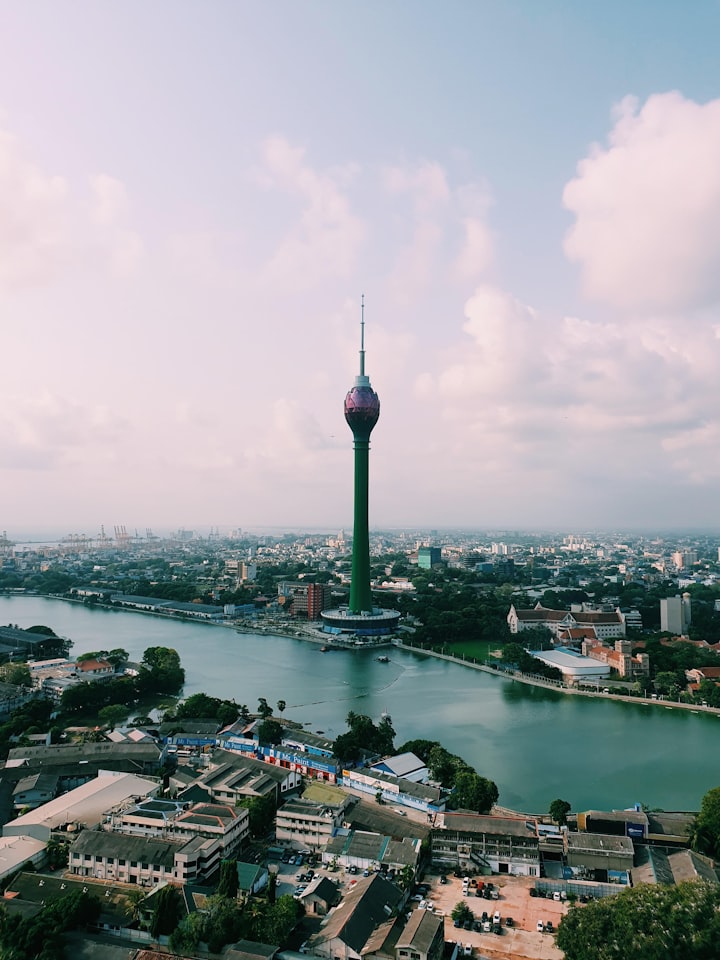
The island of Sri Lanka is a charming destination to visit with rich culture, natural beauty and friendly people. Of course, as part of any travel adventure, speaking the local language or understanding bits of it will come in handy; this is true in Sri Lanka when it comes to communicating with people especially outside major cities such as Colombo and Kandy. The good thing is, most people are helpful, though it's always better to have some understanding of the local language.
Keep in Mind the Languages
Sri Lanka has two main languages; the majority population are the Sinhalese who speak Sinhala followed by the Tamils who speak Tamil. English is considered a "link language" and you are apt to find people in urban cities, main towns and tourist hubs that can speak English fluently or at a moderate level. Many locals also speak what is colloquially known as "Singlish" which is a hybrid of English and Sinhala. You will not always find signboards in English and so it is always good to learn some Sinhala phrases which you can use to communicate when stuck, want advice or just want to interact.
Know Your "Ayubowan"
One of the easiest phrases to learn is the formal greeting "ayubowan" which is usually accompanied by placing your hands together (similar to the prayer emoji) near the chest. Be you staying at the best Kandy hotels including properties such as Earl's Regent or beach resorts down south, chances are you will get a warm and friendly "ayubowan" when you arrive; you can return this greeting by saying the same thing. It's not only a warm way to greet someone with a smile but in this age of social distancing and avoiding physical contact, it makes a great alternative to a handshake or hug too!
Learn Greetings
If you want to say "good morning", the phrase to use is "suba udesanak", though as stated earlier, many Sri Lankans use or are familiar with the English terms too. Exchanging names is another important part of getting to know people and in Sinhala, you can ask "oyage nama mokadda?"; here "mokadda" means "what is", "oyage" is "your" and "nama" is name. If you are asked this question you can reply "mage nama" followed by your name; "mage" means "my" and as mentioned, "nama" is "name".
When saying goodbye, one can say "gihin ennam"; this means that one is leaving / going somewhere else but will be back. Alternatively, you can say "suba dawasak" which is a pleasant way to wish someone a nice day.
Remember Common Phrases
Common phrases used every day are also worth learning since chances are they will come in handy even to answer questions. "Mama" means "I" and "mata" means "me", while "ow" (pronounced like "owu") means "yes" and "na" or "naha" is "no". A good phrase to learn is "mata therenne na" which translates to "I don't understand"! When in need of assistance, you can also say "mata udaw karanna" which is like saying "help me".
If you want to show your appreciation or thank someone, you can say "isthuthi" which is "thanks", though if you want to say "thank you very much", use the phrase "bohoma isthuthi". If someone asks you about something and you want to say it's "good" you can use the word "hodai"; conversely if you want to say something is "bad" you can say "narakai".
When travelling by public transport or even by tuk-tuk, if you want to get down somewhere specific / or at a halt you can use the phrase "methana nawatanna" which is stop (nawatanna) here (methane). When shopping and in need to ask the price, just say "keeyada?" which is "how much?"; if the price is too steep don't be afraid to say "gana wedi" which means "too pricey or expensive"!
About the Creator
Peaushan Devanarayana
Im a Sri Lankan travel enthusiast !!!
Keep reading
More stories from Peaushan Devanarayana and writers in Wander and other communities.
How to Explore Singapore in a Day
Tipped to be one of Asia's most popular tourist hubs, the Lion City is home to some of the world's finest recreational and cultural hotspots. Although a single day is by no means sufficient to explore all that Singapore has to offer, those who are on a tight schedule can still hit the major landmarks around the city within a day. From experiencing Singapore's iconic theme parks to wining and dining like a local, here are some tips on how to enjoy a memorable day of sightseeing in Singapore.
By Peaushan Devanarayana4 years ago in Wander
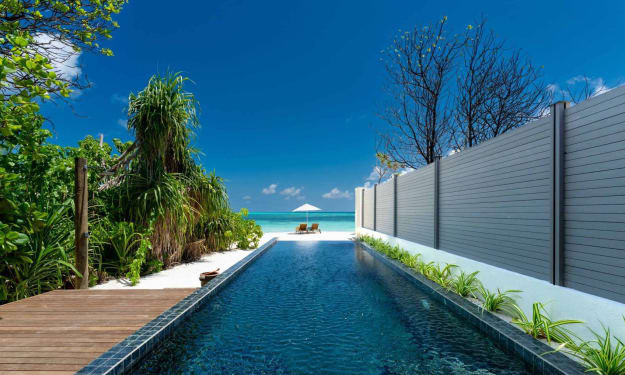
10 Reasons to Choose a Beach Villa with Private Pool
A beach holiday is about more than warm sand and gentle surf. When you choose a beach villa with a private pool, you unlock a level of comfort, privacy, and personalised experience that simply cannot be matched by standard hotel rooms. But what makes a private-pool villa genuinely worth it — beyond the glossy photos?
By Island Life Maldives7 days ago in Wander
Review of 'Man on the Run'
My wife and I saw Man on the Run, a nearly 2-hour documentary on Amazon Prime, about Wings, Paul McCartney's group that flew around the world from shortly after The Beatles broke up in early 1970 to shortly after John Lennon was murdered at the end of 1980, making a Beatles reunion forever impossible.
By Paul Levinson6 days ago in Beat



Comments
There are no comments for this story
Be the first to respond and start the conversation.