
Haidra (Ammaedara): A guide to Tunisia’s remote, abandoned Roman city with a Byzantine fort
Visiting Tunisia, love Roman history, and want to seriously go off the beaten path? Add the archaeological Roman city of Haidra (Ammaedara) to your list. This guide breaks down everything you need to know for your visit.

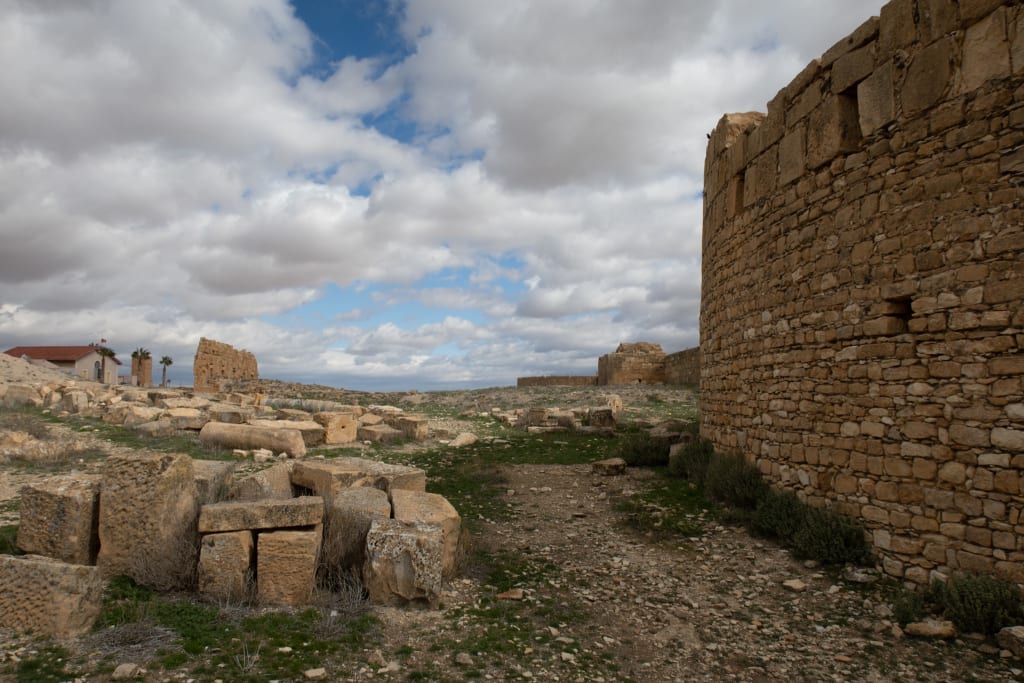
Haidra is a quiet, unassuming town that sits in Tunisia’s far west, not far from the Algerian border.
Hold on. Did I say unassuming? Haidra is not unassuming at all. It's actually one of the oldest Roman footprints in all of North Africa!
Known in antiquity as Ammaedara, Haidra was a Roman military stronghold established soon after Caesar’s annexation of Numidia in 46 BCE. The Third Augustan Legion (Rome’s main military force in Africa) was stationed here before it later moved to Theveste, just across the border in what is now Algeria.
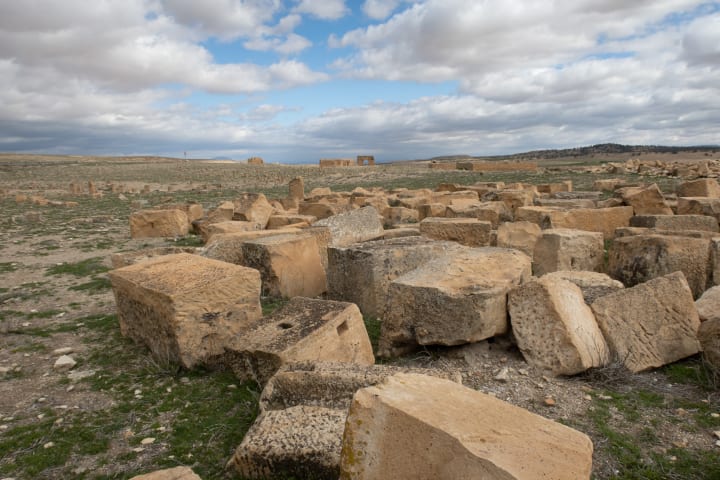
What remains today is a vast open-air archaeological site that's mostly sitting abandoned – just ruins scattered across the landscape, waiting for people to visit. For travelers interested in ancient history, Roman Empire vibes, or extremely off-the-grid spots, consider adding Haidra to your next travel itinerary.
Why is the city called Haidra?
First, let’s clear up a potential mix-up you may have: Haidra has nothing to do with Hydra, the multi-headed serpent creature from Greek mythology slain by Hercules. (For every head Hercules cut off, two more grew back — a metaphor for the multiplying problems of life…)
The name Haidra is a modern adaptation that likely evolved from Ammaedara, the Roman name for this settlement. While the exact meaning of Ammaedara is still debated, many historians agree it was a Romanized version of a Numidian (Berber) name that was hard to transliterate. They aren’t entirely sure when or how Ammaedara morphed into Haidra, but like many places across North Africa, names were Arabized or simplified over centuries.
Some historians think Haidra might stem from the Arabic root ḥ-ḍ-r, which is linked to words like ḥaḍira (settlement) or ḥaḍra (presence, urban center). Others suggest it could relate to the idea of a “green” or “civilized” place, though that’s harder to confirm.
Why did the Romans even come to Haidra?
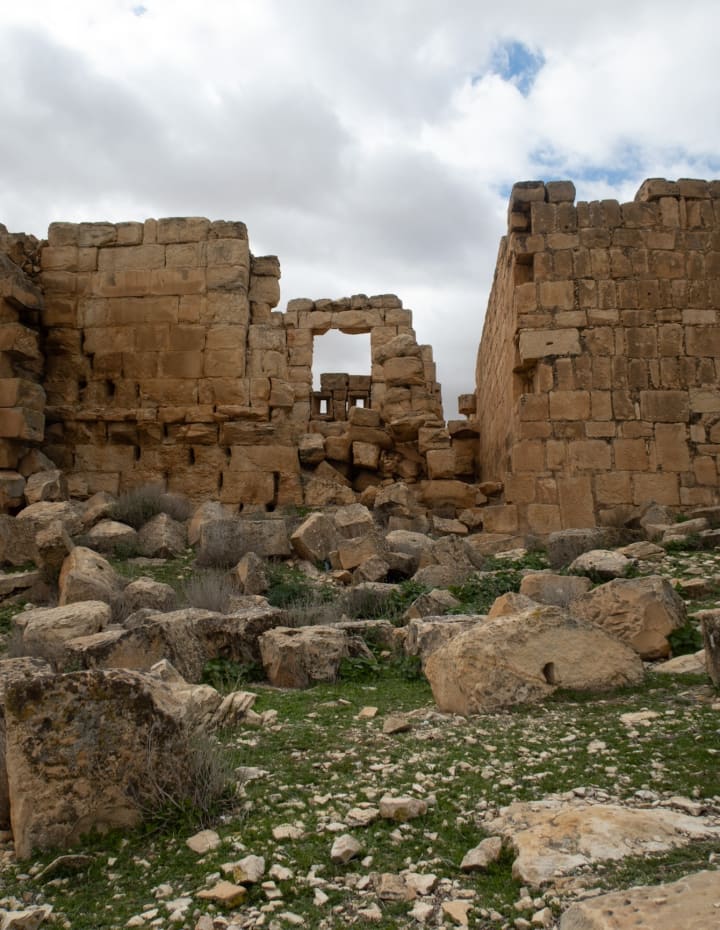
It wasn't just for the good weather and olive oil. In the first century B.C., after Caesar's conquest of Numidia, the Romans established Ammaedara as one of their first inland military colonies in North Africa. This strategic location was prime real estate for monitoring tribal movements and controlling the main road networks across the region.
After the Third Augustan Legion relocated, Rome handed the site over to retired soldiers. These veterans transformed the old military base into a full-fledged Roman city, complete with temples, baths, and civic structures.
Then came another transformation. In the 6th century, the Byzantines fortified the city, leaving behind the massive stone fortress still standing today. This rich past as a Roman garrison, a veteran settlement, and a Byzantine stronghold makes Haidra one of the most compelling ancient sites in Tunisia!
What to see in Haidra, Tunisia in 2025
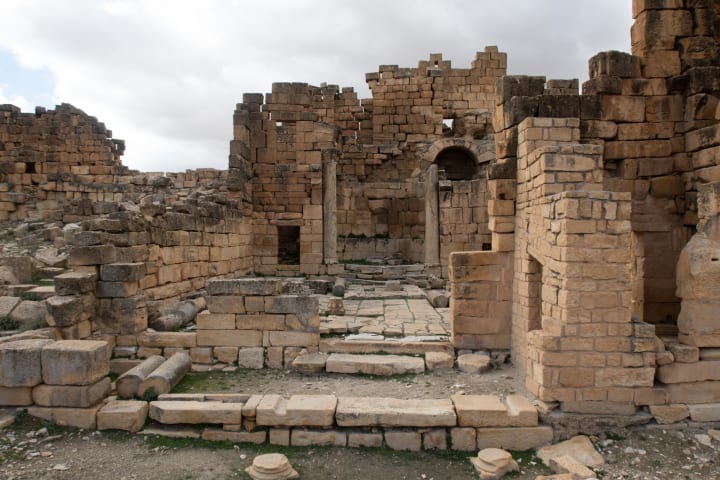
There is very little signage in the Haidra archaeological site. A small on-site museum helps provide some context for the ruins and also showcases some beautiful mosaics, but you’re mostly on your own to explore. You'll feel like an archaeologist the entire time.
This lack of modern tourism is part of Haidra’s unique charm, in many ways. It’s a very different feel from more popular sights such as Bulla Regia and Dougga. It feels extremely abandoned.
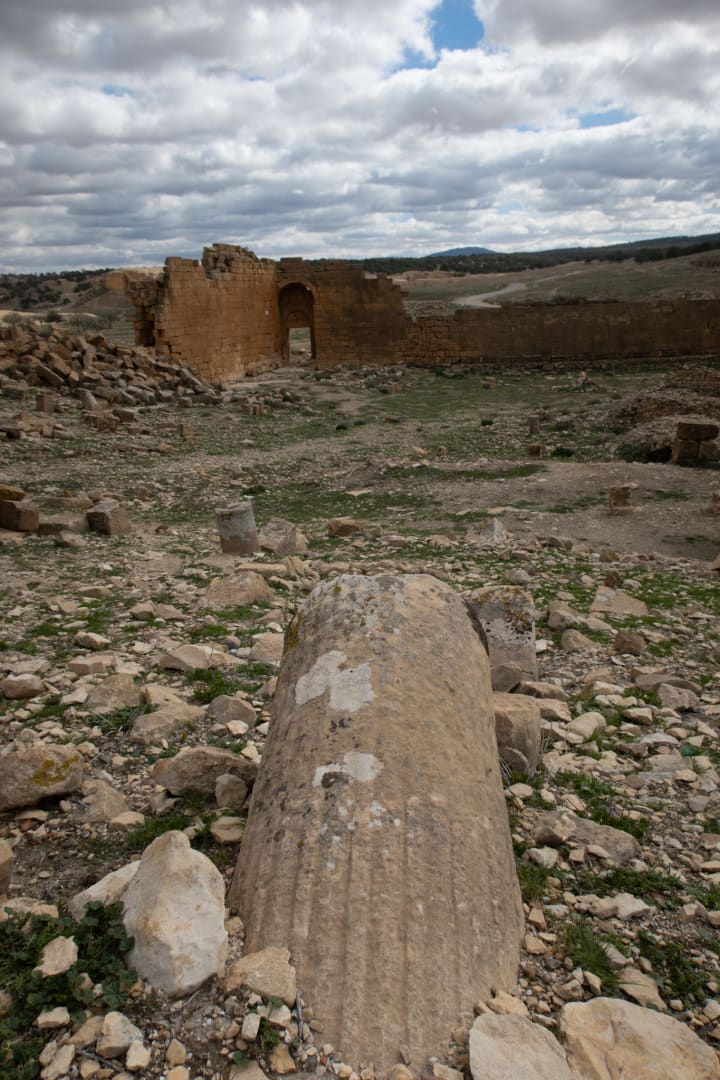
One thing you’ll notice amongst the ruins is huge remains of a Byzantine Fortress dominating the site. Emperor Justinian ordered its construction in the 6th century, and today, it stands as one of the largest and best-preserved Byzantine forts in all of North Africa.
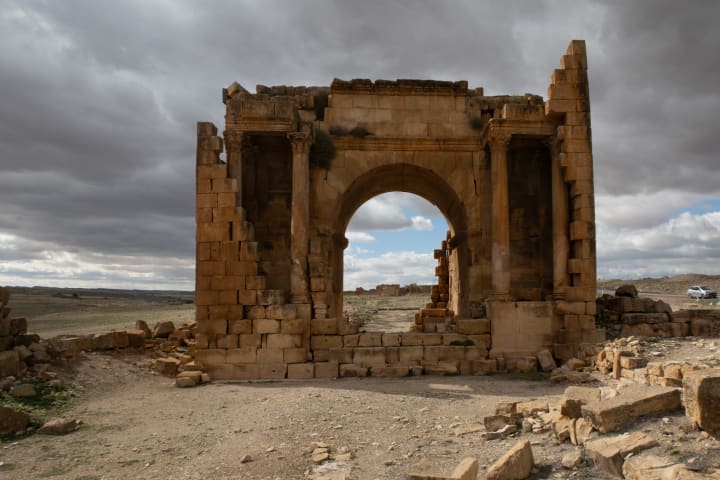
You’ll also walk beneath the Arch of Septimius Severus, built in 195 A.D., which once marked the formal gateway into the Roman city (and no, this Severus isn’t the Potions Master at Hogwarts…)
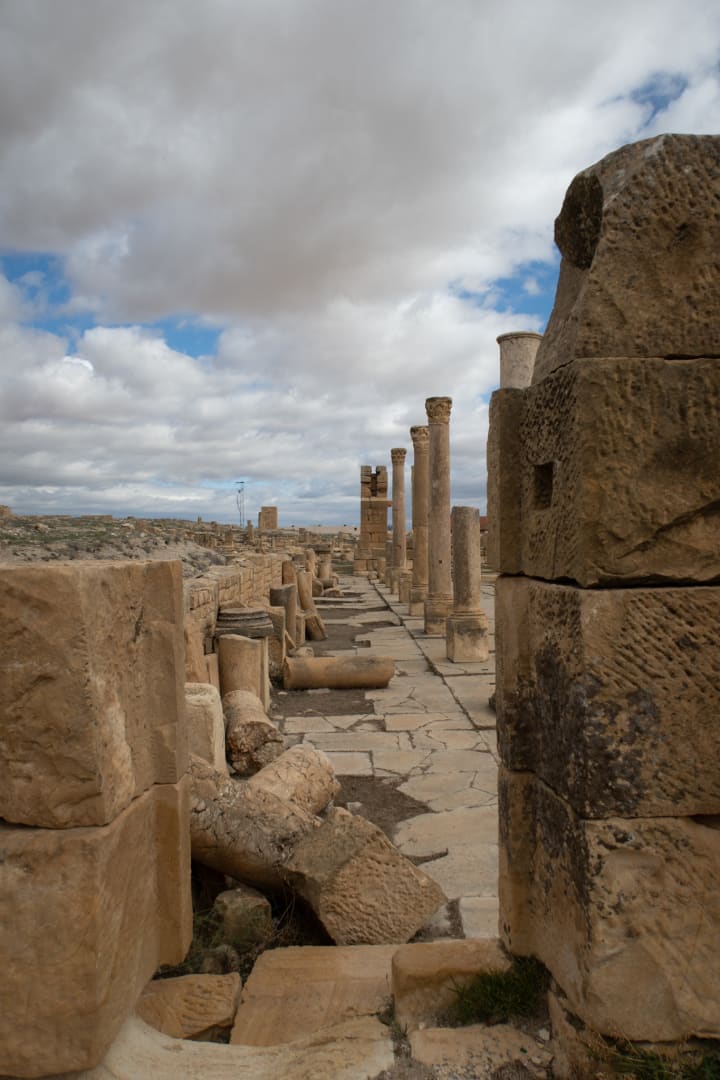
As a major Christian center after the Roman period, Haidra also has remains of several churches. The most interesting is the Basilica of Melleus, where you can see tombs of Vandal and Byzantine-era bishops set into the floor.
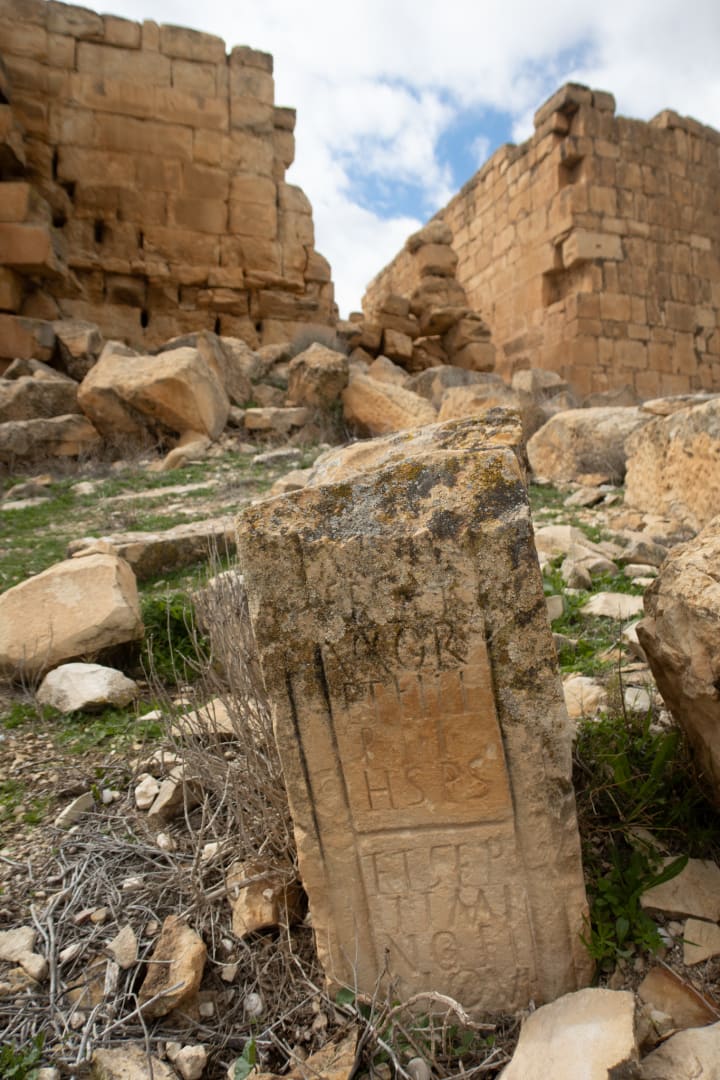
The entire structure functions as a vast open-air museum. One fun thing we did when exploring was use generative AI to try translating some of the ancient Latin inscriptions on the stones! And it worked!
2025 Travel Guide: Know before you go to Haidra, Tunisia
Visiting Haidra is definitely off the main tourist circuit. It's located in the Tunisia's Kasserine Governorate and just a few kilometers from the Algerian border, as mentioned above.
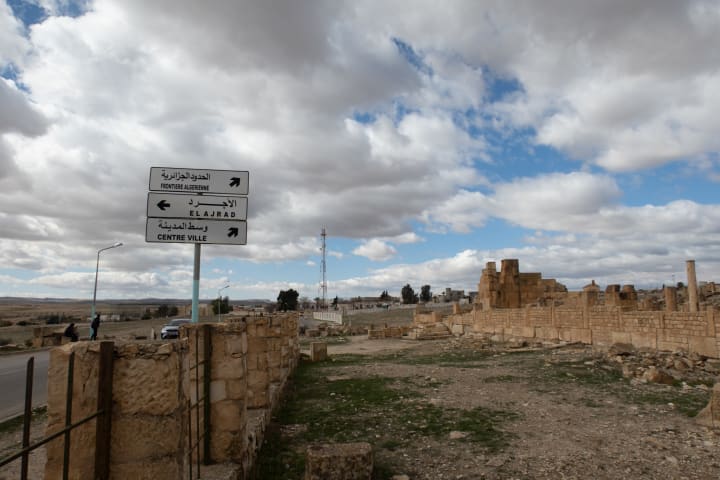
Safety Note: While American and Canadian travel advisories recommend avoiding non-essential travel near the Algerian border, the reality on the ground is more stable than those advisories suggest. That said, Haidra is very remote (and I can't emphasize "remote" enough) with limited infrastructure and low police/military presence. For this reason, I would recommend traveling with a local guide for logistics, education, and peace of mind. Consider booking through platforms such as WildyNess, which connects travelers with local experts and promotes sustainable, community-based tourism.
How to Get to Haidra: Unfortunately, there is no direct public transport to Haidra, and the road infrastructure in the region can be rough. While it’s theoretically possible to get partway there by louage (Tunisia’s shared taxi vans), stitching together routes from Kasserine or Gafsa would be extremely time-consuming and unreliable. A better bet is to book a private driver or request logistics support through local networks such as the above-mentioned WildyNess, which can also help negotiate fair rates with vetted drivers or car rentals.
Want to stay connected?
If you like my work, please consider buying me a coffee or leaving me a tip on Vocal. Proceeds will go to me ordering a "direct," (pronounced the French way: "DEE-rect") which is a cappuccino-meets-latte in Tunisia. You can also support my photography by purchasing custom digital prints (I'm still working on them, and I'll happily take commissions!)
To stay updated with off-the-beaten-path explorations both in Tunisia and beyond, please subscribe to me on Vocal, where I'll be updating frequently. I've been living in Tunisia in 2025 and believe that there's so much to share about this country. I'll also expand to other global destinations, too. You can also connect with me personally! If you're interested in a custom itinerary, comment below and I'm happy to discuss with you! Thank you so much for your support.
About the Creator
Atoosa Ryanne Arfa
I'm a hopelessly curious wanderer and love sharing stories of interesting perspectives around the world. My goal is to share stories from the periphery, inspired by my love for traveling to off-the-beaten-path places.
Keep reading
More stories from Atoosa Ryanne Arfa and writers in Wander and other communities.
Your guide to Douz, Tunisia’s gateway to the Sahara Desert
Let's be real: when people think about the Middle East and North African (MENA) region, they typically think about deserts and camels. Don't lie – you're probably guilty of this (I know I was once upon a time!).
By Atoosa Ryanne Arfa8 months ago in Wander
Worth the Wait: Puerto Viejo, Costa Rica
Beach bumming in a small Caribbean beach town sounded like a perfect way to end our 6-month trip through Mexico and Central America. Or so we thought. The foul, fishy stench of rotten seaweed hit our nostrils as we stepped from the cramped bus and looked out at a rather depressing, empty, and underwhelming black sand beach. It was pouring with rain, and we had to quickly fish out our ponchos. We thought, this couldn’t be it, could it?
By Sh*t Happens - Lost Girl Travel10 days ago in Wander
Moscow at Midnight: Stories Hidden in Russia’s Quiet Streets
Cities often reveal their true character after sunset. The noise softens, crowds fade, and ordinary streets begin to feel different. Moscow is one of those cities that changes completely when night arrives. During the day, it moves with purpose. Cars rush through wide roads, people hurry between offices, and tourists fill historic squares. But late at night, the atmosphere becomes slower and more reflective. Streetlights glow over old buildings, quiet parks hold memories of past centuries, and the city feels both peaceful and mysterious. Many people imagine Moscow as powerful and serious, yet it also holds moments of silence, beauty, and personal stories. To understand Moscow fully, one must look beyond headlines and explore the emotions hidden within its streets.
By Muqadas khan2 days ago in Wander


Comments
There are no comments for this story
Be the first to respond and start the conversation.