
Getting Lost in Lisbon: The Magic of Wandering Without a Map
The first rule of traveling, they say, is to always know where you’re going. Book your tickets early, plan your itinerary, mark every must-see on the map

M Mehran
The first rule of traveling, they say, is to always know where you’re going. Book your tickets early, plan your itinerary, mark every must-see on the map. But the best memories I’ve made while traveling didn’t come from careful planning. They came from getting lost.
I learned that lesson in Lisbon.
---
It was my second morning in the city, and I was supposed to meet a group tour near Rossio Square. I had every intention of being punctual, but a wrong turn led me down a narrow street, one of those cobblestoned lanes where laundry hung between pastel-colored buildings and the smell of bread drifted out from hidden bakeries.
For a moment, I panicked. My phone battery was low, my Portuguese was nonexistent, and my tour group was probably already gathering without me. But then something shifted. I looked around and realized: this is why I travel. Not to check boxes on a list, but to stumble into streets that make me feel like I’ve stepped into someone else’s story.
So I kept walking.
---
Lisbon is a city that rewards wanderers. The sidewalks are mosaics of black and white stone, designed centuries ago by artisans who turned even ordinary pavements into works of art. The streets curve and climb unpredictably, each corner revealing something unexpected: a splash of street art, a hidden chapel, a doorway painted the color of saffron.
I climbed one hill and found myself at a viewpoint I hadn’t read about in any guidebook. Below me, red-tiled rooftops spilled down toward the Tagus River, and in the distance, the Ponte 25 de Abril bridge arched across the water like a crimson ribbon. An old man stood nearby, strumming a guitar. A small group of locals had gathered to listen. No tour bus could have delivered me here at that exact moment. I felt like the city was letting me in on a secret.
---
That day, I wandered for hours. I ducked into a bakery where the woman behind the counter insisted I try a pastel de nata still warm from the oven. I walked through an antique shop cluttered with forgotten treasures: maps with edges frayed, porcelain teacups that once belonged to someone’s grandmother, letters written in looping cursive. I even stumbled upon a tiny bookstore where the owner pressed a translated book of Portuguese poetry into my hands, saying, “For your journey.”
By the time I finally checked my phone, the tour had long since ended. But I didn’t feel like I had missed out. Quite the opposite. I felt like I had traveled in the purest sense—immersed in a place, not just moving through it.
---
There’s a freedom in traveling without a script.
Of course, there are risks: you might get lost, you might waste time, you might never make it to the “must-see” attractions. But sometimes the risk is the reward. When you don’t know what’s coming next, you’re more open to noticing small details: the way sunlight spills across a tiled wall, the laughter of children chasing pigeons in a square, the quiet rhythm of a city going about its ordinary day.
Wandering reminds us that travel isn’t only about places. It’s about presence.
---
A few days later, I did make it to Rossio Square, this time on purpose. The group tour was fine—informative, organized, filled with postcard-perfect stops. But when the guide paused to give us free time, I slipped away again, choosing instead to follow the echo of fado music down a side street.
I ended up in a small bar where a woman sang with such raw emotion that the entire room went silent. I didn’t understand the lyrics, but I understood the feeling—longing, joy, heartbreak, all tangled together. I ordered a glass of vinho verde, let the music wash over me, and thought: this is the Lisbon I will remember.
---
Since that trip, I’ve carried the lesson of Lisbon with me wherever I go: leave room for wandering.
In Tokyo, it led me to a family-owned noodle shop tucked beneath the train tracks, where the owner treated me like a regular. In Marrakech, it took me through a maze of alleys until I found a rooftop café overlooking the medina, where mint tea tasted sweeter because I hadn’t been looking for it. In Mexico City, it guided me into a courtyard filled with paper lanterns, where strangers invited me to dance.
These moments never make it into the travel brochures. But they are the soul of travel.
---
Wandering doesn’t mean being careless. It means being open. Open to wrong turns, to unexpected conversations, to the possibility that the best stories begin where the guidebook ends.
When I think back on Lisbon now, I don’t remember the names of all the monuments. I remember the guitar music, the taste of that pastry, the kindness of a bookseller, the sound of fado on a quiet evening. I remember how it felt to be lost, and yet completely at home.
And maybe that’s the real magic of travel: not just finding new places, but finding new versions of ourselves—ones that are braver, freer, and a little more willing to get lost.
About the Creator
Keep reading
More stories from Muhammad Mehran and writers in Wander and other communities.
When the Road Became My Teacher
M Mehran Wandering began for me not as a choice, but as an accident. One train missed, one connection lost, and suddenly I was stranded in a town whose name I couldn’t pronounce. I could have panicked. Instead, I walked. That decision changed everything.
By Muhammad Mehran6 months ago in Wander
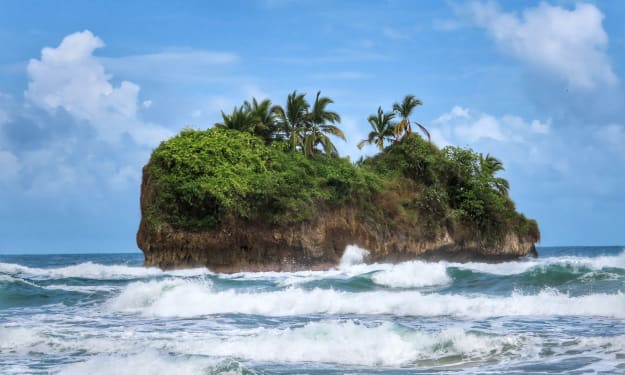
Worth the Wait: Puerto Viejo, Costa Rica
Beach bumming in a small Caribbean beach town sounded like a perfect way to end our 6-month trip through Mexico and Central America. Or so we thought. The foul, fishy stench of rotten seaweed hit our nostrils as we stepped from the cramped bus and looked out at a rather depressing, empty, and underwhelming black sand beach. It was pouring with rain, and we had to quickly fish out our ponchos. We thought, this couldn’t be it, could it?
By Sh*t Happens - Lost Girl Travel3 days ago in Wander
How to Beat the Heat in Siem Reap
Siem Reap stands out as one of Southeast Asia’s most captivating destinations, famed as the entrance to the magnificent ancient temples of Angkor. But if you’re visiting during the rainy season (typically May to October), you’ll quickly realize that the heat and humidity can feel just as mighty as the monuments themselves. Fortunately, there are plenty of ways to stay cool and enjoy your Siem Reap adventure without melting under the tropical sun.
By william barry6 days ago in Wander



Comments
There are no comments for this story
Be the first to respond and start the conversation.