
Forgotten Highways & Lost Gas Stations
The Rise and Fall of America’s Roadside Empire

I. Prelude of Asphalt & Dust
There’s something haunting about a two-lane highway that doesn’t quite go anywhere anymore. The paint is sun-faded, the asphalt cracked like an old leather boot, and the weeds creep through with the persistence of time itself. You drive past it on the interstate... your GPS urging you to stay in the fast lane... but your eyes wander. Off to the side, a rusting sign with missing neon tubes still flickers in the evening air: EATS.
These forgotten stretches of road were once the beating arteries of a nation on the move. Before the Eisenhower Interstate Highway System streamlined travel into a blur of mile markers and identical off-ramps, America’s highways were personal. They curved, they meandered, they went straight through towns where a mom-and-pop gas station, a diner, and maybe a neon cowboy were waiting. You didn’t just refuel the car; you refueled your soul.
But progress is merciless. Where once stood family-owned businesses and quirky roadside attractions, now lie ghosts; abandoned pumps, diners with plywood windows, and empty parking lots that echo with the laughter of travelers long gone.
II. The Rise of the Roadside Empire
In the early 20th century, as the automobile went from novelty to necessity, America built itself around the car. Small towns sprouted gas stations like wildflowers. They weren’t the uniform, franchise-style pumps we know today; they were personal. A Sinclair station with a green brontosaurus statue out front. A Phillips 66 shaped like a Tudor cottage. A Pure Oil station designed like a tiny Gothic chapel.
And where there was gas, there was food. Diners popped up with chrome counters, jukeboxes, and pies that made you forget the rattling miles behind you. These weren’t chain restaurants with laminated menus, they were run by families who knew your order after one visit. A cheeseburger, fries, and a coffee refilled so often it bordered on reckless.
The roadside business was a culture of personality. Stations competed not only on price but on charm. Big neon signs weren’t just marketing, they were beacons. A giant coffee pot-shaped café told you exactly what was inside. A hotdog stand shaped like, well, a hotdog didn’t need a billboard. The weirder it was, the more likely you’d stop. Travel wasn’t efficient, but it was human...
III. Quirks, Oddities & Tourist Traps
If you’ve ever seen a roadside attraction that made you ask, “Why does this exist?”... congratulations, you’ve seen Americana at its finest.
There was the Big Duck in New York, a duck-shaped poultry stand that quacked its way into history. In Arizona, a mysterious roadside museum simply called The Thing lured drivers for decades with billboards asking, “What IS The Thing?” (spoiler: it’s a mummified oddity in a glass case). In Illinois, a restaurant shaped like a giant ketchup bottle served up fries that practically demanded you stop.
Neon signs were their own art form. The mid-century Googie style, jet-age fonts, starbursts, and atomic arrows, lit up Route 66 like a carnival. Cowboys tipped their hats in animated loops. Giant soda bottles fizzed eternally. These weren’t just ads, they were cultural landmarks.
Gas stations joined the arms race with gimmicks. Some built observation towers. Others offered free maps, road guides, or the ever-tempting “free air” for your tires. Families would detour miles just for the novelty of a gas pump shaped like a rocket ship.
It wasn’t about efficiency. It was about the story. You weren’t just filling your tank, you were making a memory.
IV. The Fall — Enter the Interstate
Then came the bulldozers...
In 1956, President Eisenhower signed the Federal-Aid Highway Act, unleashing the interstate system that would eventually span 46,000 miles. It was a marvel of engineering, designed to move troops quickly in case of war but also to usher in the era of convenience. And it did. Travel became faster, safer, more predictable. But in the process, it gutted the soul of the road.
The interstate bypassed towns that once thrived on travelers pulling over for pie and a fill-up. Suddenly, mom-and-pop gas stations couldn’t compete with brand-name franchises that sprouted at every exit. Texaco, Shell, and Exxon became the new roadside monarchs. Diners lost to fast-food chains that promised consistency, if not charm.
Gas wars broke out in the ’60s and ’70s, driving independents under. Whole stretches of old highways fell into silence. Where you once found a bustling roadside stand, now there was only an empty building, a few shattered windows, and a sign advertising gas at 39 cents a gallon... a cruel reminder of a world that had moved on.
V. The Ghosts That Remain
If you drive the backroads today, you can still find them.
In the desert Southwest, skeletal gas pumps stand half-buried in sand, their numbers frozen in time. In the Midwest, weather-worn diners sit at the edge of cracked parking lots, ivy wrapping around their chrome bones. Neon cowboys flicker occasionally, like ghosts trying to remember their lines.
Some have been reborn. The Midpoint Café on Route 66, halfway between Chicago and Los Angeles, still slings pie. A few gas stations have been turned into breweries, art galleries, or Airbnb rentals. Preservation groups fight to keep certain neon signs lit, arguing they are as much history as any courthouse or battlefield.
But most remain as relics, slowly collapsing back into the earth. If you stumble across one, it feels like trespassing into America’s memory, like walking into a faded photograph.
VI. The Spirit of the Road
Why do these places matter? After all, aren’t gas stations and diners just pit stops?
No. They were community. They were identity. They were where travelers met locals, where stories passed hands over greasy counters, where a station attendant might offer directions with a smile that said, You’re welcome in our town.
The interstate gave us speed, but it took away personality. It replaced family names with logos, replaced pies with plastic-wrapped muffins, replaced neon cowboys with standardized green exit signs.
And yet, we still romanticize the road trip. Not for the efficiency of the interstate, but for the detours. For the backroads where you stumble onto a place that feels impossibly specific, impossibly alive. Forgotten highways and lost gas stations remind us that travel was once about connection, not just arrival.
VII. Call to Wander
So here’s the challenge: the next time you’re tempted to stay in the fast lane, don’t. Take the exit onto the old road. Drive the cracked highway, pass through the towns the interstate forgot. Pull over at the diner where the neon sign sputters but still fights to stay alive. Walk into the old gas station-turned-museum and breathe in the smell of motor oil and dust.
Because every time one of these places closes, we don’t just lose a business. We lose a piece of ourselves.
America is not built solely on speed or efficiency. It’s built on stories. And those stories are still waiting by the roadside, neon flickering in the dusk, hoping someone will stop.
About the Creator
The Iron Lighthouse
Where folklore meets freeway. A guide to the strange heart of the American backroads...
Keep reading
More stories from The Iron Lighthouse and writers in Wander and other communities.
Scenic Trains of America: Riding the Rails Through Beauty and Time
Most people board a train because they need to get somewhere. But in America, there’s a special group of travelers who ride the rails not for the destination, but for the view. Scenic trains have quietly become one of the last refuges for slow travel. A way to sink into the landscape, sip a coffee, and watch mountains, deserts, and coastlines roll past like living postcards.
By The Iron Lighthouse6 months ago in Wander
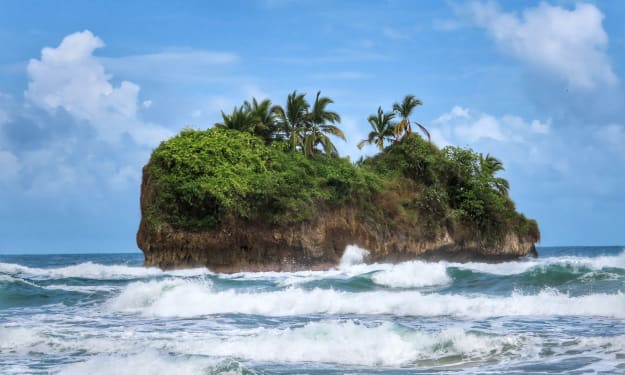
Worth the Wait: Puerto Viejo, Costa Rica
Beach bumming in a small Caribbean beach town sounded like a perfect way to end our 6-month trip through Mexico and Central America. Or so we thought. The foul, fishy stench of rotten seaweed hit our nostrils as we stepped from the cramped bus and looked out at a rather depressing, empty, and underwhelming black sand beach. It was pouring with rain, and we had to quickly fish out our ponchos. We thought, this couldn’t be it, could it?
By Sh*t Happens - Lost Girl Travel6 days ago in Wander



Comments
There are no comments for this story
Be the first to respond and start the conversation.