
Flight MH370
The Flight MH370 Puzzle Finally Solved

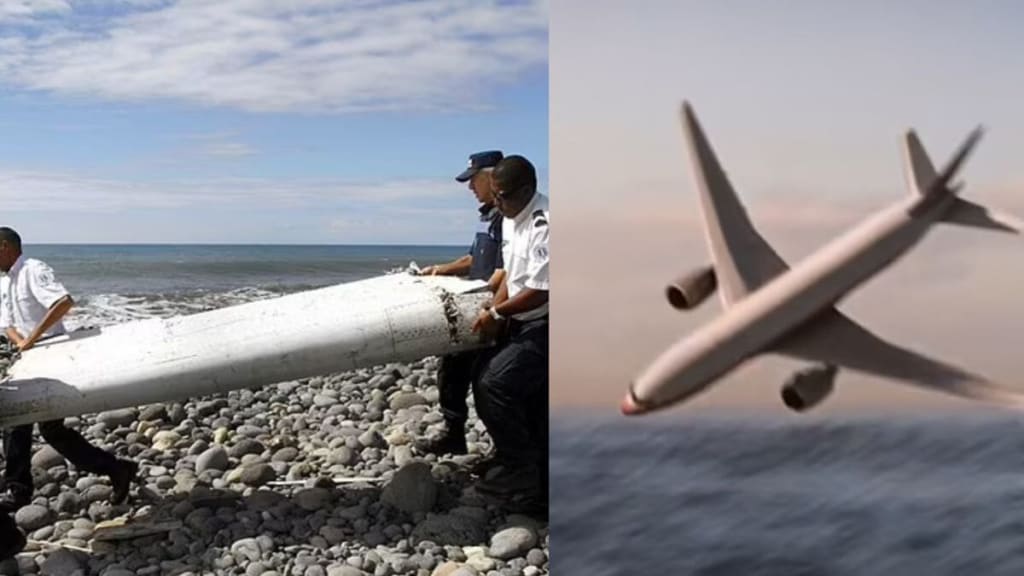
The disappearance of Malaysia Airlines Flight MH370 on March 8, 2014, remains one of the most perplexing aviation mysteries of the 21st century. The Boeing 777, carrying 239 passengers and crew members, vanished from radar screens while en route from Kuala Lumpur to Beijing, leaving behind a trail of speculation, conspiracy theories, and unanswered questions. For nearly a decade, the world has been captivated by the enigma, with countless theories proposed but none conclusively proven. However, a new theory has emerged that might finally bring closure to this tragic mystery. Enter Vincent Line, a Tasmanian scientist who has dedicated years to studying the disappearance of MH370. His research, published in the Journal of Navigation in 2021, presents a compelling case that challenges the prevailing narrative and suggests a new, chilling explanation for what happened to the ill-fated flight. According to Line, MH370's disappearance was not the result of a tragic accident but rather a meticulously planned operation carried out by the pilot in command.
Line's theory revolves around the final moments of the flight and the condition of the debris that has been recovered over the years. Key to his hypothesis is the damage found on the aircraft's wing flaps and flaperon - components that play a crucial role in controlling the plane during flight, especially during takeoff and landing. These parts were discovered washed ashore on islands in the Indian Ocean, and their condition, according to Line, tells a story that has been largely overlooked. Unlike the theory that MH370 ran out of fuel and plunged into the ocean in a high-speed dive, Line proposes that the plane was deliberately guided into a controlled ditching. He draws a parallel to the famous "Miracle on the Hudson," where Captain Chesley "Sully" Sullenberger safely landed a US Airways Airbus A320 on the Hudson River after both engines were disabled by a bird strike. In that case, the controlled ditching saved the lives of all on board, and the aircraft remained largely intact.
Line argues that a similar controlled ditching occurred with MH370, albeit with a far more sinister motive. The damage to the wing flaps and flaperon, he claims, is consistent with a scenario where the plane was skillfully brought down on the ocean's surface, minimizing the impact and thus reducing the amount of debris scattered across the sea. This would explain why, despite extensive searches, only a few pieces of the plane have been recovered, and why those pieces show signs of a controlled landing rather than a catastrophic crash. But perhaps the most startling aspect of Line's theory is his claim that he knows the exact location where MH370 lies. Through a combination of satellite data, oceanographic analysis, and a close examination of the pilot's actions, Line has pinpointed a location in the southern Indian Ocean where he believes the plane can be found. This spot, he says, is not random but was carefully chosen by the pilot. According to Line, the key to unlocking the mystery lies in the flight simulator found at the home of Captain Zaharie Ahmad Shah, the pilot of MH370. After the plane's disappearance, investigators discovered that Zaharie had plotted a flight path on his simulator that led deep into the southern Indian Ocean. This path was initially dismissed by authorities as irrelevant, but Line believes it holds the key to understanding what happened.
Line's research suggests that the plane is located where the longitude of Penang Airport, one of Zaharie's favorite destinations, intersects with the path recorded on his flight simulator. This location, Line argues, is not only symbolic but also strategically chosen. It lies at the eastern end of the Broken Ridge, a remote and largely unexplored underwater mountain range in the Indian Ocean. Within this area is a deep, 6,000-meter hole surrounded by steep ridges and trenches - a perfect hiding place for a plane that was meant to disappear.
This revelation has reignited interest in the search for MH370. If Line's calculations are correct, the plane could be lying intact at the bottom of this deep oceanic trench, waiting to be discovered. Such a discovery would not only solve one of the greatest mysteries in aviation history but also bring closure to the families of those who were on board. The implications of Line's theory are profound. If the disappearance of MH370 was indeed a premeditated act carried out by the pilot, it raises troubling questions about the motives behind such a decision. Was it an act of suicide, a protest, or something else entirely? These questions may never be fully answered, but Line's research offers a new perspective that could finally unravel the mystery.
As the world waits for the next steps in the search for MH370, Vincent Line's work provides a glimmer of hope. His meticulous research and compelling arguments have brought us closer than ever to understanding what happened on that fateful night in 2014. While the final discovery of the plane remains elusive, Line's theory has undoubtedly pushed the boundaries of what we know - or think we know - about this tragic event. For the families of the victims, the possibility of finding the plane and learning the truth is a bittersweet prospect. On one hand, it could provide the closure they have long sought; on the other, it may confirm their worst fears. Yet, as difficult as the truth may be, it is a necessary step toward healing and moving forward.
In the end, the mystery of MH370 may soon be solved, not by chance but through the tireless efforts of those like Vincent Line, who refuse to let the story fade into obscurity. His work is a testament to the power of science and determination in uncovering the truth, no matter how deeply it may be buried. And if his theory is proven correct, the world will finally have the answers it has been seeking for nearly a decade.
About the Creator
Horace Wasland
Research analyst, writer & mystical healer. Exploring the edge where science meets mystery. From mystery/the mystical, to facts, news & psychology. Follow for weekly insights on all four and please leave a tip if you like what you read :)
Keep reading
More stories from Horace Wasland and writers in Wander and other communities.
Exploring the Unexplained
The African continent has long captivated explorers, treasure hunters, and scholars due to its rich history and the numerous enigmas it holds. From ancient ruins to mysterious artifacts, Africa’s deep past continues to intrigue and challenge our understanding. Here are ten of the most fascinating and mysterious mysteries from Africa:
By Horace Wasland2 years ago in Wander
Worth the Wait: Puerto Viejo, Costa Rica
Beach bumming in a small Caribbean beach town sounded like a perfect way to end our 6-month trip through Mexico and Central America. Or so we thought. The foul, fishy stench of rotten seaweed hit our nostrils as we stepped from the cramped bus and looked out at a rather depressing, empty, and underwhelming black sand beach. It was pouring with rain, and we had to quickly fish out our ponchos. We thought, this couldn’t be it, could it?
By Sh*t Happens - Lost Girl Travel4 days ago in Wander
Lost in Translation: How Getting It Wrong in Asia Taught Me How to Travel Right
My first morning in Hanoi started with a sensory assault. I was sitting on a tiny blue plastic stool, knees touching my chin, watching a woman whisk an egg yolk into a cup of robusta coffee. The air smelled of charcoal smoke, cilantro, and exhaust fumes. It was chaotic, loud, and utterly mesmerizing.
By Eleni N. Markouabout 18 hours ago in Wander




Comments
There are no comments for this story
Be the first to respond and start the conversation.