
An Unforgettable Journey on the Dudhsagar Waterfall Trek
It’s wild, raw, and exhilarating, making it one of India’s most sought-after monsoon treks.
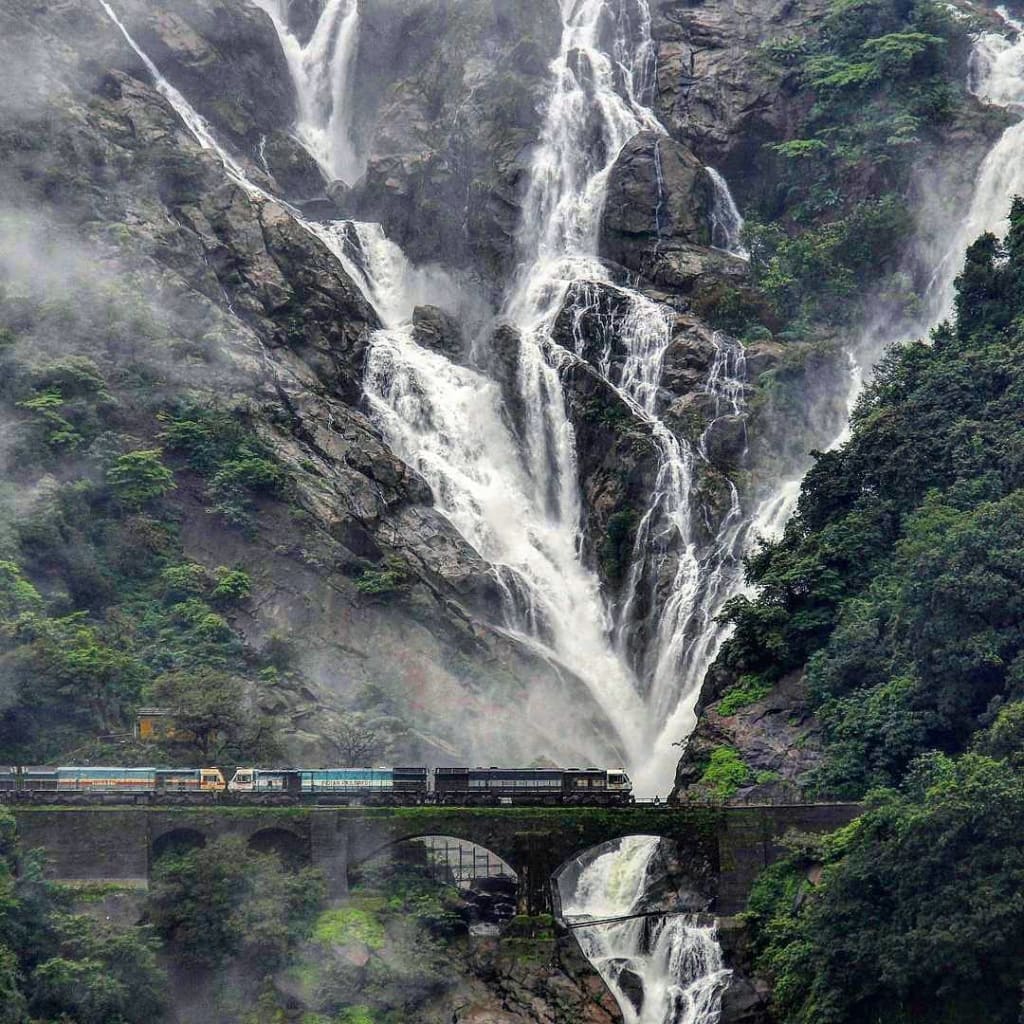
If there’s one adventure in India that blends nature, thrill, and awe in equal measure, it’s the Dudhsagar Waterfall Trek. Rising dramatically from the heart of the Western Ghats, this four-tiered cascade — whose name literally means “Sea of Milk” — tumbles down from a height of over 1,000 feet, roaring through mist and jungle.
The Dudhsagar Falls sit right on the Goa-Karnataka border, within the Bhagwan Mahavir Wildlife Sanctuary, and reaching them isn’t as simple as driving up to a viewpoint. You earn the sight — through a trail that takes you across dense forests, railway tracks, and gushing streams. It’s wild, raw, and exhilarating, making it one of India’s most sought-after monsoon treks.
How to Reach the Starting Point
The waterfall lies about 60 km from Panaji and 80 km from Belgaum, and there are multiple routes to reach it depending on how adventurous you want your journey to be.
Most trekkers begin from Kulem (Collem) in Goa or Castle Rock in Karnataka. Both routes follow the railway line that once took trains past the falls — a route made iconic by countless travel photos.
If you’re traveling from Goa, Kulem is the easiest starting point. You can reach it by train or taxi from Madgaon (Margao), which is well connected to major cities. From Kulem, the base of the trek lies about 12 km away, winding through thick forests and rivers that you’ll wade through during the monsoon.
For those who prefer an offbeat route, the Castle Rock trail (about 14 km one way) offers a longer but equally scenic trek, with tunnels, bridges, and lush greenery all along the way.
The Trek Experience: Through Forests, Streams, and Mist
The Dudhsagar trek isn’t just about the destination — it’s about the journey itself. Once you step onto the trail, civilization fades, replaced by the sound of cicadas, the rustle of leaves, and the distant rumble of the waterfall.
If you start from Kulem, the first few kilometers are a gentle walk along the tracks, surrounded by dense canopy and occasional glimpses of monkeys or peacocks. As you move deeper, small streams crisscross your path — some easy to skip across, others requiring you to get your feet wet. During monsoon, the water levels rise, making the trek both challenging and thrilling.
After 2–3 hours of hiking, the unmistakable thunder of Dudhsagar grows louder. When you finally reach the viewpoint, it’s pure magic — a wall of white cascading from the cliffs, surrounded by clouds and jungle. The spray from the falls cools your skin, and for a moment, all fatigue vanishes.
If you’re lucky, you might even spot a train cutting across the bridge in front of the waterfall — a sight so cinematic that it feels straight out of a postcard.
Many trekkers choose to rest near the falls, have a packed meal, and soak in the scenery before heading back. Remember, swimming here is not allowed due to strong currents, but the view itself is worth every step.
Best Time to Visit: When Nature is at Her Grandest
The best time to do the Dudhsagar trek is during the monsoon (June to September) or early post-monsoon (October to early November). This is when the waterfall is at its most powerful, and the surrounding forest bursts into lush greenery.
However, trekking during heavy rains can be challenging. The tracks get slippery, leeches appear, and visibility can drop quickly — but that’s also when the falls are their most majestic. If you prefer a safer and slightly easier experience, plan your trek between October and December, when the trail is dry yet the water still flows beautifully.
Avoid summer months (March–May), as the region gets hot and the waterfall reduces to a trickle.
Nearby Attractions: More Than Just a Waterfall
A Dudhsagar trek can easily be combined with other experiences in and around Goa and Karnataka. Near Kulem, you can visit the Tambdi Surla Mahadev Temple, a 12th-century structure hidden in the forest — one of the oldest temples in Goa.
If you have extra time, explore the Bhagwan Mahavir Wildlife Sanctuary, home to deer, gaur, leopards, and a wide variety of birds. Nature lovers will also enjoy nearby Devil’s Canyon or Tambdi Falls, both offering equally captivating landscapes with fewer crowds.
For those returning to Goa, relax afterward at Palolem Beach or Agonda Beach, where you can let your sore feet rest with your toes in the sand and a coconut in hand.
Travel Tips, Budgeting, and Safety
A Dudhsagar trek is moderately challenging — suitable for beginners with decent fitness levels. The key is to come prepared. Wear good trekking shoes with a strong grip, as the trail can be muddy and uneven. Carry light rain gear, waterproof bags, and plenty of water since shops are scarce once you’re inside the forest.
If you’re trekking during the monsoon, go in a small group or with an organized trek operator, as forest conditions can change quickly. The forest department sometimes restricts access during peak rains, so it’s best to check local updates or get a guide and permit through authorized operators at Kulem.
Budget-wise, you can complete the trek for around ₹1,000–₹2,000 per person if you’re doing it independently (including local transport and food). Organized tours cost around ₹2,500–₹4,000 per person, often including guides, permits, and safety gear.
And one golden rule: leave no trace. Dudhsagar is part of a fragile ecosystem — avoid littering, respect wildlife, and take back everything you bring.
Suggested Itinerary for the Dudhsagar Trek
Day 1:
Arrive in Goa or Belgaum, travel to Kulem, and settle in a homestay or guesthouse near the base village. Spend the evening exploring local areas or enjoying Goan cuisine.
Day 2:
Start your trek early (around 6–7 AM). Trek 11–12 km through the forest and reach the falls by mid-morning. Enjoy the view, rest, and return by afternoon. Evening at leisure in Kulem.
Day 3:
If time permits, visit Tambdi Surla Temple or Bhagwan Mahavir Sanctuary before heading back to your next destination.
Why the Dudhsagar Trek is a Journey You’ll Never Forget
There are waterfalls — and then there’s Dudhsagar. Its sheer power, scale, and beauty make it one of the most awe-inspiring natural wonders in India. But what truly makes the Dudhsagar trek special is the journey itself — the rain-soaked trails, the laughter of fellow trekkers, the thrill of spotting the waterfall for the first time through the mist.
It’s not a luxury getaway; it’s an experience that reconnects you with nature’s raw side — unpredictable, untamed, and unforgettable.
So if you’re looking for your next adventure, pack your backpack, lace up your boots, and head toward Goa’s wild heart. The roar of Dudhsagar Falls is calling — and once you hear it, you’ll never forget it.
About the Creator
Rohit SEN
Hey! Come along with me to explore beautiful places, learn about different cultures, and share my adventures. Let's Explore together! From a travel lover!
Worth the Wait: Puerto Viejo, Costa Rica
Beach bumming in a small Caribbean beach town sounded like a perfect way to end our 6-month trip through Mexico and Central America. Or so we thought. The foul, fishy stench of rotten seaweed hit our nostrils as we stepped from the cramped bus and looked out at a rather depressing, empty, and underwhelming black sand beach. It was pouring with rain, and we had to quickly fish out our ponchos. We thought, this couldn’t be it, could it?
By Sh*t Happens - Lost Girl Travel7 days ago in Wander
Why Wadduwa Beach Is Sri Lanka’s Must-Visit Serene Escape in 2026
Wadduwa Beach is a hidden treasure on the southwest coast of Sri Lanka. While many travellers rush to the busy shores of Galle or Bentota, Wadduwa offers a rare sense of peace. In 2026, it has become the go-to spot for those wanting to escape the noise and find a quiet slice of paradise.
By Daphne Olga3 days ago in Wander




Comments
There are no comments for this story
Be the first to respond and start the conversation.