
Air Travel Fails and Disabled Individuals
How Air Travel Fails to Support Disabled Individuals

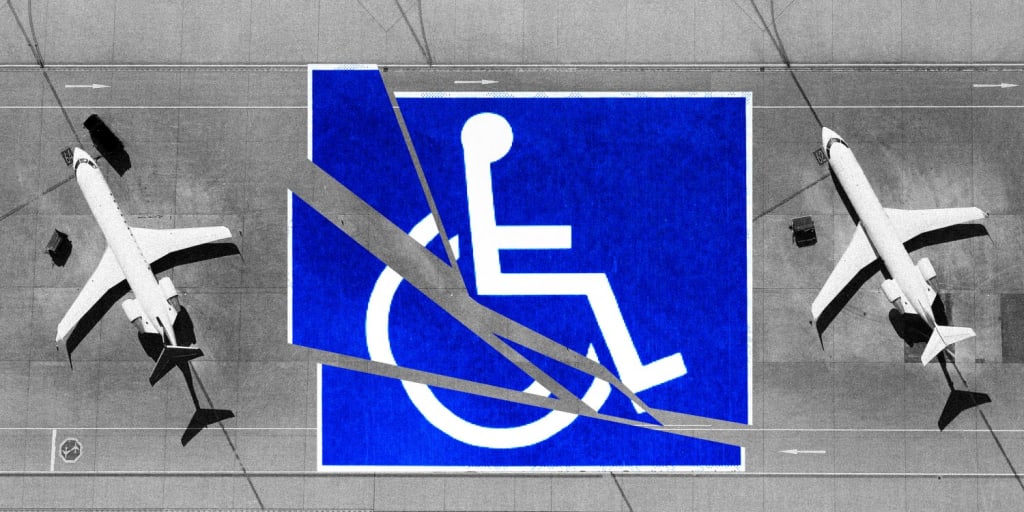
Air travel is often associated with freedom and connectivity, yet for many disabled individuals, it presents significant challenges and systemic failures. Despite advancements in accessibility, numerous barriers persist, making air travel a daunting experience for disabled passengers.
The Scope of the Issue
Globally, over 1.3 billion people live with some form of diagnosed disability. citeturn0search0 In the United States, approximately 25.5 million Americans have travel-limiting disabilities as of 2022. citeturn0search14 Despite these significant numbers, the airline industry continues to struggle with accommodating disabled passengers adequately.
Frequent Damage to Mobility Devices
One of the most pressing issues is the mishandling of wheelchairs and mobility aids. In 2022, U.S. airlines reported 11,389 mishandled wheelchairs and scooters, up from 7,239 the previous year—a 57% increase. citeturn0search7 This translates to an average of over 31 devices being damaged or lost daily. citeturn0search1 Such incidents severely impact the independence and mobility of disabled travelers, often leaving them stranded and dependent on others.
Discrimination and Boarding Challenges
Beyond equipment mishandling, disabled passengers frequently face discrimination and obstacles during boarding. In 2023, disability-related complaints increased by 28% compared to the previous year, totaling 2,685 grievances. citeturn0news18 These complaints often involve inadequate assistance, lack of proper training among airline staff, and outright denial of boarding due to arbitrary safety regulations.
Inaccessible In-Flight Facilities
The inaccessibility of aircraft lavatories remains a significant concern. Many airplanes, especially smaller ones, lack accessible restrooms, forcing disabled passengers to endure long flights without proper facilities. This not only compromises comfort but also poses serious health risks. Despite ongoing discussions, progress in this area has been slow, leaving many travelers without viable solutions.
Emotional and Physical Toll
The cumulative effect of these challenges takes a profound emotional and physical toll on disabled individuals. The anxiety of potential equipment damage, coupled with the fear of inadequate assistance, makes air travel a stressful endeavor. Moreover, the lack of accessibility and proper accommodations often leads to feelings of dehumanization and exclusion.
Steps Towards Improvement
Recognizing these systemic issues, several measures are essential to enhance air travel for disabled passengers:
Enhanced Training: Airline staff and security personnel must undergo comprehensive training to assist disabled passengers effectively and empathetically.
Improved Aircraft Design: Incorporating accessible lavatories and seating arrangements in aircraft design is crucial to accommodate the needs of all passengers.
Stricter Regulations and Accountability: Implementing stringent regulations to hold airlines accountable for mishandling mobility devices and ensuring timely assistance can drive systemic change.
Technological Innovations: Investing in technology to track and manage mobility devices can reduce mishandling incidents and provide real-time updates to passengers.
Conclusion
While air travel has become more inclusive over the years, significant gaps remain in accommodating disabled individuals. Addressing these challenges requires a concerted effort from airlines, regulatory bodies, and society at large to ensure that all passengers can travel with dignity, safety, and comfort.
Recent Developments in Air Travel Accessibility for Disabled Passengers
houstonchronicle.com
Airlines required to pay for loaner wheelchairs as part of new rule. What travelers can expect
81 days ago
nypost.com
American Airlines fined $50 million for not providing wheelchairs to disabled passengers
142 days ago
reuters.com
US airlines challenge Biden wheelchair passenger protection rule
About the Creator
Horace Was
Essay Writer, Aviation and Technology Expert
Keep reading
More stories from Horace Was and writers in Wander and other communities.
Glasgow's Airport Jobs Fair
Thousands at Glasgow's Airport Jobs Fair: What It Means for Kenya Glasgow Airport recently hosted a major jobs fair at The Holiday Inn near the airport, drawing over 2,400 jobseekers eager to explore opportunities in the aviation industry. The event showcased around 1,000 vacancies from more than 35 employers across the airport campus, highlighting the strong demand for aviation careers in Scotland. While this event is significant for jobseekers in the UK, it also carries implications for Kenya’s aviation sector and workforce.
By Horace Was12 months ago in Wander
Worth the Wait: Puerto Viejo, Costa Rica
Beach bumming in a small Caribbean beach town sounded like a perfect way to end our 6-month trip through Mexico and Central America. Or so we thought. The foul, fishy stench of rotten seaweed hit our nostrils as we stepped from the cramped bus and looked out at a rather depressing, empty, and underwhelming black sand beach. It was pouring with rain, and we had to quickly fish out our ponchos. We thought, this couldn’t be it, could it?
By Sh*t Happens - Lost Girl Travel5 days ago in Wander
A System That Isn’t Working Challenge Winners
Systems promise order. They organize behavior, distribute opportunity, and suggest that if everyone follows the rules, things will work. The entries in A System That Isn’t Working look closely at what happens when that promise begins to slip.
By Vocal Curation Teamabout 3 hours ago in Resources




Comments
There are no comments for this story
Be the first to respond and start the conversation.