
Africa’s Endless Struggle
A Continent in Chains

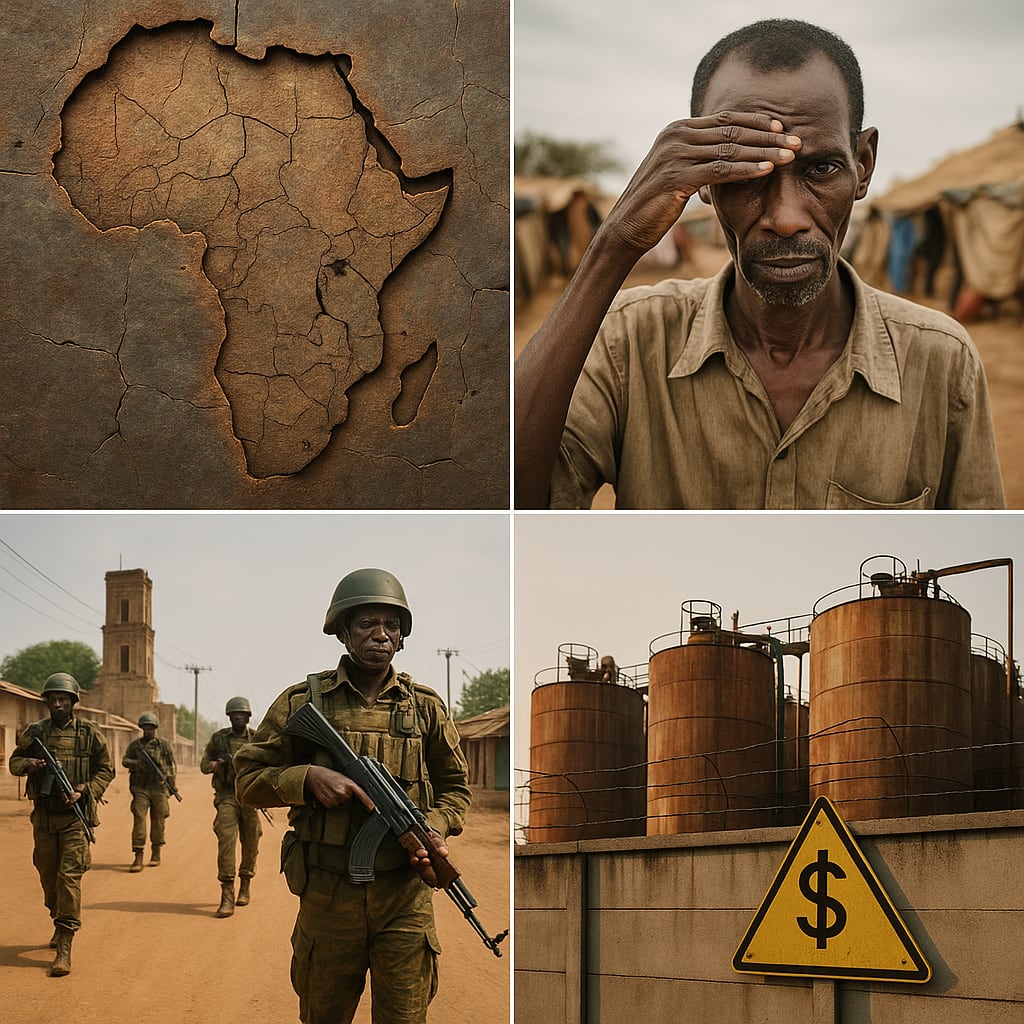
Why is Africa, the second-largest continent on Earth, still struggling with poverty, conflict, and underdevelopment despite its immense natural wealth? How can a land so rich in resources, culture, and history remain one of the most distressed regions in the world? These are not just rhetorical questions—they are at the heart of one of the most complex and painful global realities. While Africa has made undeniable progress in recent decades, deep-rooted structural issues continue to prevent it from reaching its full potential. Backed by official studies and global development reports, this article dives into the core reasons behind Africa’s ongoing struggle.
One of the most persistent roots of Africa’s distress lies in its colonial past. The Berlin Conference of 1884–85, where European powers carved up the continent without African input, led to artificial borders, tribal divisions, and exploitative economic structures. According to the United Nations Economic Commission for Africa (UNECA), many current conflicts can be traced back to these arbitrary boundaries, which forced rival ethnic groups into the same nations while splitting others apart. The long-term consequences of colonization—economic dependency, weak institutions, and disrupted societies—still shape the continent’s trajectory today.
Another major factor is the enduring problem of political instability and corruption. Transparency International’s 2023 Corruption Perceptions Index places many African countries at the bottom of the global ranking. Nations such as South Sudan, Somalia, and the Democratic Republic of the Congo continue to grapple with poor governance, where public resources are siphoned off for private gain and leaders prioritize personal power over national development. The World Bank highlights that corruption alone costs Africa over $140 billion annually—money that could otherwise fund schools, hospitals, and infrastructure.
But the issue doesn’t stop with internal governance. Africa is also a victim of global economic exploitation. The continent exports raw materials like gold, oil, cobalt, and rare earth minerals—but often imports finished goods at a premium. This creates a trade imbalance that hinders growth. According to the African Development Bank, more than 60% of Africa’s exports are raw, unprocessed goods, leaving the continent vulnerable to market fluctuations and dependent on foreign industries. Efforts like the African Continental Free Trade Area (AfCFTA) are steps in the right direction, aiming to foster intra-African trade and value addition, but implementation remains slow and uneven.
Additionally, foreign debt has become a modern form of economic control. Many African countries are trapped in cycles of borrowing to fund basic services. The International Monetary Fund (IMF) and World Bank, while providing vital financial support, have also been criticized for imposing structural adjustment programs that prioritize debt repayment over local development. As of 2023, more than 20 African countries are either in debt distress or at high risk, according to the IMF. This limits their ability to invest in health, education, and innovation.
Despite these challenges, Africa is not without hope. The continent has the youngest population in the world, growing tech hubs like Nairobi and Lagos, and rich cultural capital. But realizing its potential will require dismantling entrenched systems of inequality—both internal and external.
Why does Africa remain in distress? The answer lies in a complex web of history, corruption, global exploitation, and uneven development. These issues are not unsolvable, but they demand urgent and honest action—not only from African leaders but also from global powers who continue to benefit from the status quo.
Africa is not poor—it is poorly managed and unfairly treated. So, the real question is: will the world allow Africa to rise, or will it continue to benefit from its suffering? It’s time to look deeper, ask harder questions, and support solutions that come from within the continent rather than imposed from the outside.
About the Creator
Bubble Chill Media
Bubble Chill Media for all things digital, reading, board games, gaming, travel, art, and culture. Our articles share all our ideas, reflections, and creative experiences. Stay Chill in a connected world. We wish you all a good read.
Keep reading
More stories from Bubble Chill Media and writers in Wander and other communities.
Safest Paradises on Earth
Have you ever wondered where on Earth you could live or travel without constantly looking over your shoulder? In a world that often feels chaotic, some countries stand out as havens of peace, safety, and overall well-being. With the help of reliable international data, this list reveals the top 10 safest and most enjoyable countries to live in or explore, based on the latest 2024 Global Peace Index, quality of life surveys, and environmental indicators. Whether you’re a solo traveler, an expat dreaming of relocation, or just curious, these destinations offer more than security — they promise serenity, happiness, and beauty.
By Bubble Chill Media 8 months ago in Wander
Signs That You Grew Up in Texas
Greetings, Vocal creators! We're going to talk about arguably the best state in this country. I'm talking about Texas and it's also my home state, in case you didn't know. Nicknamed The Lone Star State, it has over 31 million people as of 2024 and is the second largest in the country. Last year, I wrote a story about the things that I loved about Arlington, which is where I'm originally from and where I grew up. Some notable people from the 28th state include Matthew McConaughey, Nolan Ryan, Matthew Stafford, and Willie Nelson. You can read the full story by clicking the link down below. The following entries are not in any particular order.
By Mark Wesley Pritchard 6 days ago in Wander


Comments
There are no comments for this story
Be the first to respond and start the conversation.