
A Chinese-American Fish out of Japanese Waters
Adventures in Tokyo and Kyoto

I met Yuki when I lived in the dorms while studying at the University of Washington. She is Japanese but had lived in Hong Kong as a teenager. I am ethnically Chinese, raised in America, but have some family in Hong Kong. We felt a shared connection. One of the first things that Yuki told me is that she assumed that I was Japanese!
After college, Yuki returned to Tokyo and I vowed to visit her in Japan. Some years later, my wish came true. I was excited to visit this modern but somewhat mysterious country, with ancient traditions, such as kaizen, the art of perfection. Kaisen can be seen in so many Japanese things, such as sushi, origami, and bonsai.
When I landed at the Tokyo airport, I was jet lagged and tired. I was absentmindedly walking when I heard a number of voices speaking excitedly at me in Japanese. I look up--and I have no idea what the Japanese airport employees are saying to me. I gathered from their gestures that I had veered off from the orderly single line into the airport and this, apparently, was a big no no. I said, "Sorry," in English and moved back into the line. The problem of being Asian in Asia is that it's difficult for others to tell what kind of Asian you are.
Yuki and her father came to pick me up from the airport. Yuk was just as I remembered her. She was full of warm smiles and curiosity about the world and was exceedingly polite and well mannered, even for the Japanese, who are polite and well mannered.
I had an amazing time in Japan--I enjoyed spending time with Yuki, eating the delicious food (especially the green tea soft-serve ice cream), visiting temples and tourist sites, and traveling in the clean and safe environment.
However, I felt a little stressed during my time there. Japan is a society full of rules and expectations. Since I was traveling with Yuki, the master of Japanese manners, and had an Asian face, many assumed I was also Japanese. Because of this, I could feel their disappointment when I failed to observe one of the many known but unspoken rules.
For example:
In Tokyo, Yuki and I had ventured out to the night market. It was an open market, full of vendors selling mostly food. I bought a box of individually-wrapped cookies. The vendor wrapped the box in beautiful wrapping paper, said something to me in Japanese, and bowed deeply as he presented the wrapped box to me. I froze for a moment, confused. I was the customer. Was I also supposed to bow? I still do not know to this day. I didn't bow, smiled nervously, accepted the box, and walked away quickly.
After Tokyo, Yuki and I took the bullet train to Kyoto. A young woman entered our train compartment, bowed, and presented the food she was selling in her box that hung down from her shoulder straps as she walked down the aisle. I was excited about this unexpected opportunity to eat and started to talk to Yuki about the logistics of ordering this food. At the sound of my voice, many heads raised up and stared. I then realized I was the only one speaking. Apparently, no one talks while on the train. Sadly, I watched the woman walk away with her food.
After a wonderful day in Kyoto visiting temples and having tea, we went to a restaurant for dinner. As is the custom, you are supposed to remove your shoes at the restaurant entrance. No problem, I think to myself, I'm Asian and I understand this custom. I confidently start to take off my shoes when I hear a startled exclamation from the waitress, followed by a stern look. Apparently, I had climbed one step too many and shoes needed to be removed on the lower floor. She was horrified I had stepped on the pristine upper floor with my shoes.
Although I suffered some embarrassment while in Japan, it's good to be a fish out of water sometimes. Traveling benefits the soul because being in new and uncomfortable situations makes you more empathetic. If you see someone struggling with something you think is straight forward or common sense, you may not really know who they are, where they are coming from, or what they have been through. Being a fish out of water should be a required human experience!
About the Creator
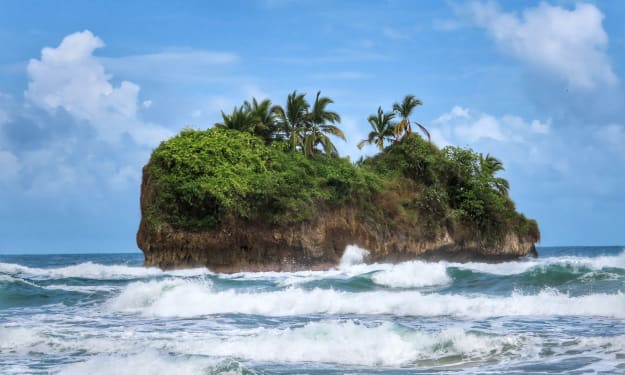
Worth the Wait: Puerto Viejo, Costa Rica
Beach bumming in a small Caribbean beach town sounded like a perfect way to end our 6-month trip through Mexico and Central America. Or so we thought. The foul, fishy stench of rotten seaweed hit our nostrils as we stepped from the cramped bus and looked out at a rather depressing, empty, and underwhelming black sand beach. It was pouring with rain, and we had to quickly fish out our ponchos. We thought, this couldn’t be it, could it?
By Sh*t Happens - Lost Girl Travel10 days ago in Wander
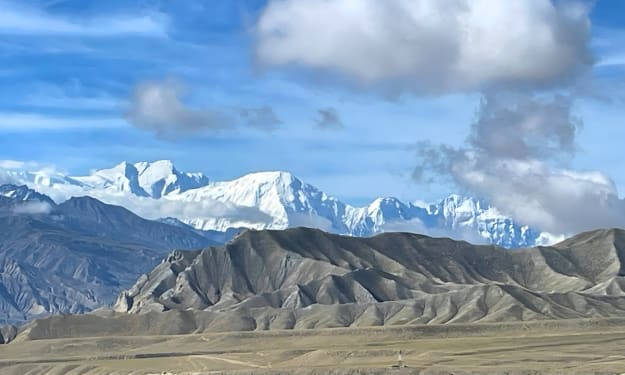
10 Irresistible Reasons to Visit Upper Mustang
Upper Mustang offers a trek that's in a class of its own. With its rugged landscapes, rich Tibetan Buddhist culture, and a history that's steeped in the mystique of the "Forbidden Kingdom," it's a destination that stands head and shoulders above the rest. Due to its restricted status, it's largely untainted, giving you a genuine Himalayan experience. You'll delve into ancient monasteries, hidden caves, and the walled city of Lo Manthang. The dry climate and rough terrain create a unique desert feel. If adventure is what you're after, here are ten compelling reasons to visit Upper Mustang.
By Kumar Lamaa day ago in Wander
A Transparent Look at Vocal Challenges and Top Stories
Almost three years ago, we shared a resource article that served as a place for people to suggest new challenge prompts. We thought it would be a good idea to refresh that thread, and take the opportunity to answer a few common questions about top stories, how challenges are judged and how submissions are reviewed.
By Vocal Curation Team4 days ago in Resources


Comments
There are no comments for this story
Be the first to respond and start the conversation.