
8 Reasons to Volunteer Abroad: Why Everyone Who Can, Should
Volunteering abroad for three months with International Citizen Service was life-changing. I wanted to share why I think volunteering abroad is such a valuable experience for all, and specifically why I loved the ICS experience.

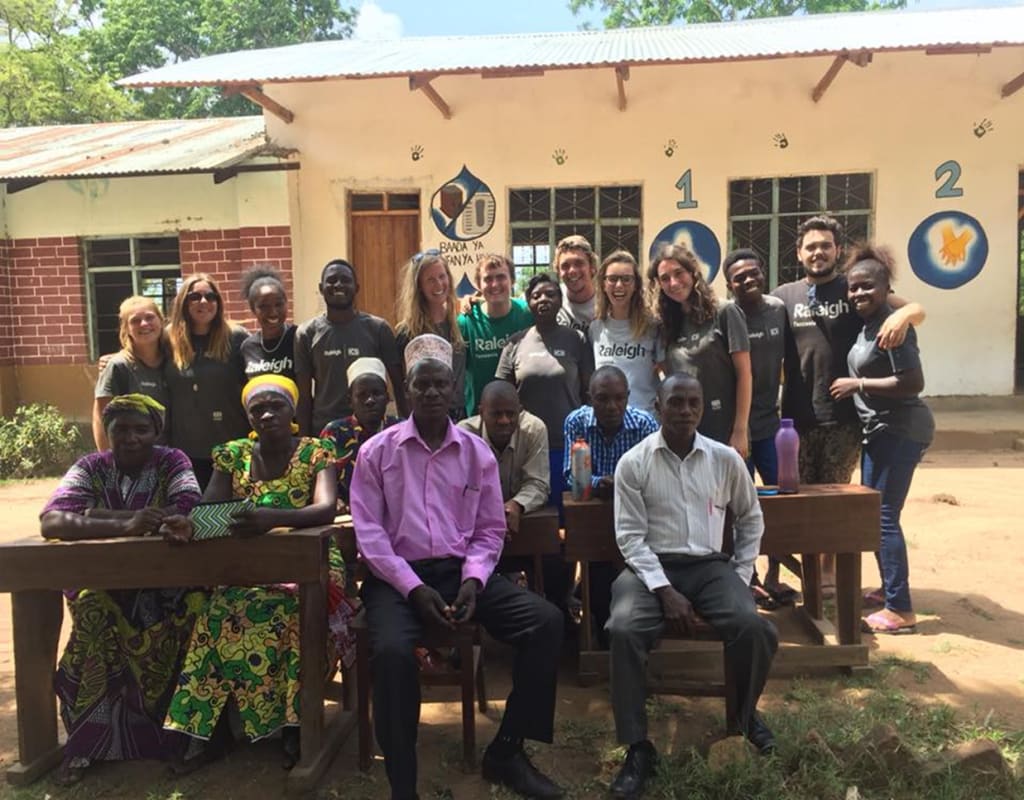
International citizen service (ICS) was founded by the UK Government to give young people who might not otherwise afford to, the chance to serve others around the world. The projects on the program were done so to reduce poverty and promote sustainable development in the host country. However, the program also aims to develop volunteers' personal and “hard” skills while providing them with a more rounded and immersive view of international development.
I took part in the program from September to December last year, volunteering on a Water, Sanitation, and Hygiene project with Raleigh International in Tanzania.
I'd always wanted to volunteer abroad. Global development issues interested me throughout school and I knew volunteering abroad would allow me to observe and further learn about sustainable solutions, understand fall-backs associated with different projects, and gain an appreciation for the amount of hard work and resources required to complete such projects.
Unfortunately, though, opportunities to volunteer abroad these days come at a high price. However, ICS is affordable and offers an authentic placement with clear goals and targets to reach while immersed in a new culture and your limits are pushed.
I hoped I would gain a lot from this placement, but I didn't imagine I would take this much away with me. It has been difficult to put into words why this placement was important to me. So I started writing, and grouped my ideas into eight different key reasons why I found the program so enriching both for myself and in the hope that you or someone you know might consider taking part.
1) Develop your skills.
Everyone comes to these programs with different skills and experiences, strengths, and weaknesses. One of the most important parts of the project is that you’ll get to build on these skills, challenge your weaknesses, and perhaps turn them into strengths.
It’s likely that you will teach lessons and organise events on the program. You might write reports and conduct short interviews too, alongside a whole host of other skills. Sometimes it may be daunting, and it might seem at times as though you’ve been thrown into the ocean while learning how to swim. But you will learn to swim, and instead of an ocean, it’ll be more like a swimming pool, with lifeguards (team-mates) and floating aids (resources) at an arm's reach, should you need them. By challenging yourself in a safe environment, you’re building your resilience to different situations and confidence to tackle problems head-on.
For me, the skill I developed most was my public speaking. Sometimes, when under pressure, my words don’t come out as clearly and precisely as I would like, and it sends me into a little panic. From teaching, I learned little ways to become more effective at remembering my next phrases and ensuring my words flowed more readily. These skills were put to the test during a speech I did at the Food Hygiene action day where I wrote and presented a speech about the importance of food safety. While it wasn’t perfect (what is?), I feel quite proud of what I achieved and where my public speaking skills came from just over a year ago.
All of these skills that will develop will undoubtably come in useful with jobs.
Additionally if you take part on a WASH programme, which involves a lot of construction, you might even learn some techniques needed to build small structures in your own garden!
2) Make true friendships with your team mates.
As you will be living and working with people in a close proximity, spending the best part of each day working and living alongside them, you will quickly find common ground, interests, and things to interact about. In a relatively short space of time, you will have worked together through both work-related and personal problems and celebrated the great successes of the project alongside them. Having shared such fulfilling moments along side your team, you will have built strong bonds that are difficult to break despite living either in different areas of the country or ever half-way across the world.
3) Become part of a family far from home.
Homestays are one of the best ways to become immersed in a culture. With immersion comes a more profound understanding of cultural norms and activities, as well as developing more meaningful bonds.
We were split into small groups of UK and Tanzanian volunteers and allocated a local family to stay with for the duration of the placement when we first arrived. I was mostly excited to meet my family, but a little apprehensive to be living with a family I’d not met before. The apprehension faded after a few days, because they were so welcoming and friendly. They loved learning little bits about my life at home, and I enjoyed learning about their lives and how they carried out their daily tasks.
I have so many wonderful memories with my homestay family. I loved them and I hope we will meet again.
4) A Rigorous Program
As I mentioned earlier, the program is a government initiative, funded by the Foreign Aid Budget. It is therefore crucial that the project goals are met, and that each team is best equipped to meet those goals.
You receive extensive training both at home and in country on facilitation skills, the programme's objectives, and gaining the most out the experience. A clear schedule is also set out with aims and objectives for each week and outcomes are evaluated through reports.
What if there are problems? There is an extensive support network and important procedures to follow to ensure the project operates safely and can be continually improved for future groups to come.
A final report is also written which includes all the important numbers- how many people the work influenced, attended your events, how many classes were taught etc. It was good to reflect back on these numbers at the end, and know that through good organisation and support the project was successful and you’d made a difference to so many people’s lives.
5) Increased Interest in Issues at Home
This part is what I find the hardest to explain to others and find a definite reason for why this changed. For myself, I think I'd always been conscious of different issues affecting my community and have tried to make conscious consumer decisions.
I think by working on a long-term project and helping so many members of your host community, you recognise how rewarding volunteering is. By showing how a group of people can make a difference in a community, it makes solving problems affecting people doable.
ICS puts this ignited energy into practice through the final part of the program: the action at home. For the action at home, you are required to organise an event to help raise awareness about issues big and small. Examples of what ICS Alumni have done can be seen here.
Of course, volunteering far into the future, big and small, is encouraged and hoped as an outcome of the project.
6) Learn a language.
While you won't become fluent in a language just from the program, I think it provides an opportunity to lay good foundations that can be built upon when you’re home. If you learn some grammar before you leave for your placement destination, you can start to practice while in the country and then continue to practice with in-country friends you'll have made.
7) Inclusive and Inexpensive
ICS is founded on a principle of inclusion—believing that anyone who wants to should able to take part in the program. Therefore, the program is mostly funded (90 percent) by the UK Government. The other ten percent, £800, comes from money you fundraise yourself to demonstrate your commitment to the project and help spread the word about ICS and the cause you are helping.
I think the sound of £800 sounds daunting to start with- but I was pleasantly surprised to see how many people supported me through donations and I got to do a bunch of different activities to raise the money. It should be said this £800 is for 12 weeks of volunteering inclusive of everything—including flights and vaccinations, I believe it is very affordable.
With the help of my family, we ran stalls at a couple of games at summer fayres, a car boot sale and I did a sponsored "Walk for Water."
There was plenty of support to help raise the money too. Most astonishingly, you were assigned a fundraising coordinator to direct questions to, get advice and run through your ideas with. There was also plenty of ideas and support available through the website and Facebook groups for ICS fundraising.
8) Empowering and Helping the Community
I would say this is the most rewarding part of the program, and the reason so many want to take part. Living with a family in a home, spending a reasonable amount of time in a reasonably small community means that you to become a part of that community. While this community is shaping your perception of life and international development and helping you build your confidence and skills, you are helping them find ways to improve their lives.
I remember the goose-pimples I had at the parent's meeting where they were engaged with finding solutions to the unclean drinking water at the school, and was thrilled to hear a resident learn things about food hygiene from a speech I'd written. Then, above all, I was humbled by the children at the school eager to take responsibility for the toilets we'd built to ensure they were well maintained for years to come.
My time is scattered frequently with small memories like these and I will treasure each one for as long I as I am.
In Summary...
These are just eight grouped-reasons that I’ve briefly explained here—each one has many memories attached. I’d need to write a book to detail each one to you!
While each participant will hold different elements from their ICS placement closer to their hearts than others, but most importantly, each participant will take and treasure these elements and what participants do take will change the way in which they live their life.
To anyone out there with the opportunity to partake in placements like ICS or similar, I’d say jump straight in. Embrace the opportunity. Be proactive to get the most out of it. It will change your perspective, fill your heart with happiness and fulfillment, and shape the path you take for the rest of your life.
About the Creator
Pokhara Adventure Activities for 2026
Pokhara Adventure Activities for 2026 Pokhara is Nepal's best place for adventure activities. It sits next to Phewa Lake with beautiful views of the Annapurna mountains. This makes it perfect for exciting things in the sky and on the ground. The popular activities include Paragliding, Bungee Jumping, Ultralight flight and Atv adventure. All these are safe, fun, and not too expensive. This article covers details about every activity including prices, places, how long they take, safety rules, and how to mix them for a great trip.
By Pranjal Pandey2 days ago in Wander
The Ultimate Guide to Free Flight Upgrades That Work
Getting stuck in a cramped middle seat while watching other passengers enjoy spacious first-class cabins doesn't have to be your reality. Free flight upgrades are more achievable than most travelers think, and this guide shows you exactly how to score them consistently.
By LaMarion Zieglera day ago in Wander



Comments
There are no comments for this story
Be the first to respond and start the conversation.