
What Does Breast Pain Really Mean? When to Worry and When Not To
Understanding Breast Pain: Common Causes, Warning Signs, and When to See a Doctor

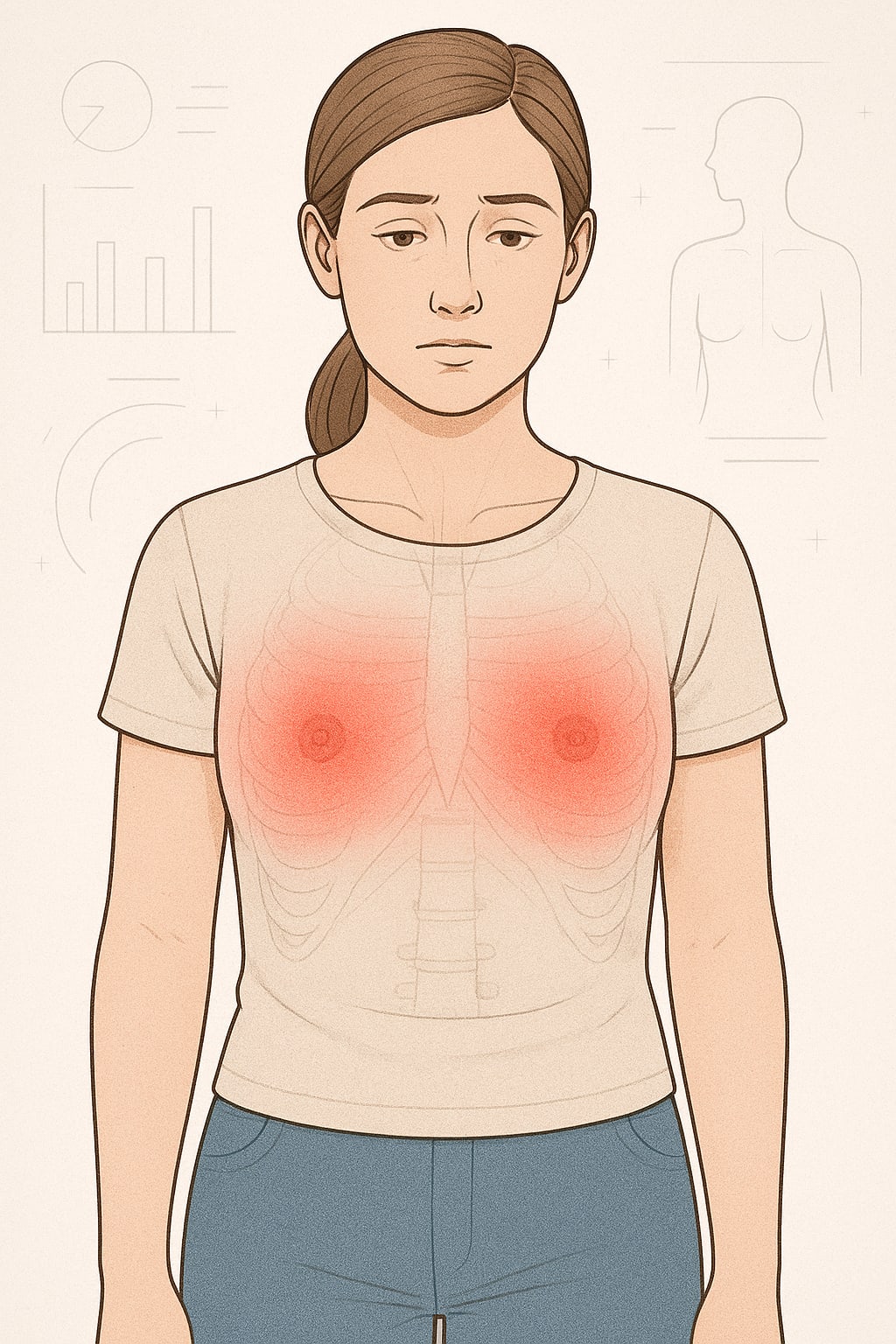
Breast pain is one of those symptoms that can trigger instant anxiety. For some, it’s a dull ache that comes and goes. For others, it’s a sharp, burning sensation that seems to appear out of nowhere. The mind often leaps to worst-case scenarios. But here’s the truth: most breast pain is not linked to breast cancer. Still, it’s not something to brush aside without understanding its cause.
The key is knowing when it’s normal—and when it might signal something more serious.
Understanding Breast Pain
The medical term for breast pain is mastalgia. It can affect one breast or both, and it may range from mild discomfort to severe tenderness that interferes with daily life. This pain can be cyclical—tied to hormonal changes—or non-cyclical, which means it has no clear relationship to your menstrual cycle.
Hormones play a huge role here. Estrogen and progesterone levels shift throughout the month, often causing breast tissue to swell or become more sensitive. This is why many women notice soreness in the days leading up to their period.
But not all pain is hormonal. Sometimes the cause is more mechanical—think ill-fitting bras, muscle strain, or even a bump to the chest that you barely remember. Occasionally, it’s a symptom of an infection, inflammation, or another medical condition.
Common Causes That Are Usually Harmless
1. Hormonal Fluctuations
Cyclical breast pain is often predictable. It begins a week or so before menstruation and fades once bleeding starts. The discomfort can be bilateral and diffuse, meaning it affects multiple areas rather than a single spot.
2. Cysts and Fibrocystic Changes
Lumpy, rope-like breast tissue is common, especially between the ages of 30 and 50. These changes can cause tenderness or localized pain. Cysts—fluid-filled sacs—may also cause sudden soreness.
3. Breast Injury or Muscle Strain
Even minor trauma, such as bumping into something or sleeping in an awkward position, can irritate the tissue or underlying muscles. This pain might last several days.
4. Poor Support
A bra that doesn’t fit well can strain ligaments and tissue, especially during exercise. Over time, this can lead to ongoing soreness.
5. Medications
Certain drugs, including some antidepressants and hormonal treatments, can trigger breast discomfort as a side effect.
When Breast Pain Might Be a Warning Sign
While most breast pain is not linked to cancer, there are cases where it deserves prompt medical attention. Pain that is persistent, localized, and associated with other changes in the breast should be taken seriously.
Red flags include:
- A hard lump that feels fixed rather than movable
- Skin changes, such as dimpling or redness
- Nipple discharge, especially if it’s bloody
- Unexplained swelling in one breast
- Pain that doesn’t improve over weeks
If you notice these signs, a healthcare professional should evaluate you. Early detection matters when it comes to breast cancer and other serious conditions.
The Role of Infections and Inflammation
Breast infections, or mastitis, often occur in breastfeeding women but can affect anyone. The pain is usually intense, and the area may feel hot or look red. Fever can develop. In rare cases, an abscess—a pocket of pus—may form, requiring drainage.
Inflammatory breast cancer is another rare but aggressive condition. It often presents with redness, swelling, warmth, and thickened skin, sometimes without a noticeable lump. Because this form progresses quickly, any suspicion warrants urgent medical assessment.
How to Relieve Benign Breast Pain
If your pain is not linked to a dangerous condition, several strategies can help:
- Supportive bras: Wear one that fits properly, especially during physical activity.
- Warm or cold compresses: Applying heat can relax muscles, while cold packs reduce swelling.
- Over-the-counter pain relief: Nonsteroidal anti-inflammatory drugs (NSAIDs) can ease discomfort.
- Dietary adjustments: Some women report improvement by reducing caffeine or salt intake, although evidence is mixed.
- Track your cycle: Knowing when pain tends to appear can help you prepare and reduce anxiety.
Why You Shouldn’t Ignore Changes
Even if breast pain is common for you, any sudden change in its pattern deserves attention. New pain in a specific area, changes in skin texture, or nipple alterations should be checked promptly. It’s not about living in fear—it’s about being aware of your baseline so you can spot anything unusual.
The Bottom Line
Breast pain can be unsettling, but in most cases, it’s not a sign of cancer. Hormones, cysts, injuries, or even an unsupportive bra are often the culprits. Still, persistent, localized pain—especially with other changes—should not be ignored.
Your breasts are unique to you. Pay attention to them. Learn their patterns, respect their signals, and don’t hesitate to seek medical advice when something feels off. Awareness, not panic, is your best tool.
About the Creator
Richard Bailey
I am currently working on expanding my writing topics and exploring different areas and topics of writing. I have a personal history with a very severe form of treatment-resistant major depressive disorder.
Keep reading
More stories from Richard Bailey and writers in Viva and other communities.
UTIs in Women: Why They Keep Coming Back and How to Stop Them
For many women, urinary tract infections (UTIs) are more than just a one-time problem. They become a frustrating cycle — a few days of relief, followed by burning, urgency, and discomfort all over again. This revolving door of symptoms can feel endless, leading not only to physical discomfort but also to emotional exhaustion.
By Richard Bailey7 months ago in Viva
Why Every Woman Should Buy Her Own Diamond: The New Era of Independent Sparkle
For a long time, the narrative surrounding diamond rings for women was strictly linear. It began with a romantic proposal, followed by a wedding, and perhaps an anniversary a few years down the line. The diamond was always a gift—a token of someone else’s affection, a symbol of a promise made by another. But as we navigate 2026, that old-fashioned script is being rewritten.
By Mohd Kaish7 days ago in Viva


Comments
There are no comments for this story
Be the first to respond and start the conversation.