
The Illusion of Choice
Does Free Will Truly Exist?

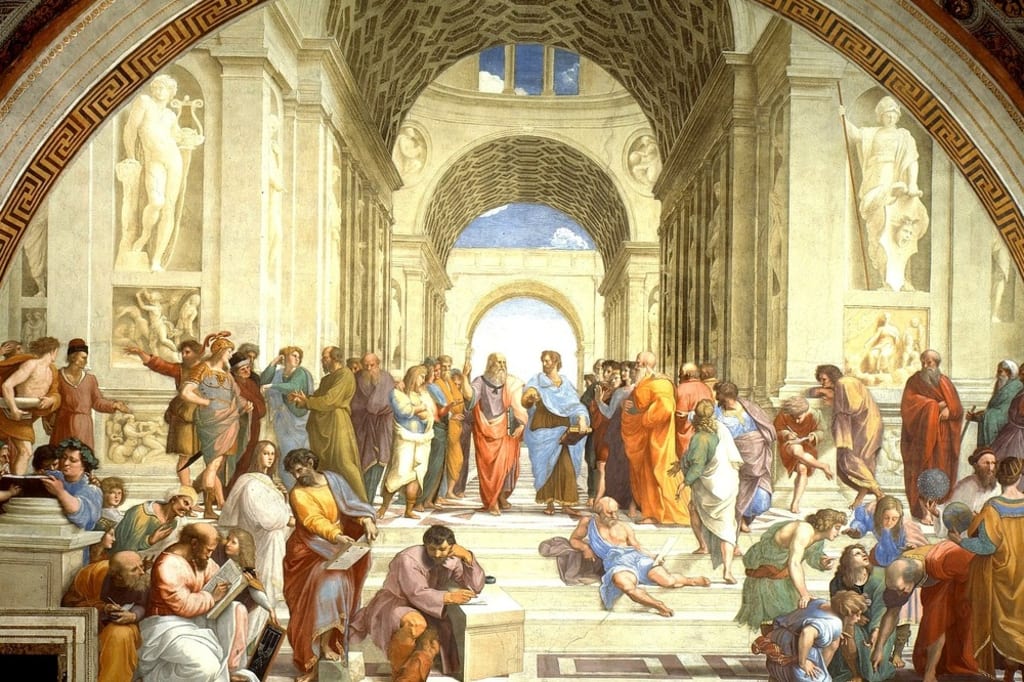
Is free will a myth in today’s society? Science says it might be.
Have you ever paused to wonder if your choices are truly your own? In a world that glorifies independence and personal responsibility, the idea of free will seems almost sacred. Yet, growing scientific evidence suggests that much of what we consider conscious decision-making may be nothing more than a beautiful illusion. As we move deeper into the complexities of modern life, it’s time to ask: Is free will real, or have we been conditioned to believe in a fantasy?
Our society is built on the belief that every individual can choose their own path. Capitalism thrives on the narrative that success is a direct result of personal effort. But when we dive into the world of neuroscience, psychology, and even political history, a different, more unsettling story unfolds. What if, from the moment we are born, the framework of our lives is largely set — a dance choreographed by forces beyond our conscious control?
The first cracks in the myth of free will appear in neuroscience. Studies conducted with advanced brain imaging show that our brains make decisions milliseconds before we are even aware of them. In one famous experiment, participants were asked to press a button whenever they chose. Monitors showed that the brain “decided” up to seven seconds before the participant felt they had made a choice. If our brains act before our conscious minds engage, what does that say about the reality of free will?
This scientific insight connects to the powerful social structures that shape our lives. Socioeconomic background, education, access to healthcare, and even geographical location heavily influence the choices we think we make freely. A child born into poverty does not have the same range of possibilities as a child born into privilege, no matter how strong their will might be. The supposed freedom to succeed, then, is less about individual grit and more about systemic factors laid down long before personal effort comes into play.
Moreover, capitalism itself depends on the perpetuation of the free will myth. By framing success and failure as personal choices, it avoids confronting systemic inequality. The narrative is seductive: you are in control; you are free; your fate is in your hands. It sells empowerment while masking the deeper currents that steer our lives. This illusion is not just a convenient byproduct — it’s a carefully maintained foundation of modern economic and political systems.
Science increasingly supports the idea that human behavior is a tapestry woven from genetics, environment, and unconscious processing. The belief that we are autonomous beings making rational decisions is comforting but ultimately misleading. It allows societies to reward the “winners” and blame the “losers,” without addressing the structures that preordain these outcomes.
Yet, acknowledging the limitations of free will does not mean surrendering to hopelessness. Instead, it invites a deeper compassion for ourselves and others. Recognizing that we are products of intricate systems and hidden forces can foster empathy, drive systemic change, and encourage policies that focus not just on individual responsibility but on collective well-being.
So where does that leave us? Are we puppets, dancing to tunes we cannot hear, or do we still have slivers of agency that allow us to rewrite our stories? The answer lies somewhere in between. While the grand narratives of our lives may be shaped by forces outside our control, the small, everyday choices — to be kind, to stay curious, to question the status quo — remain ours to make. In those tiny rebellions, perhaps, the spirit of free will still flickers.
As we stand at the crossroads of science and philosophy, it becomes clear: free will may not be the absolute, inviolable force we were taught to believe in. But understanding its limits can lead us to a deeper truth — that freedom is not given; it is constantly forged in the face of unseen forces.
Do you believe your choices are truly yours? Or are we all just following a script written before we could even read it?
About the Creator
Bubble Chill Media
Bubble Chill Media for all things digital, reading, board games, gaming, travel, art, and culture. Our articles share all our ideas, reflections, and creative experiences. Stay Chill in a connected world. We wish you all a good read.
Keep reading
More stories from Bubble Chill Media and writers in Viva and other communities.
Run 20 Minutes a Day, Change Your Life
Discover the benefits of running just 20 minutes daily Can 20 minutes of jogging really transform your body, your mind, and your life? Science says yes—and the results are more powerful than you might think. Running, even in small daily doses, triggers a chain reaction of physical, mental, and emotional benefits. But it’s not just about burning calories. It’s about gaining energy, clarity, confidence—and even joy. The keyword? Running. It’s the simplest, most accessible superpower we have. But it must be done wisely. Let’s dive into what happens when you make running a daily habit—and what to avoid to make the most of it.
By Bubble Chill Media 11 months ago in Longevity
Tatt~Master
— Assembly Line Tatt Machine ~ Impressions to Impress — As I begin to understand more about the Tattoo Phenomenon. I've written silly, yet verbatim, dating site anecdotes in 'Frazzled.' So let me ask you: Would you be More attracted to someone slathered with tattoos, or Less?
By Jay Kantor5 days ago in Humor



Comments
There are no comments for this story
Be the first to respond and start the conversation.