

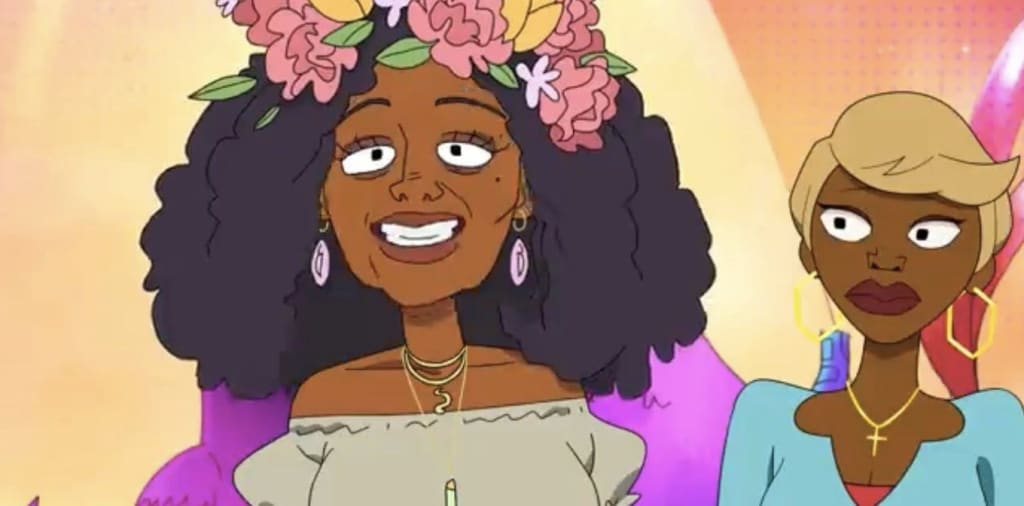
Netflix took a chance to create a spin-off of 1974's beloved sitcom, Good Times. This 2024 series created by Stephen Curry, Seth MacFarlane and Norman Lear is called the same name or "Good Times: Black Again" according to the title sequence. Instead of James, Florida, James Junior, Thelma, and Michael, we get Reggie, Beverly, Junior, Grey, and Dalvin. Reggie is James Evans's grandson and the series explores the Evans descendants through a modern adult comedy series. There are 10 episodes and in the 3rd episode called "Grey's Anatomy", they explore feminism. In this 3rd episode, Grey (Marsai Martin)gets her first period and it's a big deal. Her mother, Beverly(Yvette Nicole Brown) is anxious about what this means in Grey's life as this marks the beginning of her adulthood. She informs Grey of what she can expect now while making her opinion of tampons known. Grey mentions the white girls in commercials saying it makes you feel like you don't have a period but Beverly believes tampons are a gateway to other activities and exploration. She wants to prevent Grey from sexual curiosity at a young age as her mother did for her.
Grey's father, Reggie (J.B.Smoove) is also worried as he leaves with hopes of returning once it's over. He stops his plan to rest at home and leaves with Junior (Jay Pharaoh) once he hears about Grey getting her period. He became avoidant and afraid of her development which affirms several notions concerning the menstrual cycle. Many fear the discussion of blood, hormonal change, the cycle details, and the symptoms or lack thereof. This anxiety is stemmed from different factors for different people evident in Beverly's phobia being centered around fertility and early pregnancies. After Beverly's feminine napkin doesn't work for Grey and exposes her in class, she heads to her high school. She gets Grey from the nurse's office while trying to hide the fact that her period is causing the bleeding before they head to the restroom to freshen up. In there, Beverly continues to prevent her from using tampons despite the absence of sanitary napkins. She tells her that using a tampon would lead to her sticking other things up and she would "end up giving birth in a public bathroom" with her life over soon similar to the lady they encounter there.
Beverly tries to teach her how to make a makeshift napkin but after Grey takes the tampon, they are transported to "the whore bondage of tampon spirits." They meet Princess Hoo-Ha (Cree Summer) and she informs them that they're in a uterus. The first mention of the iconic "dy-no-mite" is made by her after Grey asks her for clarification of being in a woman's womb and she says, "You heard me right. Isn't that just dy-no-mite?" She encourages them to embrace the natural and normal power of the "skeet oven" especially since their arrival killed Shonda Shame. Shonda Shame is a personification of the internalized shame utilized for several reasons preventing freedom and appreciation. They explore while sitting on a tampon going down the monthly red flow. They learn about the internal parts of women with a positive perspective but Beverly calls it the "WAP agenda" The personification of patriarchy (Michael McDonald) is present and upset about the death of Shonda Shame and a search for the murderers begins. When Beverly asks why the patriarchy is in a woman's womb Princess Hoo-Ha says, "It's how they keep the women down". She makes the importance of shame known adding that, "without shame as a weapon, they just a bunch old-ass white clowns."
This aligns with the belief that whiteness and patriarchy work together to keep the women (especially BIPOC women)in order. The patriarchal system utilizes race and race utilizes the patriarchal system in various situations. However, similar to how feminism exists as a whole with it's racial sub-sections to be acknowledged or utilized when needed, so does patriarchy. The "white clowns" abuse their power in several forms including shame tactics to ensure that women are not burdensome obstacles in every facet. As they journey back home, Gray and Beverly clash again. Grey decides to go down the tampon trail instead of the maxi pad one. There she has a desire to be a real woman and is assisted by the sex workers to achieve their perception of a real woman. Beverly realized she was trying to shame Grey into avoiding being how she was but Princess Hoo-Ha allowed her to realize that she was shamed and ended up a "fast-ass girl". Beverly goes to get Grey and ends the generational trauma by trusting Grey saying she would support her no matter what. They exit that world and Grey is empowered to embrace her period spreading it everywhere, literally.
At home, Reggie asks if Grey is "still leaking" and we see the effect of empowerment on the ladies as they caution him while defending themselves. The episode ends with them happy about their adventure. While there are good moments, the 2024 Good Times series often falls flat due to the absurdity of it despite the involvement of Norman Lear, the creator of the 1974 show. In a world of drug-dealing babies, a superhero mutant chicken called "The Mother Clucker", "Allison Whiteman" or All White man, lactation GPS, melted faces, sex workers down the tampon lane, the weave ladder, traumatized PTSD dog, the fight and murder of a rat called "hoodrat", his short temper and no marketable skills landing him a job as a police officer, "the black particle gene" to understand the resilience of black people, and more happen to justify their "Absurd" and "Provocative" description.
In the 1st episode, Reggie sings the original Good Times theme song which is great recognition but in that same episode, they reference Janet Jackson through the 2004 Super Bowl incident. Janet Jackson played Penny in the 1974 Good Times and they included her in this version in poor taste through a controversial moment. There is a surplus of drugs included in this series which contradicts the treatment of the topic of drugs in 1974's Good Times. I have not watched Good Times in a long time but I remember the only time drugs were shown was in the episode with Debbie Allen. She was an addict who ran away with J.J. but it was handled as a serious issue with a statement before the episode began and the acting was wonderful despite it apparently being her first time acting. A difference between the times and the medium of airing is a point but in this, Dalvin (Gerald "Slink" Johnson)is a drug-dealing baby and takes "a key bump of formula". It was honestly entertaining how ridiculous the series could get as they embraced that they could not be as great as the Evans of old because "the truth is we're the Evans of New." There are several notable black actors and personalities including BernNadette Stanis and Jimmie Walker who played Thelma and JJ in the original show. This series is similar to 2023's Velma series. Despite their acknowledgement of being different from the original, both utilize the premise of a beloved character or show with a spin of exaggeration, therefore, damning the adaptation and their depictions of information and culture.
If you enjoyed this, for more of my articles:
- you can check through the Geeks category on my profile
- subscribe to my account and/or subscribe to my mailing list
- visit my linktree and/or my Twitter account
About the Creator
'Vive Akugha
I write on various things: social issues, well-being, cinema and out of curiosity. More!
Keep reading
More stories from 'Vive Akugha and writers in Viva and other communities.
The feminist force in 'Òlòtūré'
Òlòtūré is a 2019 movie following the life of Òlòtūré who goes by Ehi to work. Òlòtūré (Sharon Ooja) is a journalist in an undercover role as a sex worker to garner information about the tragic and abusive industry of sexual exploitation in Nigeria. She goes through various trials and tribulations as Ehi while trying to maneuver around several problems. Ehi lives in Sandra's (Omawumi Megbele) house with other sex workers but is a friend and roommate to Linda (Omowunmi Dada). She learns of an opportunity to go to Europe from Linda. Ehi expresses her distress after running barefoot from a customer. She hopes the men would be different in Europe but after Linda negates that possibility, she focuses on the monetary value. Linda admits she was told about this person by a friend as she was in Benin City. She left for Lagos in hopes of her and her sister travelling to gain betterment for their family once in Europe. Linda agrees to help her despite the secretive nature of the lady.
By 'Vive Akugha2 years ago in Viva
Get Rid of Dark Pimple Marks
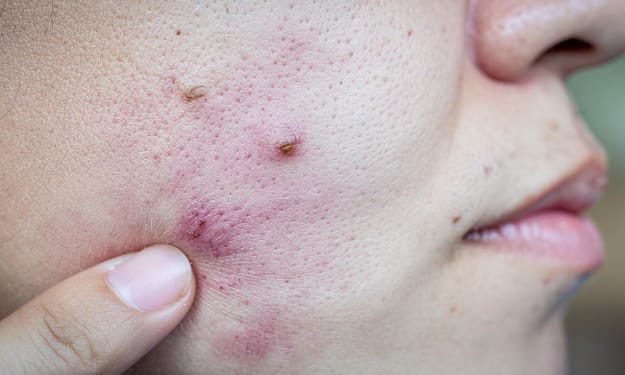
Dark pimple marks, often called post-acne marks, are one of the most common skin concerns today. Even after acne heals, these marks can remain on the skin for weeks or even months, making the complexion appear uneven. Many people struggle with these stubborn spots, especially those with oily or sensitive skin.
By Stories Todayabout an hour ago in Viva
Why Staying Near Victoria Falls Transforms Your Safari Experience
A safari is not only about the animals spotted on a drive. It is shaped by where the day begins, how it unfolds, and how it ends. Near Victoria Falls, the experience feels calmer, richer, and far more personal. Staying close changes the pace, the mood, and the way the wild is remembered.
By Claudia Fennel3 days ago in Viva
A Transparent Look at Vocal Challenges and Top Stories
Almost three years ago, we shared a resource article that served as a place for people to suggest new challenge prompts. We thought it would be a good idea to refresh that thread, and take the opportunity to answer a few common questions about top stories, how challenges are judged and how submissions are reviewed.
By Vocal Curation Team4 days ago in Resources



Comments
There are no comments for this story
Be the first to respond and start the conversation.