
Picasso - An Artistic Genius or a Bullying, Misogynistic Womaniser?
Separating the art from the artist


Pablo Picasso was inarguably the most prolific painter of the 20th century. A pioneer of the avant-garde movement and whose artistic genius is unparalleled. But do you know that his tumultuous relationships were expressed in his art pieces in the form of misogyny, prejudice, and male chauvinism?
The art patrons have consistently disregarded his ravaged relationships with his wives and partners in favor of keeping the "art separate from an artist," despite the fact that Picasso himself credited the extensive oeuvre to the different women in his life.
In this article, we would briefly discuss his personal relationships and his paintings that depicted sexism and misogyny.
Picasso's personal relationships
Picasso defined the erotic and emotional aspects of his creative expression in the course of his career with the seven women in his life - Fernande Olivier, Eva Gouel, Olga Khokhlova, Marie-Thérèse Walter, Dora Maar, Françoise Gilot, and Jacqueline Roque.
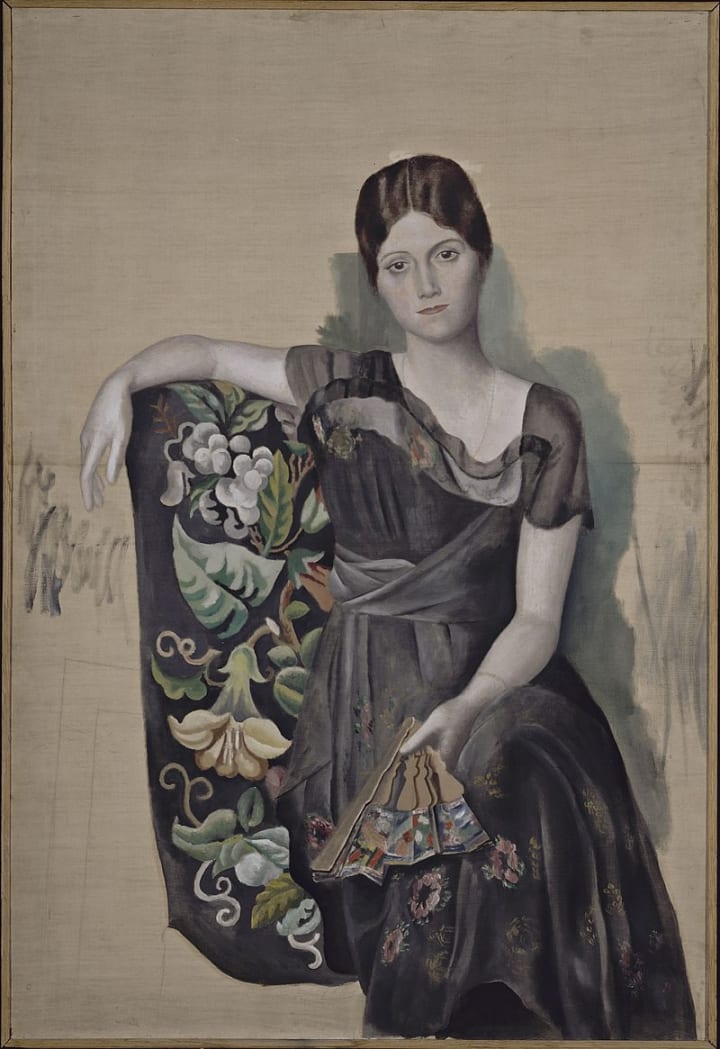
During World War 1, from 1914 to 1918, Picasso worked in Rome where he met his first wife Olga Khokhlova, a Russian ballet dancer. Olga dominated Picasso's composition from 1917 through the 1920s. During the beginning of their relationship, in 1918, Picasso painted a graceful and colored portrait of Olga - Olga in an Armchair
But after their son, Paulo, was born, the relationship deteriorated and Picasso started a new relationship with a young girl, Marie-Thérèse Walter, who was 17 years old.
Walter became his new muse and all his compositions depicted expressions of 'sexual joy and surrealism'. The abstract fantasies and rearranging her body according to his desire. In 1934, he painted Nude in a Garden which depicted surrealism and eroticism.
As he said, "Why not the sex organs in place of the eyes, and the eyes between the legs?" This leaves a result of hybrid and often playfully erotic creatures.
With Walter, he had a daughter Maya who was seen in his paintings too.

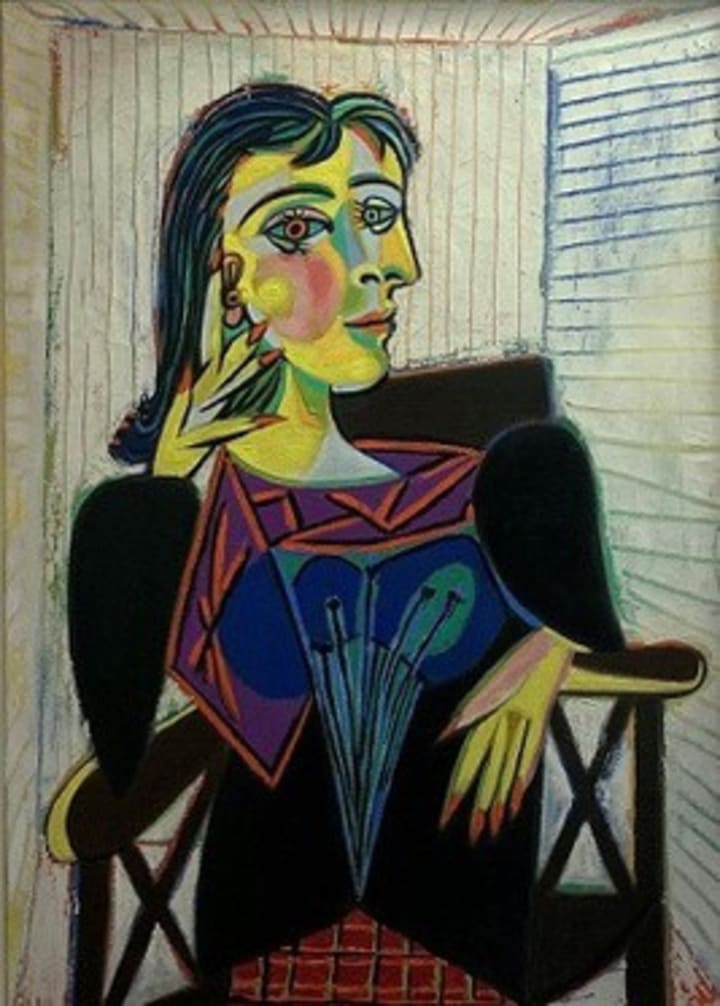
The "Marie-Thérèse Walter era" ended when he met the French painter and poet Dora Maar. Unlike portraits of Walter, the paintings of Dora were more intense and turbulent. The reason could be that Picasso did not wholly end his relationship with Walter and started dating Dora. The Portrait of Dora Maar was painted in 1937, one year after they met and the relation lasted for almost nine years.
With the possible exception of Françoise Gilot (who had the courage to disaccord with Picasso's mindset and lived an independent life), Picasso had a miserable relationship with every other woman. Both Marie-Thérèse Walter and Jacqueline Roque (his last muse and second wife) committed suicide on account of Picasso and when the artist's grandson Pablito was turned away at his grandfather's funeral by Jacqueline Roque, he too, ended his own life.
Picasso's misogynistic depiction of women
Picasso followed a trend in his relationships and that was reflected in his art.
During the beginning of any relationship, he depicted graceful and intimate portraits which were followed by melancholic canvases in the end.
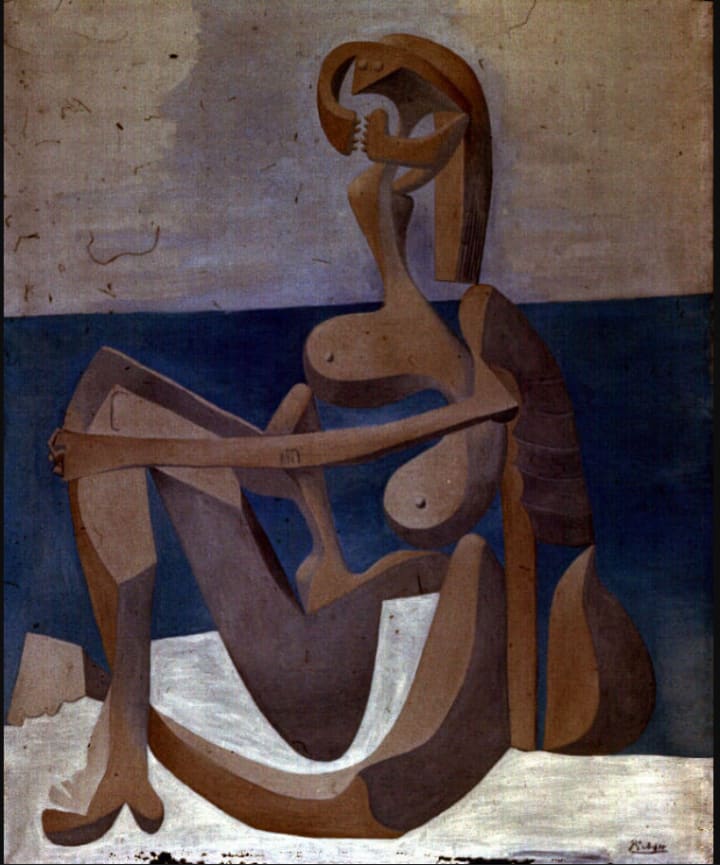
When Picasso separated from his first wife, Olga, he created Seated Bather in 1930. From a bright portrait, Olga had a skull-like head with jaws and the image seemed to emerge from mechanical and animal forms. Picasso also referred to Olga as "the castrator".
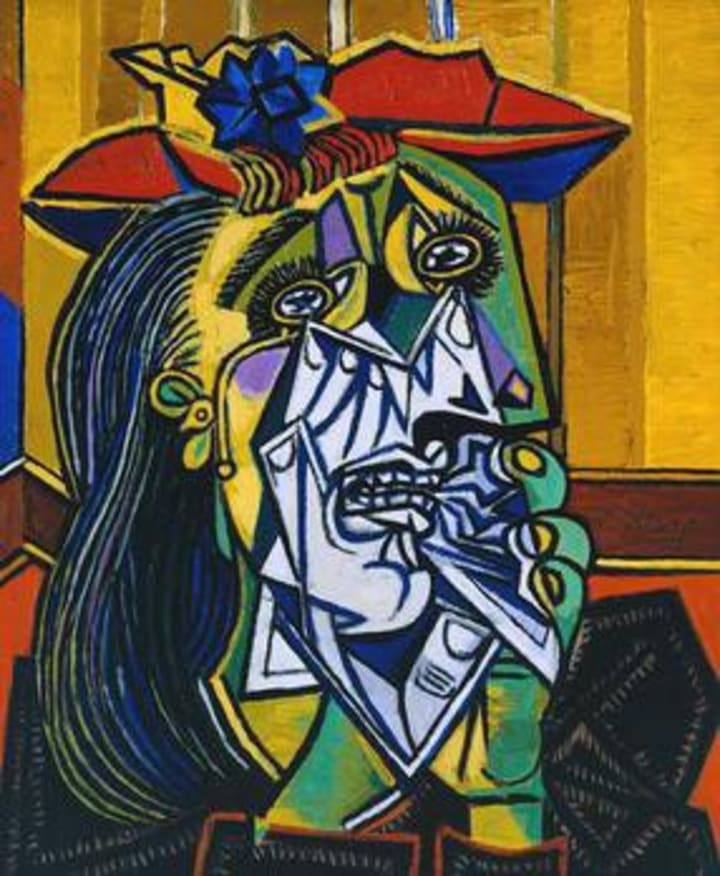
Similarly, Picasso created The Weeping Woman in surrealist style, probably around the time when Dora and his relationship became unpleasant. The contorted features of Dora with acidic colors were portrayed that represented her anguish.
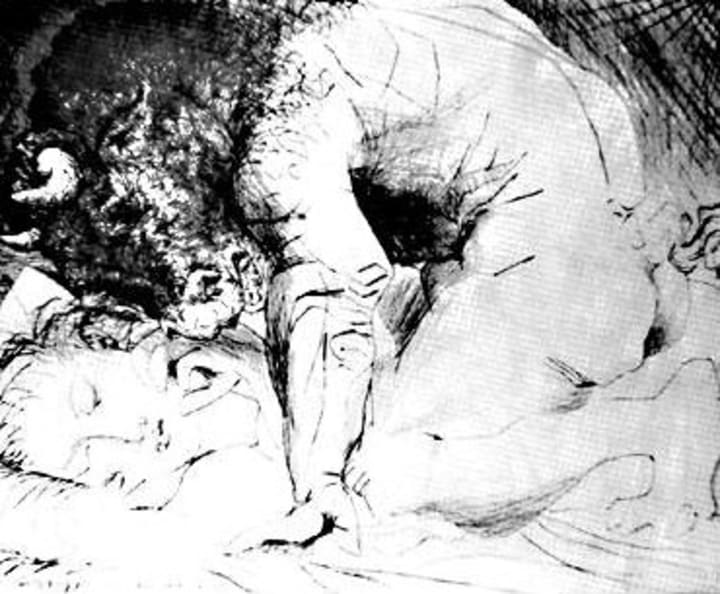
One of his strangest creations was Minotaur Caressing a Sleeping Woman. He apparently depicted the mythological creature (with half bull-half man). It showed his "animalistic urges" and symbolized the intense and carnal nature of love and sex.
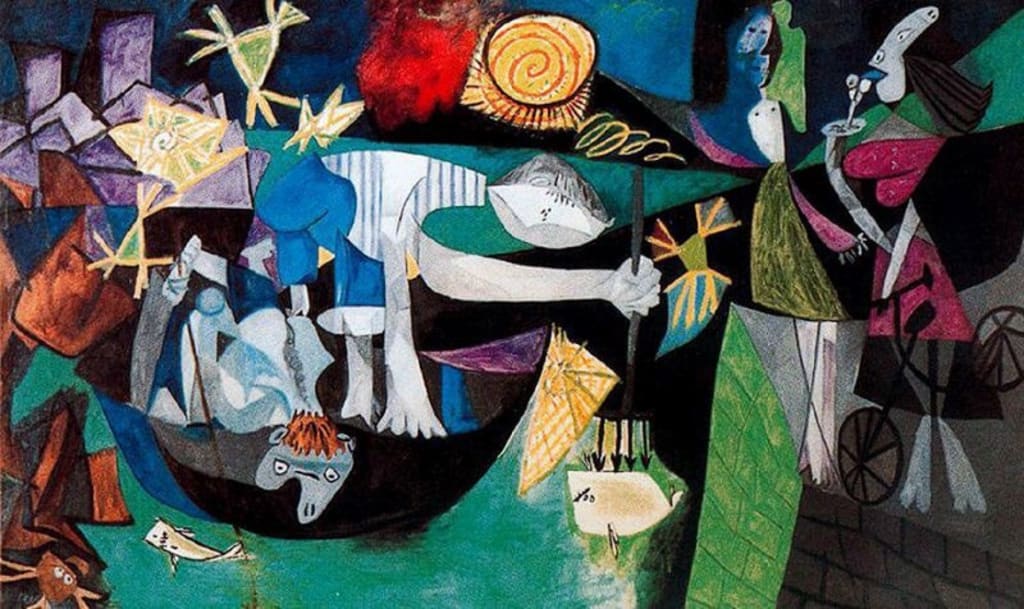
Another painting that represented the objectification of women was Night Fishing at Antibes. No doubt that it was a masterpiece but this painting showed two women who likely represent Picasso's wife Olga and one of his partners (Walter or Dora Maar). The one is shown spreading her arm in a graceful pose while the other is shown with a phallic head and pronounced breasts that certainly represent a misogynistic distinction between the two.
Last Thoughts
Françoise Gilot was the only woman in Picasso's life who could not tolerate his mindset and mistreatment. She mentioned that Picasso believed that there were two kinds of women, "goddesses and doormats".
In a memoir written by Picasso's granddaughter, Marina Picasso details the way in which Picasso bled the women in his life dry: "He submitted them to his animal sexuality, tamed them, bewitched them, ingested them, and crushed them onto his canvas. After he had spent many nights extracting their essence, once they were bled dry, he would dispose of them."
There have been instances where the personal lives of many great artists are flawed and devastated. Like a true genius, everything was complicated in Picasso's life.
It's too convenient for established male artists to brush off their misogynistic abuses with their accomplished careers. For Picasso, probably without these women and his relationships with them, we would never have had the art in his distinct style. That being said, no art, no matter how great can justify abuse or misogyny.
So maybe it is not possible to separate the art from the artist. If the art world truly needs to be inclusive, we should embrace the more complicated historical narratives.
In my opinion, a true appreciation of Picasso's art can only come from embracing him both as a person and as an artist. As a society, we should be intelligent enough to simultaneously enjoy a work of art and know that the person who created it was flawed.
References
Picasso's Depiction of Women by Hannah Cherian
The Picasso Problem: Why We Shouldn't Separate the Art From the Artist's Misogyny
How Picasso's Muse Became a Master
Picasso's depiction of sexual violence under the artistic microscope in the #MeToo era
About the Creator
Kamna Kirti
Art enthusiast. I engage with art at a deep level. I also share insights about entrepreneurship, founders & nascent technologies.
https://linktr.ee/kamnakirti
Keep reading
More stories from Kamna Kirti and writers in Viva and other communities.
The Mysterious Genital Sculptures That Adorn Britain's Churches
Sheela Na Gigs are seemingly erotic stone carvings of female figures predominately found in Romanesque churches. What's special about them? Well these sculptures consist of an old disproportionate woman squatting and pulling apart her vulva, a fairly strange thing to find in a church.
By Kamna Kirti4 years ago in Viva
The Soul of the Stone: Why I’m Betting on Oval Diamonds This Valentine’s Day
Valentine’s Day has a funny way of making us overthink everything. We obsess over the reservation, the flowers, and—most nerve-wracking of all—the ring. For years, I’ve watched friends and colleagues agonize over finding a diamond that isn't just a status symbol, but a reflection of their partner's personality. In my time exploring the nuances of jewelry and the emotions behind proposals, I’ve realized that we often overlook the most important factor: the "vibe" of the stone itself.
By Mohd Kaish6 days ago in Viva
Inspirational Stories of Women Leading Change Today
In an era marked by rapid change, complex global challenges, and evolving social norms, women everywhere are rising to lead, innovate, and inspire. From teenagers creating solutions for their communities to seasoned leaders breaking barriers in science, sustainability, and social advocacy, the stories of women today reveal resilience, courage, and transformational impact. These narratives not only celebrate individual success — they help reshape what is possible for future generations.
By Stories Today6 days ago in Viva


Comments
There are no comments for this story
Be the first to respond and start the conversation.