
According to a new study, dementia is connected to early menopause in women
Women's health

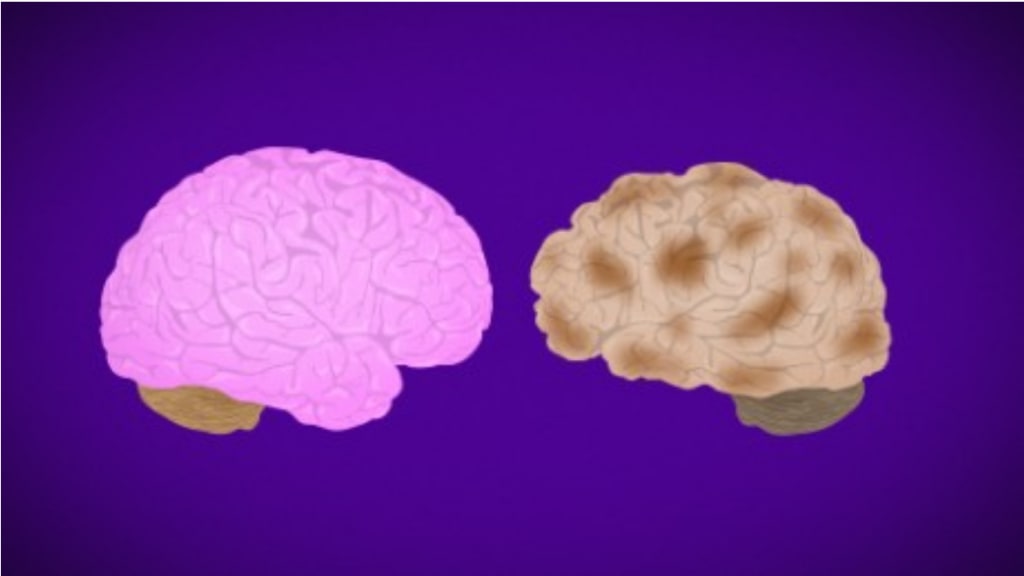
A preliminary study reveals that entering menopause before the age of 40 is associated with a 35% increased chance of having dementia later in life.
Premature menopause occurs when a woman's ovaries cease producing hormones and her menstrual cycle terminates at the age of 40. Based on the US Department of Health and Human Services' Office on Women's Health, this is roughly 12 years earlier than the normal start of menopause, which is age 52 in the United States.
"What we see in this study is a modest association between premature menopause and a subsequent risk for dementia," said Dr. Donald Lloyd-Jones, president of the American Heart Association. He was not involved in the study.
Why do women experience menopause so early in their lives? Unless they have had their ovaries and uterus removed surgically, "it has to do with a more rapid biological aging of all of the body's tissues, including premature aging of our organs and their function," said Lloyd-Jones, who is a professor of preventive medicine, medicine and pediatrics at Northwestern University's Feinberg School of Medicine in Chicago.
He also said that "It's a red flag on many levels when a woman goes through premature menopause, as it indicates there may be some underlying genetic, environmental or health behavior issues that we really need to focus on."
Menopause before age 45
The study, which has yet to be published but might very well be presented this week at the American Heart Association's 2022 conference, began to look at data from over 153,000 women who participated in the UK Biobank, a continuous study that looks at biological and health information from 500,000 people in the United Kingdom.
"The scope and breadth of the data is important and impressive, but it doesn't give us the details we need to understand the study's full implications," Lloyd-Jones said.
The study controlled for race, weight, age, educational and economic level, nicotine and alcohol consumption, heart disease, insulin, and physical activity. It discovered that women who went through menopause before the age of 45 were 1.3 times more likely to receive a diagnosis with early-onset dementia by the age of 65.
Early menopause, which occurs between the ages of 40 and 45, is distinguished from premature menopause, which occurs well before age of 40, and even though these can be induced by numerous similar variables: a family medical history; inflammatory diseases, such as chronic fatigue syndrome; Transmitted infections; chemo or uterine radioactivity cancer treatments; procedure to eliminate the ovaries and uterus; and cigarettes.
"Functional menopause due to surgery is less risky than biological menopause occurring early, as again it may be a red flag that other tissues are aging more rapidly, so a woman needs to really get with her doctor and have a plan to optimize all of her health factors," Lloyd-Jones said.
Role of estrogen?
When women reach menopause, estrogen levels will drop, which might explain the research's findings, according to study author Wenting Hao, a doctorate student at Shandong University in Jinan, China.
"We know that the lack of estrogen over the long term enhances oxidative stress, which may increase brain aging and lead to cognitive impairment," Hao said in a statement.
When the body's antioxidant defenses are overwhelmed by an oversupply of electrons or volatile atoms that can harm cells, oxidative stress develops. Free radicals exist spontaneously in the body as a result of cell respiration, but exposure to smoking, environmental pollutants, pesticides, dyes, and air pollution can elevate levels.
"However, I think premature menopause is a more significant signal than just being about estrogen," Lloyd-Jones said. "Just as gestational diabetes or preeclampsia should be a sign, premature menopause says this is a woman who is on the faster track to having a problem with her heart or her brain.
"Let's control everything else we can control about her diet, physical activity, weight, and smoking with lifestyle changes and if needed, medication," Lloyd-Jones added.
According to Hao, there are several approaches for women experiencing early menopause to lower their risk of cognitive loss.
"This includes routine exercise, participation in leisure and educational activities, not smoking and not drinking alcohol (and) maintaining a healthy weight," Hao said. "Being aware of this increased risk can help women practice strategies to prevent dementia and to work with their physicians to closely monitor their cognitive status as they age."
About the Creator
Keep reading
More stories from Jaelan Royal and writers in Viva and other communities.
The 1ct Engagement Ring: Why This "Sweet Spot" is the Biggest Wedding Trend of 2026
Choosing an engagement ring is perhaps the most high-pressure purchase a person can make. You want it to be breathtaking, timeless, and—let’s be honest—impressive. While the trend of "bigger is better" dominated the early 2020s, 2026 has brought us back to a more refined realization: the 1ct engagement ring is the absolute "Goldilocks" of the jewelry world.
By Mohd Kaish5 days ago in Viva
The Soul of the Stone: Why I’m Betting on Oval Diamonds This Valentine’s Day
Valentine’s Day has a funny way of making us overthink everything. We obsess over the reservation, the flowers, and—most nerve-wracking of all—the ring. For years, I’ve watched friends and colleagues agonize over finding a diamond that isn't just a status symbol, but a reflection of their partner's personality. In my time exploring the nuances of jewelry and the emotions behind proposals, I’ve realized that we often overlook the most important factor: the "vibe" of the stone itself.
By Mohd Kaish7 days ago in Viva




Comments
There are no comments for this story
Be the first to respond and start the conversation.