
UEFA Nations League serves only lower-ranked countries
Despite obstacles, there should be no turning back
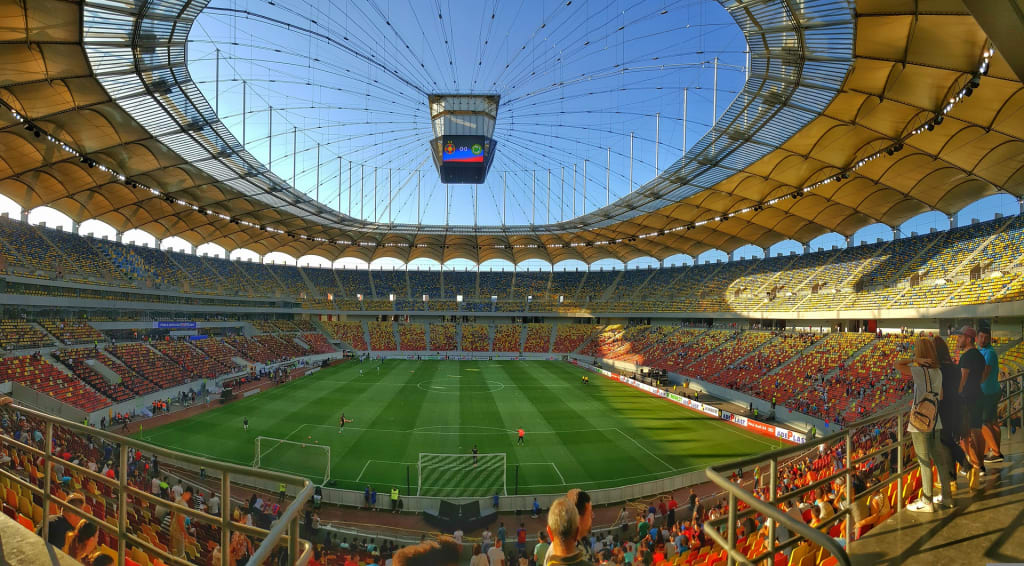
When UEFA Nations League was introduced it received much skepticism. Since it was something completely new, quite expectedly. After two whole editions behind us and the last one in the final stages (only the final four of league A winners and C league relegation battles yet to play), it’s fair to say that not everyone is pleased with it. Don’t get me wrong. It has more positives than negatives, but one thing stands out the most. It conveniently serves lower-ranked countries while it produces more potential problems for the “big ones”. Let me explain why.
UEFA put many thoughts into the idea of how to replace international friendly matches. They were, modestly speaking, anything but desirable from clubs, managers, and players. In fact, they served pretty much just players that were not constantly playing their club’s football and ones eagerly waiting to make their first caps to include in their CV. To put it shortly, most of the matches were painful to watch.
With new competition, Nations League, UEFA somehow managed to overcome the above-mentioned loop in its overall decent system. Friendlies were cleverly replaced with a league tournament system that promotes and encourages competition and offers rewards in the end.
In general, nations from lower leagues are promoted when winning their leagues while the opposite happens to the teams that finish last in their leagues. All detailed system rules can be found here.
So, why is this a burden for big nations? When your nation is standardly qualifying and reaching the knockout stages of big tournaments and is ranked high on a FIFA table, it’s expected of it to regularly compete among the best. Nothing else. Since the best teams only play among themselves relegation is not that far. Just ask England for example.
On the other side, reaching an A league final four only gives teams a chance to win a yet not-so-recognizable trophy. Not, for example, an automatic place in the next World Cup which would have been a much more suitable reward. Or perhaps some noticeable advantage that can be used in future big tournaments qualification.
Therefore, if you look at the whole picture, an A-league nation has the potential to lose more than gain. It’s probably true that, for example, the English Football Association makes more money if England plays Germany and Italy than San Marino, but we are looking just from the competition’s point of view.
Some may argue that the higher you get, the more dreadful the fall. However, everything reminds me of midweek-friendly matches when you play a league game every 7/8 days. Instead of training on Wednesday, teams schedule a friendly match that day during the week.

And it is a type of match that first-team players have nothing to gain. If they play well, it is expected of them, since they are already on the team. But if they perform poorly, they are more often than not left out for the next league’s game, since they become labeled with “can’t or isn’t interested in doing it properly in a friendly”.
In contrast to everything said above, lower-ranked nations benefit heavily from such competition. Besides easier ways of reaching at least the knockout phase of qualification for the next EURO, their chances of winning increase heavily.
In standard World Cup qualifiers, a D league nation is mostly expected to finish with all losses and an occasional draw. But in direct competition with their similarly qualitative teams, their chances of collecting 3 points dramatically rise. And football is mostly about winning right?
Moreover, reaching higher-ranked leagues represents a high level of success in some countries. Georgia, for example, was recently promoted to group B causing a real euphoria in the country! On the other hand, survival in high-ranked leagues can also be seen as a story of success and a potentially bright future.
My dearly beloved Slovenia played in a league B together with Erling Braut Haaland’s Norway, Aleksandar Mitrović’s Serbia, and Alexander Isak’s Sweden. A tough group. A group that had relegation written all over it. It’s true that my home country possesses one of the greatest goalkeepers at the moment in Jan Oblak, but all of the opponents were better on paper. No matter how we looked at it.
Despite that, Slovenia stayed in a league (Sweden was knocked out) which made the whole country proud. Slovenian football fans were once again filled with optimism. Nobody minded the intensive 4 matches period in June and spectators were also able to see decent superstars from up close regularly.
In conclusion, we can see that lower-league teams benefit more than higher-ranked teams from UEFA Nations League. And least from the competition’s point of view. However, I think that the UEFA Nations League is a positive change in general, and going back to friendlies would be suicide. So, let’s see, who will your country be facing in the next edition …
About the Creator
Keep reading
More stories from Matic Cretnik and writers in Unbalanced and other communities.
Why Liverpool came close to winning a quadruple
Liverpool had a phenomenal season. Until the very last week, they were competing for a quadruple. Manchester City edged them in the Premier League for just a point and Real Madrid later beat them in the Champions League final. Despite that, they lifted two trophies. FA Cup and Carabao Cup. In both of them, they were better than Chelsea after penalties. We’ll look at the key reason, why they have almost made it the most successful season in the club’s history.
By Matic Cretnik4 years ago in Unbalanced
Wild Card Weekend Recap: What Happens Now?
I think I figured out why I love Wild Card Weekend so much. It's because it's the first playoff anything of the calendar year. The NFL season starts in the fall, and once upon a time, the champion was crowned either on or slightly before New Year's. The evolution of the NFL schedule has resulted in the playoffs starting just into the New Year, and currently, the final week of the season falls on the first weekend of the New Year, with Wild Card Weekend coming a week after that. So yes, chronologically, the NFL's Wild Card Weekend serves as the first playoff anything of the calendar year.
By Clyde E. Dawkins3 days ago in Unbalanced
Somers Dominates at John Jay
Scroll down for photos vs John Jay, Panas and Put Valley After beating Croton-Harmon to open the season, Somers traveled to John Jay on Saturday, December 6 with a long memory. “They beat us up pretty bad last year,” said Leo Keimig. But going up 18 half way through the third certainly seemed to alleviate old wounds. That is until John Jay cut the lead to ten. So an answer was needed, and Keimig made the grade, according to Coach Loughlan.
By Rich Monetti5 days ago in Unbalanced



Comments
There are no comments for this story
Be the first to respond and start the conversation.