
The Complexity of Gender: A Balanced Perspective
Navigating the Gender Spectrum

If you've been following the news or engaging in conversations on social media, you've probably noticed that the topic of gender has become increasingly complex in recent years. We're no longer simply talking about male and female; there's a growing awareness of non-binary and other gender identities that fall outside of the traditional binary. As someone who's passionate about understanding and discussing cultural shifts, I've decided to dive deep into this topic and share my thoughts with you, my dear readers.
Let me start by saying that this is a sensitive topic, and I understand that some of you might have strong opinions on the matter. My goal is not to convince you one way or the other, but to explore both perspectives on this debate, including the reasoning behind the acceptance of these identities as well as the concerns that arise from expanding our understanding of gender.
The Journey Towards Acceptance
Those who advocate for accepting non-binary and other gender identities argue that doing so reflects a more inclusive and compassionate society. In fact, there's a growing body of scientific evidence recognizing that gender is not strictly binary, but instead exists on a spectrum.
The world as we have created it is a process of our thinking. It cannot be changed without changing our thinking.
This understanding is supported by the existence of intersex individuals, who are born with a combination of male and female biological characteristics, as well as numerous cultures around the world that have historically recognized more than two genders, such as the hijra in India or the two-spirit people in many Indigenous cultures.

As someone who values compassion and empathy, I can't help but be moved by the idea of embracing a broader range of gender identities. Additionally, I've learned that accepting diverse gender identities has important implications for mental health. Numerous studies have shown that gender identity is deeply rooted in an individual's sense of self, and that denying someone's gender identity can have serious psychological consequences. By accepting and affirming diverse gender identities, we might create a healthier, more supportive environment for everyone.
The Roadblocks on the Path to Inclusivity
While I'm drawn to the idea of embracing a wider range of gender identities, I also recognize that there are valid concerns about the implications of doing so. Some people worry that blurring the lines between male and female could lead to confusion and undermine the importance of biological sex in certain contexts, such as sports or medical care.

For example, in sports, there's an ongoing debate about how to fairly include transgender and non-binary athletes while maintaining a level playing field. In medical care, understanding a patient's biological sex can be crucial for accurate diagnosis and treatment. Critics argue that acknowledging a multitude of gender identities could lead to a slippery slope, where the concept of gender becomes so fluid and subjective that it loses meaning altogether.
Inclusivity is the foundation of a healthy community, and the obstacles we encounter on our way to achieving it remind us that there's more work to be done.
Furthermore, there's a concern that expanding the range of accepted genders could create division and tension within society. Those who hold more traditional views on gender may feel threatened or alienated by these changes, potentially leading to increased social conflict and polarization. As someone who values unity and understanding, I find this possibility troubling.
The Balancing Act: A Personal Reflection
Navigating this complex and contentious issue is no easy feat. It requires us to approach the topic with nuance and empathy, traits I strive to cultivate in myself and encourage in others. Acceptance of non-binary and other gender identities should not come at the cost of dismissing the importance of biological sex or undermining the experiences of individuals who identify as male or female. Moreover, it's essential to consider the broader social implications of changing our understanding of gender.

I've come to realize that the conversation around gender is an ongoing and evolving one that requires us to continually reassess our beliefs and values. By remaining open to new perspectives and striving to understand the experiences of others, I believe we can foster a more inclusive and compassionate society that recognizes the complexity of gender in all its forms.
As I continue to explore this topic, I'm committed to engaging in open and respectful dialogue with those who hold different views. I invite you, my dear readers, to join me in this journey and share your thoughts, experiences, and perspectives in the comments below.
Together, let's strive to create a space for understanding and empathy, where we can embrace the complexity of human experience and celebrate the diversity of our world.
About the Creator
Keep reading
More stories from Mark Ino and writers in Unbalanced and other communities.
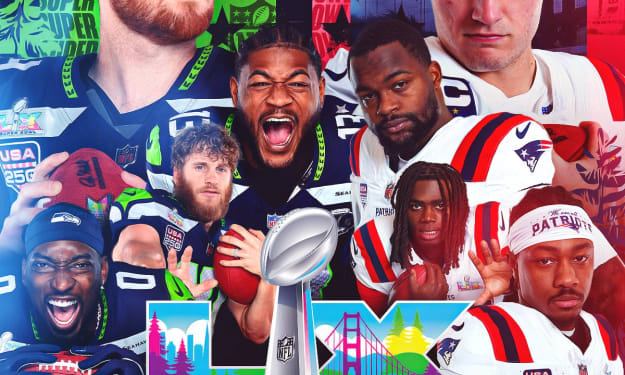
Super Bowl LX Recap: A Team Called Hawks
Sixty. The Super Bowl turned 60! Still amazes me that this was the sixtieth Super Bowl played in NFL history. It seems like yesterday that I watched Super Bowl XXVII, the first SB I ever watched. The QB who won Super Bowl XXVII has since called a few SBs, and will call next year's game, but that's another story. Super Bowl LX took place at Levi's Stadium in Santa Clara, California, the home stadium of the San Francisco 49ers. However, it was one of their division foes who represented the NFC, as the Seattle Seahawks faced off against the New England Patriots.
By Clyde E. Dawkins26 days ago in Unbalanced
Century 29
On Monday night, the Colorado Avalanche defeated the Los Angeles Kings, 4-2, in the first game of a three game road trip. The win increased our total to 40 victories, the first to reach the big 4-0 this season. We would not be done with Southern California quite yet, as we got right back to work the next day against the Anaheim Ducks; a Ducks team that is in a bad Pacific Division, but has a good chance of not only reaching the playoffs for the first time in eight years, they can also end up with home ice in (at least) the first round!
By Clyde E. Dawkins3 days ago in Unbalanced



Comments
There are no comments for this story
Be the first to respond and start the conversation.