
Sunderland sporting heritage
Visiting a vintage sports ground


At its zenith, Ashbrooke Sports Ground thronged to crowds of 25,000 to witness a touring Australian cricket team take on Durham. Despite the struggles of the General Strike across the northeast’s industrial communities, the chance to see a top-class visiting team in 1926 was too much for a sports crazy region to miss.
Impressively, there were 15,000 more people watching Australia’s win over Durham than attended the Saturday play at the Oval a week later in the first test. And this in a region where the old traditions of the gentleman amateur sportsman had quickly been overtaken by the professional player, leading to a dominant interest in football that continues to this day.
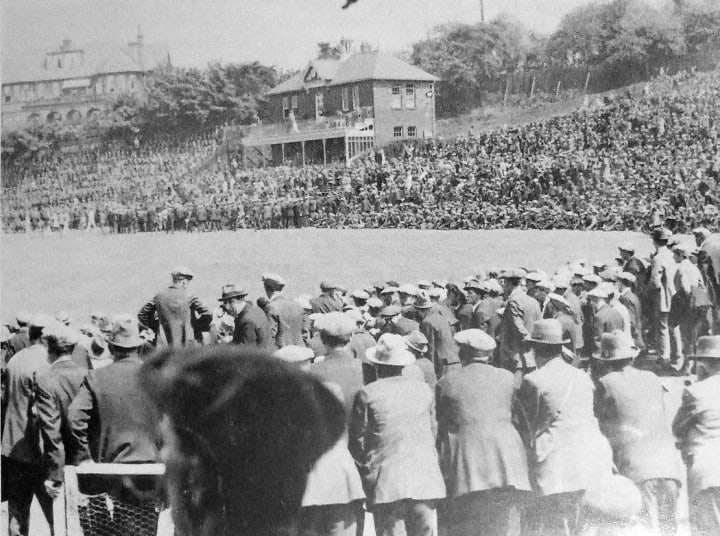
Ashbrooke Sports Ground itself was laid out in 1887 at the heart of a then-new middle-class suburb to the south of the town centre. Surrounding streets of fine red-brick housing were home to an emerging affluent class, riding the wave of the town’s industrial prosperity. Remote from the grime of the collieries and the clang of the shipyards, these streets were home to engineers and educators, lawyers and accountants. The cricket pavilion, built between 1897-99, was designed by James Henderson, a professional architect who lived nearby and was cricket club captain.
In my childhood, Ashbrooke was all about Bonfire Night. A large-scale firework display, revived in 2024 after several years’ absence, was one of the highlights of the year. In keeping with the district’s white-collar heritage, my own family worked in education while neighbours included a published poet, a retired football international, assorted healthcare professionals and office workers. In the 80s, when Sunderland’s industrial core was hollowed away, the town’s confidence and prosperity went with it.
That crisis continues to impact upon Ashbrooke. Last year brought genuine concerns about the survival of the grounds as membership numbers failed to rebound after the pandemic. Efforts to attract wider audiences have been mixed: a proud history as a former home of Sunderland AFC, as well as long-established cricket and rugby clubs, cannot pay the bills on its own.
Yet there is still room for triumph. On the first day of spring, it was all about rugby. Sunderland RFC narrowly missed out on winning the Durham Northumberland Division I title last year; this time the runaway leader could seal the deal with a win at home to Darlington.
The crowd was bigger than usual. Pre-game, the clubhouse was crowded. And as the action kicked off there was a sizeable contingent standing on one touchline. In front of “The Last Stand”, a war memorial commemorating former players lost in the World Wars, there were few empty seats. It wasn’t anywhere near the famous 25,000 who watched the Aussies, but it hinted at a revival of fortunes.
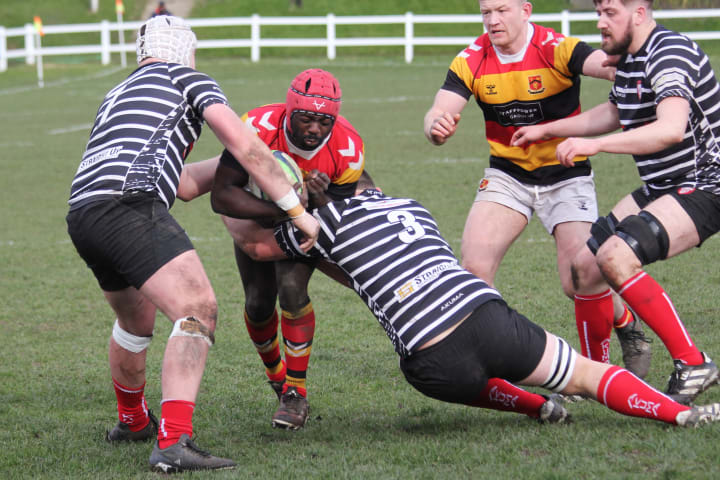
On the field, with glory up for grabs, Sunderland made no mistake. The home team crossed for its first try inside two minutes and kept piling up the points in an 85-14 win over Darlington.
An incident late in the first half summed up the difference between the teams. Darlington defended heroically to hold up a Sunderland attack. Almost on the try line, the visitor forced a knock-on, earning the feed at a scrum on the 5-metre line. A triumphant yelp from the defenders greeted the moment with all the enthusiasm of scoring a try. Yet the powerful home pack managed to steal possession from the subsequent scrum and roll Darlington back over the line for yet another score. Even before half time, the game and the championship was won.
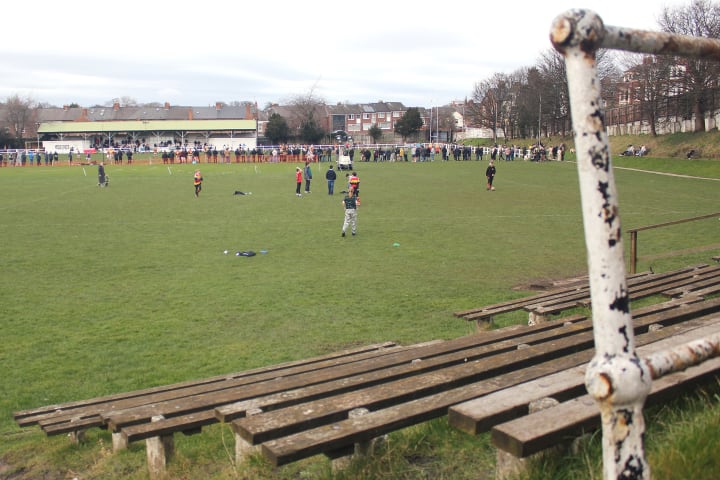
Glory days for the rugby players of the 21st century. But there’s a greater glory here in the echoes of Sunderland’s sporting history. The wooden benches in front of the pavilion have seen better days but they offer a link back to an earlier age. Those days may be gone, but preserving their spirit remains a valuable part of community identity and something that should be protected and cherished.
About the Creator
Andy Potts
Community focused sports fan from Northeast England. Tends to root for the little guy. Look out for Talking Northeast, my new project coming soon.
Keep reading
More stories from Andy Potts and writers in Unbalanced and other communities.
Rugby special
Somebody once described 80 minutes of rugby league as the equivalent of running a half marathon while being run over by a truck 10 times. It’s an uncompromisingly physical sport, full of juddering full-body collisions and the kind of tackles that would earn you an assault charge anywhere off the field of play.
By Andy Potts12 months ago in Unbalanced
Wild Card Weekend Recap: What Happens Now?
I think I figured out why I love Wild Card Weekend so much. It's because it's the first playoff anything of the calendar year. The NFL season starts in the fall, and once upon a time, the champion was crowned either on or slightly before New Year's. The evolution of the NFL schedule has resulted in the playoffs starting just into the New Year, and currently, the final week of the season falls on the first weekend of the New Year, with Wild Card Weekend coming a week after that. So yes, chronologically, the NFL's Wild Card Weekend serves as the first playoff anything of the calendar year.
By Clyde E. Dawkinsabout 11 hours ago in Unbalanced
Indiana stuns Oregon as viral sideline moment draws national attention
Introduction Indiana’s decisive victory over Oregon delivered one of the most surprising results of the college football sminated the scoreboard, attention online briefly shifted to a viral broadcast moment involving the family of Oregon quarterback Fernando Mendoza.
By Saad 2 days ago in Unbalanced
Day 4 of Quitting
If this is how sobriety feels, maybe it’s better to go through life a little buzzed… this, along with other hits like, I want to kill myself, I wish I was dead, and I’m going to throw myself off a bridge have been the only thoughts on rotation these past few days. I promise myself that if, in a month, I still feel like this (‘this’ meaning despondent, full of rage, and simultaneously numb) I can go back to smoking. Until mid-February though? Nicotine is off the table.
By sleepy drafts6 days ago in Longevity



Comments
There are no comments for this story
Be the first to respond and start the conversation.