
Mocking Jaylen Brown’s Hairline Is More Than Just a Joke—It’s a Reflection of Our Misplaced Priorities
Why the Internet’s Obsession with Jaylen Brown’s Hairline Misses the Bigger Picture About Empathy, Identity, and Respect for Athletes
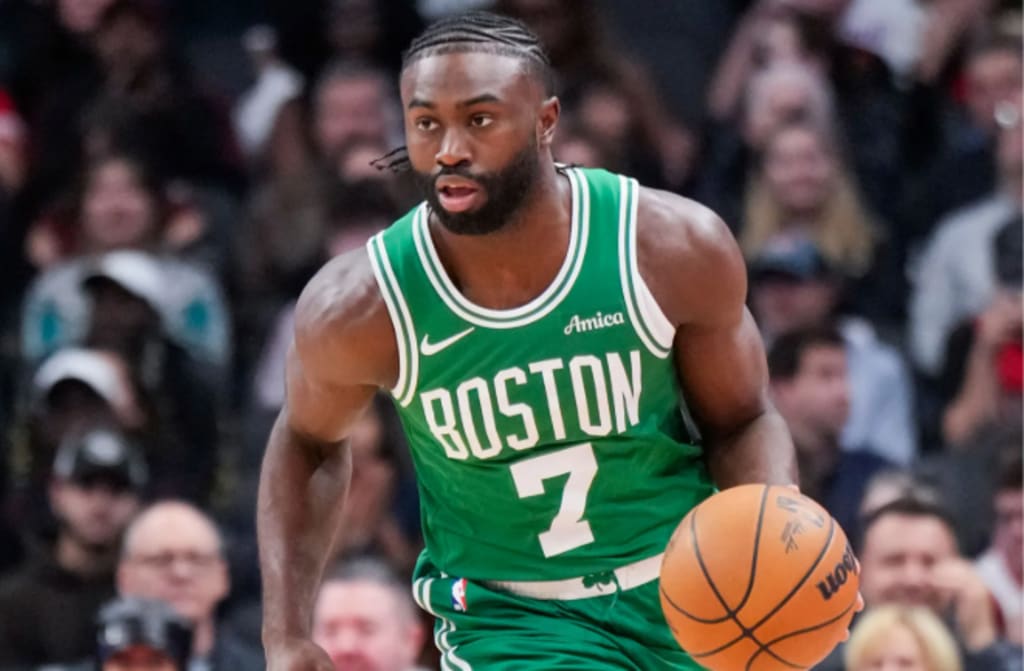
In recent weeks, Boston Celtics star Jaylen Brown has found himself at the center of a viral controversy—not for his performance on the court, but for what fans have dubbed the “spray-paint saga.” During games against the New York Knicks and Detroit Pistons, Brown’s alleged use of spray-on hair products appeared to leave visible marks on the jerseys of opposing players OG Anunoby and Ronald Holland II. While the internet has had its fun, turning the incidents into memes and punchlines, it’s time to ask a more serious question: Why are we so quick to ridicule something that might be deeply personal?
The Viral Moments That Sparked the Ridicule
The first incident occurred during a Celtics-Knicks matchup on October 25, 2025. As Brown drove to the basket, his head brushed against Anunoby’s white jersey, leaving behind a noticeable black smudge. Cameras zoomed in, and social media erupted with speculation that Brown’s hairline had “rubbed off” mid-game. Just days later, a similar moment unfolded against the Pistons, when Brown’s head again left a dark streak on Ronald Holland II’s jerseyYahoo Sports.
These moments quickly became fodder for internet humor. Shaquille O’Neal joked on “Shaqtin’ a Fool,” referencing Bigen, a jet-black dye often used to mask thinning hair. Fans on X (formerly Twitter) quipped, “When you face Jaylen Brown, you might get crossed up or get touched up,” mocking the idea that his hairline was somehow weaponized Yahoo Sports.
The Problem With the Mockery
While the jokes may seem harmless, they reflect a troubling tendency to dehumanize public figures. Brown is not just an athlete—he’s a person navigating the pressures of fame, performance, and public scrutiny. The ridicule surrounding his hairline taps into broader issues of body image, masculinity, and mental health.
Hair loss and grooming choices are deeply personal. For many men, especially Black men, hair is tied to identity, confidence, and cultural expression. The use of products like spray-on hair fibers is not uncommon, and mocking someone for using them perpetuates stigma around appearance and aging. As writer and activist Feminista Jones once noted, “Black hair is political, cultural, and personal. It’s not just aesthetics—it’s identity.”
Athletes Are Not Immune to Insecurity
Professional athletes are often seen as invincible, but they face immense pressure to maintain not just peak physical performance but also a polished public image. Brown, a former NBA Finals MVP and one of the league’s most articulate voices on social justice, has consistently used his platform to advocate for change. Yet, in this moment, his humanity is being overshadowed by jokes about his grooming habits.
We don’t know what Brown might be going through. Is he dealing with hair loss? Is he self-conscious about his appearance? Is the spray-on product a coping mechanism? These are questions we can’t answer—and shouldn’t speculate on. What we can do is extend empathy instead of ridicule.
The Double Standard of Public Scrutiny
It’s worth noting that grooming mishaps are not unique to Brown. LeBron James has faced similar scrutiny over his hairline for years, and other celebrities have been mocked for cosmetic procedures or appearance changes. But the intensity of the ridicule often reflects deeper biases—especially when it targets Black men.
The fixation on Brown’s hairline also reveals a double standard in how we treat athletes versus entertainers. When a pop star or actor undergoes cosmetic changes, it’s often framed as a personal choice or a fashion statement. When an athlete does the same, it becomes a punchline. This disparity underscores the need to rethink how we engage with public figures and their vulnerabilities.
A Call for Compassion
Instead of laughing at Brown, we should be applauding his resilience. Despite the viral moments, he dropped 41 points against the Pistons and continues to lead the Celtics in the absence of Jayson Tatum. His focus and performance speak volumes about his professionalism and mental fortitude.
Moreover, Brown has not responded publicly to the hairline controversy, choosing instead to let his game do the talking. This silence is powerful—it suggests that he refuses to be defined by superficial narratives. But it also highlights the emotional labor athletes must endure when their personal lives become public spectacle.
What This Says About Us
The real issue isn’t Brown’s hairline—it’s our collective impulse to mock rather than understand. In a culture obsessed with perfection and virality, we often forget that behind every meme is a human being. The “fake hairline” jokes may seem trivial, but they contribute to a culture of shame and insecurity.
As fans, we have a responsibility to uplift, not tear down. Humor has its place, but it should never come at the expense of someone’s dignity. Brown deserves better—not just because he’s a star athlete, but because he’s a person navigating the same insecurities and challenges that many of us face.
Final Thoughts
Jaylen Brown’s “spray-paint saga” may fade from headlines, but the lessons it offers should linger. Let’s move beyond the jokes and embrace a culture of empathy. Athletes are not immune to vulnerability, and our laughter should never come at the cost of someone’s humanity.
Sources: ClutchPoints Total Pro Sports ClutchPoints Yardbarker
About the Creator
Keep reading
More stories from Maadi Roshan and writers in Unbalanced and other communities.
The Truth About the Michigan vs. Michigan State Rivalry
The attitude of the Michigan players is always so passive-aggressive and snobby that it is so easy to get Michigan State on the edge. Whether it be their body language, their interviews or how they portray themselves on the field, there is an air of superiority that fumes people the wrong way. It is not merely confidence but a type of smugness that drives the rivalries and creates the passionate reactions of the rival fanbases. To Michigan State fans, this is the same attitude as pouring gasoline on a fire and the fan emotions every time the two teams meet are heightened.
By Maadi Roshan3 months ago in Unbalanced
Wild Card Weekend Recap: What Happens Now?
I think I figured out why I love Wild Card Weekend so much. It's because it's the first playoff anything of the calendar year. The NFL season starts in the fall, and once upon a time, the champion was crowned either on or slightly before New Year's. The evolution of the NFL schedule has resulted in the playoffs starting just into the New Year, and currently, the final week of the season falls on the first weekend of the New Year, with Wild Card Weekend coming a week after that. So yes, chronologically, the NFL's Wild Card Weekend serves as the first playoff anything of the calendar year.
By Clyde E. Dawkins6 days ago in Unbalanced
Homestand Part II: Not-So-Usual Suspects
On Thursday, the Colorado Avalanche's long homestand began against the Ottawa Senators, and it was a slaughter. An 8-2 victory that saw the Avs put six pucks in the net during the middle period. Martin Necas and Brock Nelson each reached the 20-goal mark during that game, and the highlight was Josh Manson's Gordie Howe Hat Trick--two goals, two assists, and a fight, with his dad, legendary player Dave Manson, in attendance.
By Clyde E. Dawkins7 days ago in Unbalanced




Comments
There are no comments for this story
Be the first to respond and start the conversation.