
JESSE OWENS AND HIS ROLE IN DEFYING NAZI IDEALS
Conclusion:Owens' Triumph as a Defiance of Nazi Ideals.


Jesse Owens and His Role in Defying Nazi Ideals
Introduction Jesse Owens, one of the most iconic athletes in Olympic history, is celebrated not only for his remarkable athletic achievements but also for his profound impact on challenging racial ideologies during the 1936 Berlin Olympics. Owens' triumphs in the face of Adolf Hitler’s racial superiority theories are emblematic of the broader struggle against discrimination. His performance at the Berlin Games became a momentous event, not just for athletics, but for global politics and social justice.
The 1936 Berlin Olympics and the Rise of Nazi Ideology The 1936 Summer Olympics in Berlin were held under the shadow of Nazi Germany's aggressive promotion of Aryan racial superiority. Adolf Hitler sought to use the Games as a platform to showcase the supremacy of the so-called "Aryan race," and to present Germany as a rising global power. Nazi propaganda portrayed athletes of Aryan descent as physically and intellectually superior to all others.
As part of this narrative, Hitler was determined to have German athletes dominate the Games, especially in track and field, where they could display the supposed superiority of the German people. However, Jesse Owens, an African American sprinter from the United States, would defy those expectations and deliver one of the most significant performances in Olympic history.
Jesse Owens: A Legend in the Making Jesse Owens was born on September 12, 1913, in Oakville, Alabama, into a life of poverty and racial segregation. Despite these challenges, Owens exhibited exceptional talent in athletics from a young age, setting records in high school and later at Ohio State University. His extraordinary speed and skill earned him the nickname "The Buckeye Bullet." Owens' performances at the 1936 Berlin Olympics were set to make him a symbol of athletic excellence.
At the Berlin Games, Owens participated in four events: the 100-meter sprint, the 200-meter sprint, the long jump, and the 4x100-meter relay. In a display of dominance, he won all four events, making history with four gold medals. His victories were a stark contrast to Hitler's vision of Aryan supremacy and were seen as a direct defiance of Nazi ideology.
Owens’ Triumph in the 100 Meters Owens first made his mark in the 100 meters. In an event that had been hyped as a showdown between Owens and the German sprinter, Carl Ludwig "Lutz" Long, Owens proved his superiority by winning the race with a time of 10.3 seconds. His victory in the 100 meters was a clear rebuttal to Nazi claims of Aryan dominance in athletics.
The 200-Meter Sprint and the Long Jump Owens followed up his success in the 100 meters with an equally impressive victory in the 200 meters. His time of 20.7 seconds broke the Olympic record and cemented his place in history. In the long jump, Owens faced another challenge from Nazi propaganda, which had hoped that German athlete Carl Long would win. However, Owens defeated Long and won the gold with a jump of 8.06 meters, further solidifying his dominance.
Owens’ performance in the long jump was particularly symbolic as it defied expectations set by Nazi Germany's racial theories. His success was a powerful statement that physical excellence was not confined to any particular race or nationality.
The 4x100 Meter Relay In the 4x100 meter relay, Owens led the American team to another victory, contributing to his total of four gold medals. This victory was especially significant as it further demonstrated the superiority of the United States' athletes, undermining Hitler’s hopes of showcasing Aryan supremacy. The success of the American relay team in defeating the German squad was seen as a moment of pride for the country and for Owens, who was leading the charge against Nazi ideals.
Owens' Impact Beyond the Track Jesse Owens’ triumphs at the 1936 Berlin Olympics were not just athletic achievements—they were political acts. His victories on the world stage highlighted the absurdity of Nazi racial theories, and the defiance they represented resonated around the world, especially in the United States, where the civil rights movement was gaining momentum. Owens' success, achieved in a racially segregated society, helped to challenge the pervasive racial discrimination both in the U.S. and internationally.
However, despite his overwhelming success at the Olympics, Owens was not celebrated in the U.S. in the way one might expect for an athlete of his caliber. He returned home to a nation that still practiced segregation, and he struggled to find work in a country that had yet to fully embrace African American athletes. This harsh reality highlighted the ongoing racial inequalities Owens faced, even after achieving such historic victories.
Legacy of Jesse Owens Jesse Owens' legacy extends far beyond his Olympic accomplishments. He became a symbol of resilience, grace under pressure, and defiance in the face of racial oppression. His courage in the face of Hitler’s racism made him an international hero and a figure of hope for many in the African American community. He inspired future generations of athletes, particularly those who, like Owens, faced racial prejudice.
Owens' impact on the Olympics was profound. He helped to redefine the Olympic Games as a platform for unity and sportsmanship, rather than a space for racial or national superiority. His victories in Berlin served as a reminder that sports should transcend ideology, politics, and prejudice.
Jesse Owens’ performance at the 1936 Berlin Olympics was a pivotal moment in both Olympic history and world politics. His four gold medals not only challenged the racist ideologies of Nazi Germany but also proved that excellence in sport is not confined to any one race or nation. Owens’ legacy remains a testament to the power of perseverance and the enduring belief that sports can be a force for equality and unity.
About the Creator
Badhan Sen
Myself Badhan, I am a professional writer.I like to share some stories with my friends.
Reader insights
Outstanding
Excellent work. Looking forward to reading more!
Top insights
Compelling and original writing
Creative use of language & vocab
Easy to read and follow
Well-structured & engaging content
Excellent storytelling
Original narrative & well developed characters
Eye opening
Niche topic & fresh perspectives
Heartfelt and relatable
The story invoked strong personal emotions
On-point and relevant
Writing reflected the title & theme
Keep reading
More stories from Badhan Sen and writers in Unbalanced and other communities.
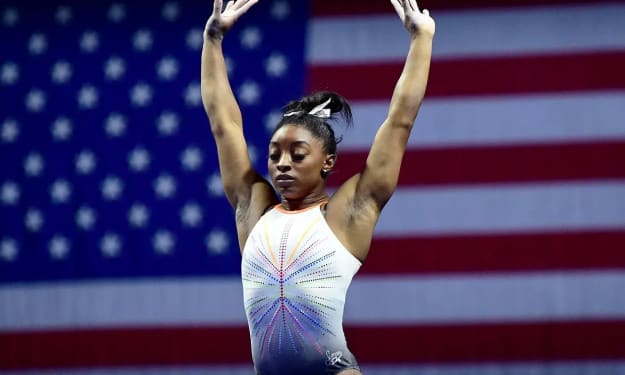
SIMONE BILES AND HER HISTORIC OLYMPIC GYMNASTICS FEATS
SIMONE BILES AND HER HISTORIC OLYMPIC GYMNASTICS FEATS Simone Biles is often regarded as one of the greatest gymnasts of all time, and her journey through the Olympic Games stands as a testament to her incredible skill, mental toughness, and dedication to her craft. From her first Olympic appearance in 2016 to her dominant performances in 2021, Biles has set new standards in the sport of gymnastics and has left an indelible mark on the history of the Olympic Games.
By Badhan Senabout a year ago in Unbalanced
Wild Card Weekend Recap: What Happens Now?
I think I figured out why I love Wild Card Weekend so much. It's because it's the first playoff anything of the calendar year. The NFL season starts in the fall, and once upon a time, the champion was crowned either on or slightly before New Year's. The evolution of the NFL schedule has resulted in the playoffs starting just into the New Year, and currently, the final week of the season falls on the first weekend of the New Year, with Wild Card Weekend coming a week after that. So yes, chronologically, the NFL's Wild Card Weekend serves as the first playoff anything of the calendar year.
By Clyde E. Dawkins6 days ago in Unbalanced
Homestand Part II: Not-So-Usual Suspects
On Thursday, the Colorado Avalanche's long homestand began against the Ottawa Senators, and it was a slaughter. An 8-2 victory that saw the Avs put six pucks in the net during the middle period. Martin Necas and Brock Nelson each reached the 20-goal mark during that game, and the highlight was Josh Manson's Gordie Howe Hat Trick--two goals, two assists, and a fight, with his dad, legendary player Dave Manson, in attendance.
By Clyde E. Dawkins6 days ago in Unbalanced



Comments (1)
I remember Jesse Owens from history class. Thank you for publishing this story!