
"I just wanted to kill that individual. Not Dennis Rodman" - Dennis Rodman debunks the popular rumor that he contemplated suicide
Dennis Rodman debunks the popular rumor that he contemplated suicide
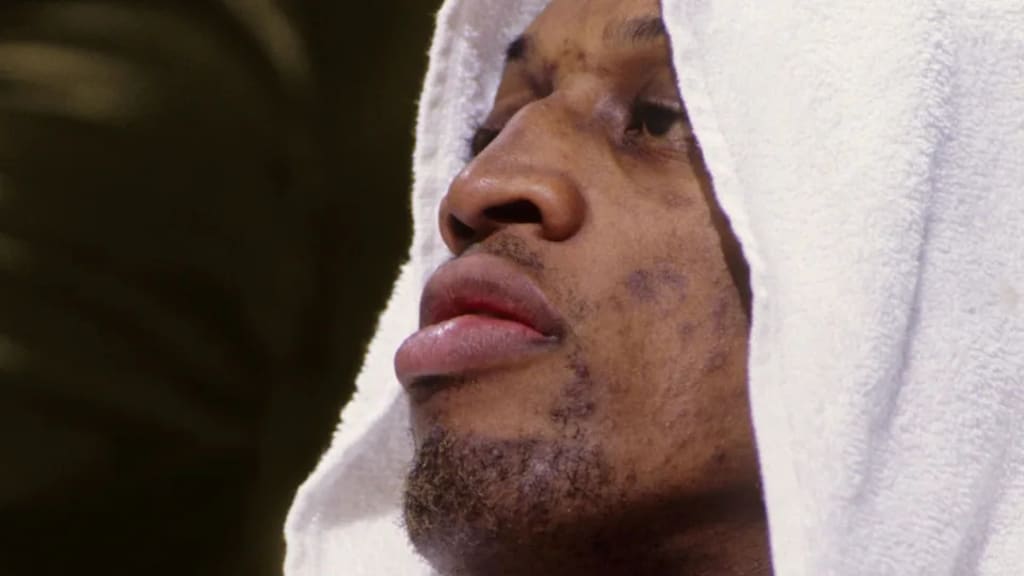
"I just wanted to kill that individual. Not Dennis Rodman" - Dennis Rodman debunks the popular rumor that he contemplated suicide originally appeared on Basketball Network.
The story surrounding Dennis Rodman's early NBA days has always been shrouded in myth.
One of the most persistent narratives has been that, during a period of personal and professional turmoil in the early 1990s, Rodman sat in his truck in a Detroit Pistons parking lot with a loaded rifle, allegedly contemplating suicide.
The image stuck, so much so that it became a central moment in various biographies and documentaries. But now, Rodman himself has stepped in to push back against what he calls a misrepresented chapter of his life.
Killing the character
The five-time NBA champion and Hall of Famer set the record straight, drawing a line between dark emotional struggle and the intention to end his own life.
"No, I wasn't doing that," Rodman said. "And I try to correct that whole statement and part of that chapter. The thoughts were going through my head: yes, absolutely, I just wanted to kill that individual. Not Dennis Rodman."
That distinction is between despair and rage, between being lost in a fog of internal collapse versus being focused on outward blame. Rodman's statement reframes what has long been viewed as a suicide attempt into something more nuanced and personal, a moment of emotional volatility fueled by betrayal and frustration rather than self-harm.
1993 was a transitional year for Rodman.
He was no longer the glue of the Detroit Bad Boy Pistons that had defined his early career. Chuck Daly, the coach who had become a surrogate father figure to Rodman, had departed. The gritty core of the team — Isiah Thomas, Bill Laimbeer and Joe Dumars — was slowly being dismantled.
Rodman, once the league's premier defender and rebounder, found himself drifting in an organization that no longer resembled the one that drafted him in 1986.
Rodman's recollections
The Pistons' dynastic run had faded.
From 1989 to 1991, they had been the league's most feared defensive machine, capturing back-to-back championships and stamping their identity on a bruising era of basketball. Rodman was their engine, twice named NBA Defensive Player of the Year during that stretch.
But by the early '90s, the Pistons' identity was unraveling. Daly resigned in 1992. Thomas retired not long after. The team's decline wasn't just professional, it was personal for Rodman, who had been shaped as much by his teammates and coach as he had been by the system they built together.
"I think the circumstance was the fact that everyone was dispersing from Detroit," he said. "The organization start to get rid of certain key people on the team."
For a player who'd risen from obscurity, growing up in poverty in Dallas, going unnoticed in high school and landing at tiny Southeastern Oklahoma State, Rodman's stability had always been rooted in the relationships he built in Detroit. The sudden erosion of those bonds left a hole he couldn't explain at the time. What followed was confusion and fury, often misread as self-destruction.
The Worm's emotional unraveling led to a trade to the San Antonio Spurs, a move that placed him under a different spotlight. His game remained elite — he led the league in rebounds for seven consecutive seasons from 1991 to 1998 — but his persona began to eclipse his performance.
Dyed hair, piercings, public escapades and eventually a very public friendship with Kim Jong-un painted him as a caricature in the eyes of some.
But even as the headlines grew louder, he never stopped doing the work on the court. He ended his career with over 11,000 rebounds, a career average of 13.1 boards per game and five NBA titles, three of which came during his tenure with the Chicago Bulls alongside Michael Jordan and Scottie Pippen.
For decades, the Hall of Famer, one of the most eccentric personalities in American history, has been cast as both wild and wounded. But behind the headlines and the shades lies a man who never truly fit the box he was put in, not in Detroit, not in San Antonio, not even in Chicago.
About the Creator
🍂🍂🍂.
Research on geopolitics
Keep reading
More stories from 🍂🍂🍂. and writers in Unbalanced and other communities.
Death of Liverpool forward Jota leaves football world in shock
The death of Liverpool and Portugal forward Diogo Jota in a car crash aged 28 has left the football world in shock. Jota and his brother, Andre Silva, both died after the Lamborghini they were travelling in crashed in the Spanish province of Zamora.
By 🍂🍂🍂.7 months ago in Unbalanced
Wild Card Weekend Recap: What Happens Now?
I think I figured out why I love Wild Card Weekend so much. It's because it's the first playoff anything of the calendar year. The NFL season starts in the fall, and once upon a time, the champion was crowned either on or slightly before New Year's. The evolution of the NFL schedule has resulted in the playoffs starting just into the New Year, and currently, the final week of the season falls on the first weekend of the New Year, with Wild Card Weekend coming a week after that. So yes, chronologically, the NFL's Wild Card Weekend serves as the first playoff anything of the calendar year.
By Clyde E. Dawkins7 days ago in Unbalanced
Homestand Part III: Close Call
So far, the Colorado Avalanche are two-for-two in this long homestand that will dominate the month of January. A blowout win over the Ottawa Senators, and then, a shutout win over the Columbus Blue Jackets. On Monday, we played host to the Toronto Maple Leafs, who desperately needed something. It had been a long season for the team, who find themselves in danger of their long playoff streak coming to an abrupt end.
By Clyde E. Dawkins4 days ago in Unbalanced




Comments
There are no comments for this story
Be the first to respond and start the conversation.