
How to Design a Virtual Basketball Training Plan for Maximum Results
Art of creating a personalized online basketball training plan that enhances skills, tracks progress, and delivers real game-time results


As I lace up my sneakers, the thought of honing my basketball skills without stepping onto a court excites me. Designing a virtual training plan is not just a trend; it's a game-changer for athletes like us. I'll explore how to assess individual needs, structure effective workouts, and leverage technology for maximum results. With the right approach, I promise you'll transform your game from the comfort of your home.
The Rise of Virtual Basketball Training
The COVID-19 pandemic accelerated the adoption of virtual training, with platforms like Zoom and Microsoft Teams becoming essential tools for coaches and players to connect. This shift in coaching methods has fundamentally transformed how athletes are trained.
Coaches are increasingly utilizing video analysis technologies such as Hudl to provide real-time feedback during training sessions, enabling athletes to immediately adjust and enhance their skills. Additionally, workout applications like Trainerize offer personalized exercise regimens that players can follow at their convenience.
Virtual reality training is emerging as an important tool, allowing athletes to practice skills in an immersive environment, which enhances both engagement and performance. Together, these technologies create a dynamic coaching ecosystem that is adaptable and resilient, even in uncertain circumstances.
Benefits of Virtual Basketball Training for Basketball
Virtual training offers unparalleled flexibility, allowing players to practice at home while receiving expert coaching and personalized feedback through platforms like Hudl and Coach's Eye.
These platforms enhance training by incorporating video breakdown capabilities and performance analytics. For example, Hudl's video library enables players to analyze patterns of play in real time, which encourages better decision-making.
Meanwhile, Coach's Eye provides athletes with frame-by-frame breakdowns of their skills and techniques, ensuring that they can make precise improvements. This combination fosters an interactive learning environment where players can train at their own pace while receiving immediate feedback, ultimately leading to significant performance improvements.
Assessing Player Needs
Identifying a player's needs is crucial for developing a virtual basketball training program that aligns with their skill level and goals, enabling individual improvement.
Identifying Skill Levels
Athlete assessment involves evaluating their skills through basketball drills, such as the 3-point shooting test and various layup exercises, which typically take about 30 minutes per player.
Following these drills, an analysis of the results is conducted by calculating shooting percentages and identifying areas for improvement. Coaches utilize tools like the Shot Tracker app to record and visualize performance metrics over time.
After assessing a player's strengths and weaknesses, a customized practice plan is developed to target their less proficient skills, whether that involves improving shooting accuracy or enhancing dribbling speed.
Progress is monitored through regular assessments every 4 to 6 weeks, which also aids in determining whether the training regimen needs to be adjusted to ensure continued improvement.
Setting Individual Goals
Setting specific, measurable, achievable, relevant, and time-bound (SMART) goals helps players maintain motivation and focus during practice.
For instance, a basketball player might set a specific goal to increase their free throw shooting percentage by 15% over the next six weeks. Players can monitor their progress using a training journal or an app, such as MyFitnessPal. By recording their shooting percentage daily, they can review their performance at the beginning of the month and compare it to their percentage before the next month's assessment.
It is also beneficial for players to reflect on the techniques they employed to achieve a particular shooting percentage on any given day. To enhance focus and accountability, players should establish smaller, short-term goals that align with their larger six-week objectives.
For example, they could commit to practicing 100 free throws every day they train throughout the week. Tracking progress toward long-term goals allows players to recognize their improvement, and celebrating achievements as they reach mini-goals reinforces positive habits.
Components of a Basketball Training Plan
A comprehensive virtual basketball training program should encompass physical conditioning, skill development, and mental training to help players reach their maximum performance level.
Physical Conditioning and Endurance Training
The most effective way to combine strength training, agility drills, and flexibility exercises is to utilize structured workout routines, such as the Nike Training Club app, for planning and tracking workouts to achieve maximum results.
Strength Training: A study published in December 2017 in the International Journal of Sports Physiology and Performance recommends that athletes incorporate strength training exercises, such as squats, lunges, deadlifts, and push-ups, into their workout regimens. The study suggests performing three sets of 10-15 repetitions, three times a week.
Agility Drills: In a December 2019 study conducted by the Department of Physical Education at the University of Santiago de Compostela and published in the journal Sports, a combination of high-intensity ladder drills or cone sprints is recommended. The study advises including 10-15 minutes of high-intensity intervals, twice weekly.
Flexibility Exercises: The Centers for Disease Control and Prevention (CDC) recommends stretching the major muscle-tendon groups to improve flexibility. Each stretch should be held for 15-30 seconds and should be performed after workouts when the muscles are warm.
Using the Nike Training Club app can help schedule workouts and track progress, ensuring that all three types of exercise are incorporated into a balanced fitness regimen tailored to individual goals, including injury prevention and nutrition planning.
Skill Development
Core skills in basketball can be developed by practicing focused drills, such as form shooting, with clear objectives related to shooting mechanics and training modalities.
Utilizing apps like DribbleUp can help players follow guided sessions effectively. Along with shooting drills, it is important to incorporate ball-handling sessions. The HomeCourt app allows players to track metrics such as dribble speed and shooting accuracy while providing immediate feedback.
For enhancing passing skills, practicing with a partner is one option, and CoachTube offers a variety of instructional videos that demonstrate different drills.
Players should aim for a minimum of 30 minutes of focused practice on each skill during every training session. Additionally, integrating technology by reviewing recorded performance metrics on a weekly basis can help identify problem areas. This balanced approach will ensure the steady development of core basketball skills.
Mental Training and Tactical Awareness
Mental training is essential in sports, as it enhances athletes' ability to focus and build resilience. Techniques such as visualization and mindfulness exercises are particularly effective, and resources like the mindfulness app Headspace can be beneficial.
One effective visualization technique involves dedicating 10 minutes each day to imagining yourself executing skills, such as shooting and passing, flawlessly. This approach leverages the brain's capacity to relive experiences, thereby improving physical execution during gameplay.
According to Headspace, mindfulness exercises can help athletes enhance their focus and reduce anxiety by guiding users through breathing and awareness exercises. When these techniques are integrated into regular training routines, they can enable athletes to strengthen their mental game and perform better under pressure.
Creating a Training Schedule
A well-structured training schedule is essential for achieving consistent improvement and peak performance during the season.
Weekly Structure
A well-structured practice schedule that includes physical conditioning, skill practice, and mental training can consist of 4-5 sessions per week as follows:
Monday: Start the week with a conditioning session focused on strength training or cardiovascular exercises, lasting 45 to 60 minutes.
Tuesday: Dedicate the session to skill drills, incorporating specific shooting or passing exercises that are repeated under various conditions. This session should last about an hour.
Wednesday: Engage in light recovery training, such as yoga or stretching exercises, to promote relaxation and flexibility.
Thursday: Plan a mixed session that combines both physical conditioning and technical skills for a balanced approach to training.
Friday: Reserve this day for mental training, which can include strategy reviews or visualization techniques to enhance mental toughness.
Weekends: Use this time for rest and recovery to allow your body and mind to recharge.
Session Duration and Frequency
You should aim to exercise for 60 to 90 minutes per session, depending on the intensity, allowing sufficient recovery time in between to prevent burnout and injuries.
To enhance the effectiveness of your training regimen, schedule your sessions according to their intensity. For instance, 60 minutes is suitable for moderate activities, such as steady-state running, where the volume can be higher. Conversely, 90 minutes is appropriate for high-intensity interval training (HIIT) or strength training sessions that require more recovery time.
Be sure to take a 5-minute hydration and form check break every 30 minutes during your workout. Listen to your body and don't hesitate to end a session if you feel more fatigued than usual. Consistently tracking your progress over time will help you gradually increase your endurance without the risk of overtraining.
Utilizing Technology in Goal-Oriented Training
The integration of technology in virtual basketball training enables enhanced analysis and feedback on player performance, resulting in more effective training and development through strategic planning.
Video Analysis Tools
Tools such as Hudl and Ubersense provide detailed video analysis, allowing players to review their techniques and make necessary adjustments. These platforms offer several key features that enhance performance evaluation.
For instance, Hudl provides frame-by-frame playback and drawing tools for on-screen annotations, which help players visualize areas for improvement. In contrast, Ubersense includes slow-motion capabilities that facilitate a detailed examination of specific movements.
To make the most of these tools, players can record their practice sessions, upload the footage, and analyze it using these features, concentrating on aspects like foot placement or swing mechanics. Regularly reviewing this feedback helps track progress and effectively refine skills.
Apps for Tracking Progress and Conditioning Exercises
Apps such as MyFitnessPal and Strava effectively track training sessions, nutrition intake, and overall performance metrics.
MyFitnessPal allows users to log meals and exercises, featuring a vast food database for accurate nutritional tracking. In contrast, Strava focuses on tracking runs and rides, providing insights into pace and distance.
To get started, simply download the apps, create an account, and set your fitness goals. Regularly updating your logs will help you identify trends and make informed adjustments to your training regimen, ultimately enhancing your performance.
Additionally, consider scheduling weekly reviews to assess your progress and update your goals accordingly.
Designing Drills and Exercises for Player Development
Creating suitable drills for virtual training sessions ensures that players maintain their competitive edge and align with their performance goals.
Individual Drills
Drills that players can perform without in-person instruction are valuable for self-improvement, typically including ball handling exercises and shooting routines. Many of these drills can utilize tools such as apps like DribbleUp, which offer virtual instructional guidance.
Along with general drills, players should concentrate on specific exercises that target one aspect of performance at a time. For instance, the Cross-over Dribble is a ball handling drill designed to enhance a player's control. This drill can be executed using cones to create a zigzag course that players dribble around for at least 10 minutes each day.
The Spot Shooting Drill is another effective routine for basketball players aiming to improve their shooting skills. In this drill, players select five spots around the key to shoot from. After taking shots from each position, they track the number of successful shots compared to their total attempts to measure their improvement.
While having someone observe and provide feedback on technique can be beneficial, tools like DribbleUp also offer video feedback, enabling players to adjust their technique as needed with a structured feedback mechanism.
To accurately assess improvement, consistency is essential. The best way to ensure consistency is to keep a daily log of practice sessions. Players should record the drills they completed each day, noting the time spent on each and their self-assessment of performance. This practice can help identify patterns in performance and track improvement over time.
Group Drills for Virtual Sessions and Tactical Training
Virtual platforms can be utilized for group drills that emphasize teamwork and strategy, such as passing drills and defensive formations.
For effective virtual drills, tools like Zoom and Microsoft Teams are essential for real-time communication. You can set up breakout rooms for smaller groups to practice specific skills, such as passing accuracy, using a simple wall or target.
Encourage players to use shared documents on Google Drive to analyze their performance and suggest improvements. Additionally, leverage video recording to review drills later, allowing players to provide each other with constructive feedback.
This approach not only fosters teamwork but also keeps players engaged and accountable during training sessions.
Monitoring Progress and Training Evaluation
Regularly monitoring player progress is essential to ensure that training remains effective and continues to align with individual goals.
Setting Milestones
Establish specific milestones based on performance indicators, such as increasing shooting accuracy from 60% to 75% within six months. This can be accomplished by breaking the goal down into smaller milestones, targeting an increase of 2% each month.
Track performance during practices and games, conducting weekly assessments to monitor progress and identify areas that require improvement. Utilize video analysis tools like Hudl to review shooting motions, allowing players to make precise adjustments to their technique.
Incorporate shooting drills that emphasize form and accuracy; for instance, the 'Spot Shooting' drill requires players to shoot from designated areas on the court, which helps develop muscle memory and boosts confidence.
Feedback Mechanisms
Implement regular feedback mechanisms by using platforms like Zoom for video check-ins, which facilitate real-time coaching and adjustments. Incorporate structured feedback sessions into your schedule to enhance player engagement and performance.
Establish a bi-weekly meeting rhythm to discuss individual progress. Utilize tools such as Google Forms to collect anonymous feedback from players, ensuring they feel comfortable sharing their thoughts.
Additionally, provide on-the-spot feedback during practice to reinforce learning while it's still fresh. For instance, after a scrimmage, conduct a brief debriefing session to review what worked well and identify areas for improvement, encouraging open dialogue.
This combination fosters a proactive culture of growth through continuous training evolution and athlete engagement.
Adjusting the Training Plan for Optimal Training Adaptation
Flexibility in a training plan enables adjustments to be made based on player feedback and new training techniques, thereby ensuring that the plan remains relevant and effective.
Adapting to Player Feedback
Regularly seek player feedback through surveys or informal check-ins to allow the training program to evolve based on their input. After collecting feedback, categorize it into themes such as skill gaps, equipment preferences, or session scheduling.
Tools like Google Forms can facilitate easy survey distribution and data collection. Once trends emerge, conduct focus groups to explore specific points in greater detail.
Utilize this data to implement changes, such as adjusting training schedules or adding new drills. For example, if players report difficulties with dribbling, consider incorporating targeted exercises in the next session.
Continuously revisiting this process ensures that the program remains dynamic and responsive to the needs of the players.
Incorporating New Techniques and Game Readiness
You can keep your training program current by learning about new techniques from sources such as coaching webinars and research journals, and incorporating them into your program when appropriate.
To integrate up-to-date training methods into existing regimes, begin by evaluating the strengths and weaknesses of the current program. For example, if you are developing a training program for distance runners, consider whether high-intensity interval training (HIIT) would be a better alternative. This can be explored by attending an in-person class or watching a class online.
Then, compare it with a traditional long-distance running training program to determine which option offers greater benefits for your runners. Establish benchmarks for success, such as improving a specific performance metric or increasing class participation.
Regularly solicit feedback from participants regarding the effectiveness of the program and make adjustments as necessary to ensure that these new methods enhance existing practices.
Frequently Asked Questions on Training Optimization
What is the benefit of designing a virtual basketball training plan for maximum results?
A virtual training plan allows athletes to access personalized workouts and training sessions from anywhere, making it convenient and efficient for achieving maximum results.
How do I begin designing a virtual basketball training plan for maximum results?
Start by setting clear goals and identifying areas of improvement. Then, research and incorporate a variety of drills and exercises that target those areas in a well-rounded training plan.
Can a virtual basketball training plan be just as effective as in-person training?
Yes, with the right resources and dedication, a virtual training plan can be just as effective as in-person training. It allows for personalized and targeted workouts, as well as the ability to track progress and make adjustments as needed.
What equipment do I need for a virtual basketball training plan?
Ideally, you should have a basketball, a hoop, resistance bands, and a workout mat. You can also use basic household items such as water bottles or a chair for added resistance.
How often should I follow my virtual basketball training plan for maximum results?
This will vary depending on individual goals and schedules, but it is recommended to train at least 3-4 times a week for at least 30 minutes per session to see significant results. Consistency is key for improving your training frequency and overall performance!
What are some tips for staying motivated while following a virtual basketball training plan? Explore various motivation techniques and goal setting strategies to keep your focus!
Set small, achievable goals to track your progress and keep yourself motivated. Utilize performance tracking tools to measure your achievements. Also, finding a virtual training group or partner can provide accountability and support, enhancing your practice efficiency. Lastly, don't forget to reward yourself for your hard work and dedication by reviewing your skill progression!
About the Creator
Hooper Fiko
With my professional advice on basketball workouts and online training, you can reach your greatest potential. Get expert advice, customized workouts, and inspiring material to improve your performance. Come along and change your abilities!
Keep reading
More stories from Hooper Fiko and writers in Unbalanced and other communities.
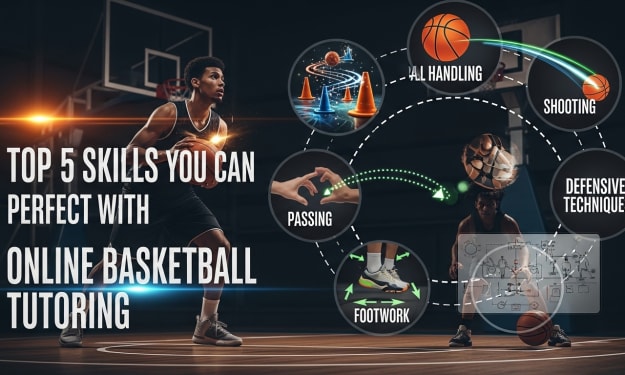
Top 5 Skills You Can Perfect with Online Basketball Tutoring
I vividly remember the first time I stepped onto a basketball court. The excitement was palpable, with the thrill of competition and the rush of adrenaline. It was a moment that combined the thrill of the game with the camaraderie of my teammates. This experience sparked a desire to improve my skills, leading me to online basketball coaching. It allowed me to refine my technique through personalized coaching and training.
By Hooper Fiko5 months ago in Unbalanced
Super Bowl LX Recap: A Team Called Hawks
Sixty. The Super Bowl turned 60! Still amazes me that this was the sixtieth Super Bowl played in NFL history. It seems like yesterday that I watched Super Bowl XXVII, the first SB I ever watched. The QB who won Super Bowl XXVII has since called a few SBs, and will call next year's game, but that's another story. Super Bowl LX took place at Levi's Stadium in Santa Clara, California, the home stadium of the San Francisco 49ers. However, it was one of their division foes who represented the NFC, as the Seattle Seahawks faced off against the New England Patriots.
By Clyde E. Dawkins23 days ago in Unbalanced
Shane Lowry’s two-hole tailspin gives Nico Echavarria the Cognizant Classic win"
Shane Lowry’s collapse over the final two holes handed victory to Nico Echavarria in a dramatic finish at the Cognizant Classic, turning what seemed like a routine closing stretch into one of the most talked-about moments of the PGA Tour season. Lowry, the 2019 Open Championship winner, had controlled much of the final round and appeared poised to secure another PGA Tour title. Playing with confidence and precision throughout the day, the Irishman built a narrow but steady lead as he approached the closing holes. His ball-striking had been reliable, and his putting solid enough to keep challengers at arm’s length. But golf’s unforgiving nature was on full display when pressure peaked at exactly the wrong moment. Everything changed on the par-3 17th hole. Lowry’s tee shot drifted just off line, leaving him with a delicate recovery from thick rough. His chip failed to stop close to the pin, and he missed the par-saving putt. The resulting bogey immediately tightened the leaderboard and brought Nico Echavarria firmly back into contention. Lowry still held a share of the lead heading to the final hole, but momentum had shifted. The par-4 18th delivered a crushing blow. Lowry found trouble off the tee, forcing him into a defensive approach shot that left a long and awkward putt for par. Under intense pressure, he could not convert. Another bogey dropped him behind Echavarria, who had calmly completed his round with a steady par finish. In the space of two holes, Lowry went from likely champion to runner-up, a stark reminder of how quickly fortunes can change in professional golf. For Echavarria, the victory was a defining career moment. The Colombian golfer showed remarkable composure in the closing stretch, especially after watching Lowry stumble. Rather than forcing aggressive shots, Echavarria relied on smart course management and consistent putting. His performance over the final few holes highlighted maturity beyond his years and underlined why he is considered one of the PGA Tour’s rising talents. “This win means everything,” Echavarria said after lifting the trophy. “I stayed patient, trusted my game, and waited for the opportunity. Golf is unpredictable, and today it went my way.” The Cognizant Classic has built a reputation for dramatic finishes, and this year’s tournament added another chapter to that history. Played under warm Florida conditions with swirling winds in the afternoon, the course demanded accuracy and mental strength. Several contenders struggled as pin positions became more difficult late in the round, but none felt the pressure more acutely than Lowry. Despite the painful ending, Lowry’s overall performance was far from a failure. He ranked among the leaders in greens in regulation and showed the consistency that has defined his career. However, his closing collapse will linger as a lesson in the fine margins that separate victory from disappointment. Golf analysts noted that Lowry’s conservative choices on the final holes may have contributed to his downfall, allowing tension to creep into his swing and decision-making. Fans reacted with a mixture of sympathy and shock. Social media quickly filled with clips of the final two holes, with many praising Echavarria’s calm demeanor while lamenting Lowry’s misfortune. Fellow players also expressed respect for both competitors, acknowledging the mental toughness required to seize such an unexpected opportunity. The win provides Echavarria with valuable FedEx Cup points and further secures his status on the PGA Tour. More importantly, it gives him confidence heading into the heart of the season, where he will now be viewed as a genuine contender rather than an outsider. For Lowry, the focus will turn to recovery and reflection. Champions are defined not just by victories but by how they respond to setbacks. With major tournaments still ahead, the Irishman will aim to convert this disappointment into motivation. In the end, the Cognizant Classic delivered a finish that captured the essence of professional golf: pressure, unpredictability, and the thin line between triumph and heartbreak. On a day when Shane Lowry faltered at the last hurdle, Nico Echavarria stepped forward and claimed a victory that may shape the trajectory of his career.
By Fiaz Ahmed 2 days ago in Unbalanced
When the Shelter Closes
Across the street from my house, a man slept under a tree, his dog by his side. My first, naive thought: he must be traveling through. But he kept coming back, often sleeping there during the day. Then it hit me—that person might not have a home.
By Bride of Sound6 days ago in Humans



Comments
There are no comments for this story
Be the first to respond and start the conversation.