
Football’s Darkest Battle: What Happens When the Game Breaks You Before You Break Through
What Happens When the Game Demands More Than a Player Can Give?

Football is a game of fire — passion, strength, adrenaline, and ambition. The world sees the full stadiums, the thunderous applause, the stunning goals, and the triumphant celebrations. But what the world doesn’t see, are the silent collapses, the sleepless nights, the crumbling mental health, and the way players — especially those at the top — crumble under the weight of expectations no one talks about.
Football is not just a game. It’s an industry. A machine. And players — especially young ones — are thrown into it with the promise of fame, money, and legacy. But that dream comes with a price nobody ever warned them about.
Imagine being 16, miles away from home, in a football academy where you’re told every day that your future depends on being better than everyone around you. Imagine playing through injuries because you know that if you sit out, someone else will take your spot. Imagine having a bad game and waking up to thousands of abusive messages online because people bet money on your performance.
This is not football fantasy. This is football reality.
Mental health in football is still treated like a side note — an unspoken weakness. Start talking about depression, and suddenly you’re “losing focus.” Show vulnerability, and they say “you’re not built for this.” But what about the pressure? What about the trauma of injuries, the fear of failure, the burnout, the loneliness, the social media hate, the career uncertainty?
Footballers struggle too. They cry, they break down, they lose themselves. But the system tells them not to.
Fans worship players when they win but abandon them when they slip. A missed penalty can erase a decade of greatness. A slow season turns legends into memes. Whenever players speak up — like Dele Alli opening up about addiction and abuse, or players stepping back due to mental exhaustion — the world applauds for a moment. Then they move on. But that athlete is still fighting long after the applause fades.
When young players get injured, the world sees the rehab videos, the smiling updates, the motivational quotes. What nobody sees are the silent breakdowns. The self-doubt. The fear that they’ll never be the same again. That their life's dream is slipping away.
And then there are players who retire early — not because they want to — but because they can no longer bear the emotional toll. Not the tackles. Not the training. The pain inside.
Every time we watch a match, scream at a player, spread a tweet, or post an opinion about tactics and transfers — we forget that these are not just names in jerseys. They are human beings. Sons, fathers, friends, children — with emotions, scars, dreams, and battles just like us. But the difference? Their battles are fought in silence while the world watches their every move.
Football must change. We must change how we see footballers — not just as performers but as people. Mental health support should be as important as injury treatment. Coaches must care beyond performance. Fans must show empathy beyond goals.
About the Creator
Keep reading
More stories from duran lorena and writers in Unbalanced and other communities.
🏈 The Silent Battle: NFL Injuries, Concussions, and the Mental Health Crisis Behind the Game
Introduction: The Hidden Pain Behind the Glory Every Sunday, millions of fans tune in to watch their favorite NFL teams battle on the gridiron. The lights are bright, the crowd roars, and the hits echo across stadiums. But behind the helmets and glory lies a hidden truth the NFL is not just a game of strength, it’s a game of survival. Players may walk off the field heroes, but many carry scars the world can’t see concussions, chronic pain, and mental health struggles that haunt them long after the final whistle.
By duran lorena4 months ago in Unbalanced
Super Bowl LX Recap: A Team Called Hawks
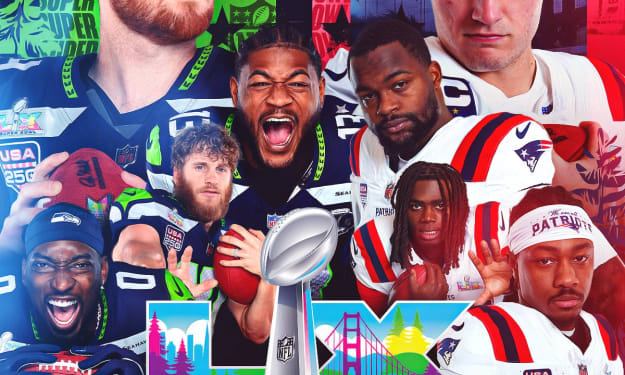
Sixty. The Super Bowl turned 60! Still amazes me that this was the sixtieth Super Bowl played in NFL history. It seems like yesterday that I watched Super Bowl XXVII, the first SB I ever watched. The QB who won Super Bowl XXVII has since called a few SBs, and will call next year's game, but that's another story. Super Bowl LX took place at Levi's Stadium in Santa Clara, California, the home stadium of the San Francisco 49ers. However, it was one of their division foes who represented the NFC, as the Seattle Seahawks faced off against the New England Patriots.
By Clyde E. Dawkins19 days ago in Unbalanced
Tennessee vs Vanderbilt: More Than a State Rivalry
When Tennessee vs Vanderbilt appears on the schedule, it feels different. The air carries history. Families pick sides. Old memories return. Some remember heartbreak. Others remember last-minute wins that still give them chills.
By Muqadas khan7 days ago in Unbalanced



Comments
There are no comments for this story
Be the first to respond and start the conversation.