
Beyond the Court: Elevate Your Game with Mental Preparation Techniques for Basketball Players
Mastering the Mind Game: Strategies to Enhance Focus, Confidence, and On-Court Performance

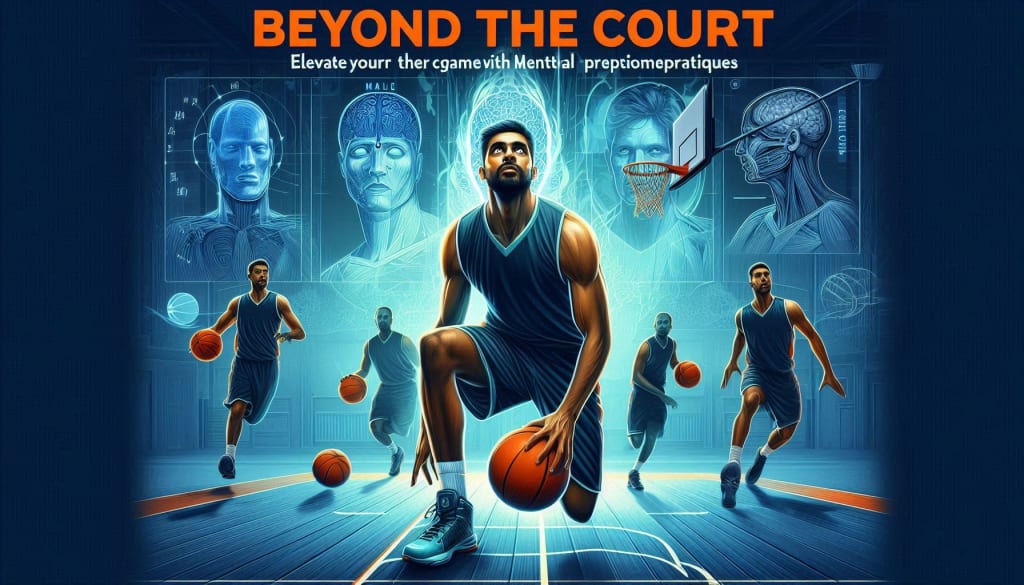
Basketball isn't just a game of physical prowess; it's also a mental battle. While hours spent on the court practicing shots and drills are crucial, mental preparation is equally important for peak performance. This blog explores strategies to boost mental resilience and focus, equipping players with the tools they need to excel both on and off the court.
Whether you're a player, coach, sports psychologist, or part of the basketball community, you'll find valuable insights and practical tips to incorporate into your training routine. Let's unlock the secrets of mental toughness and fortitude that can take your game to new heights.
Understanding the Mind-Body Connection
How Mental Preparation Impacts Physical Performance
The mind and body are inextricably linked. When your mental state is sharp, your physical performance benefits significantly. A clear and focused mind can enhance reaction times, decision-making abilities, and overall gameplay.
Mental preparation techniques like visualization, breathing exercises, and goal setting help create a focused mindset. By honing these techniques, players can ensure they are mentally ready to face any challenge on the court. Understanding this connection is the first step toward leveraging it for peak performance.
When players are mentally prepared, they're better equipped to handle the pressures of the game. This not only improves individual performance but also contributes to the team's overall success. By prioritizing mental preparation, players can elevate their game and contribute to a winning team culture.
The Power of Visualization
See It, Believe It
Visualization is a powerful technique used by top athletes across all sports. It involves creating a detailed mental image of successful performance or desired outcomes. When you visualize success, your mind gets accustomed to that reality, building confidence and belief in your abilities.
Visualization also helps with decision-making on the court. By mentally rehearsing different game scenarios and visualizing yourself making the right decisions, you train your mind to be more focused and decisive during gameplay.
To incorporate visualization into your training routine, set aside time before games or practices to meditate and visualize successful outcomes. Make the visualizations as detailed and realistic as possible, including sights, sounds, and physical sensations.
The Art of Breathing
Finding Calm in Chaos
Breath is a powerful tool for finding focus and calmness amidst the chaos of a basketball game. Controlled breathing techniques can help players regulate their emotions, stay present, and perform at their best under pressure.
One such technique is box breathing - slowly inhaling for four counts, holding for four counts, exhaling for four counts, and holding again for four counts before repeating the cycle. This technique can be done on or off the court to help players center themselves and find clarity.
Incorporating breathwork into your training regimen can also help players build endurance and increase lung capacity, providing physical benefits as well.
The Importance of Goal Setting Small Goals Lead to Big Successes
Setting specific, achievable goals is a critical component of mental preparation for basketball players. By setting small, incremental goals, players can continuously strive for improvement and track their progress.
Goal setting also helps players create a sense of purpose and direction in their training. This can be particularly helpful during times of adversity or when facing challenges on the court.
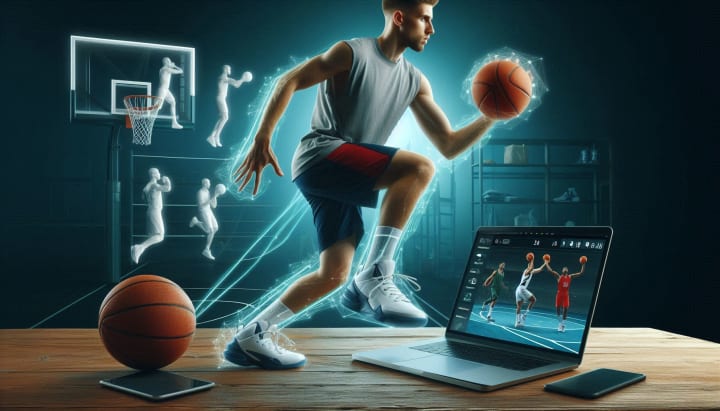
When setting goals, it's essential to make them realistic and measurable. Celebrate small victories along the way to keep motivation high and continue pushing towards bigger achievements.
Techniques for Enhancing Focus and Concentration
Visualization
Visualization is a powerful tool for improving performance. By imagining successful plays and outcomes, players can increase their confidence and reduce anxiety. Visualization helps create a mental roadmap for success, making it easier to execute on the court.
Top athletes like Michael Jordan have long championed visualization. Jordan once said, "I visualize every shot before I hit it." By mentally rehearsing plays, athletes can improve their muscle memory and reaction times.
Incorporating visualization into your daily routine can yield tremendous benefits. Spend a few minutes each day visualizing successful plays, free throws, and defensive maneuvers.
Breathing Exercises
Breathing exercises are essential for maintaining composure and focus. Controlled breathing helps regulate the nervous system, reducing stress and anxiety levels. Techniques like diaphragmatic breathing can improve oxygen flow to the brain, enhancing mental clarity.
Phil Jackson, legendary coach of the Chicago Bulls and Los Angeles Lakers, emphasized the importance of breathing exercises. He said, "The game is won or lost in the head." Controlled breathing can help players stay calm under pressure and make better decisions.
Incorporate breathing exercises into your warm-up routine. Practice deep, slow breaths before games and during timeouts to maintain focus and composure.

The Role of Self-Talk in Mental Toughness
Building Resilience and Confidence Through Positive Self-Talk
Self-talk refers to the internal dialogue we have with ourselves. It can greatly impact our thoughts, emotions, and behaviors, making it a critical component of mental toughness.
Positive self-talk can help players build resilience and confidence by reframing negative thoughts into positive ones. Instead of saying "I can't make this shot," reframe it as "I'm going to make this shot." This shift in thinking can boost belief in one's abilities and lead to better performance on the court.
Creating positive affirmations and repeating them during training or before games can also help build mental fortitude. These affirmations can be individualized and tailored to address specific challenges or weaknesses.
Mental preparation is just as important as physical training when it comes to excelling in basketball. By incorporating techniques like visualization, breathing exercises, goal setting, and positive self-talk into your routine, you can improve focus, composure, and overall performance on the court. Remember, mental toughness is a skill that can be honed and developed over time - with dedication and consistency, you can reach peak performance levels and contribute to a winning team culture. So take the time to prioritize your mental preparation - it may just make all the difference in your game. And always remember: "The game is won or lost in the head." - Phil Jackson - Don't forget to breathe. In high-pressure situations, it's easy to get caught up in the chaos and forget to take a moment to center yourself. But by incorporating breathing techniques into your routine, you can stay calm, focused, and in control on the court.

So next time you feel overwhelmed during a game or practice, remember to take a deep breath and refocus your mind. Your teammates and coaches will thank you for it
Surround Yourself with Positive Influences
Mental toughness also involves surrounding yourself with positive influences. This can include supportive teammates, coaches who believe in you, and mentors who have been through similar
Positive Self-Talk
Positive self-talk is a crucial component of mental preparation. Encouraging and motivating oneself can boost confidence and improve performance. Negative self-talk, on the other hand, can undermine confidence and lead to poor performance.
Kobe Bryant once said, "The mental aspect of the game is just as important as the physical aspect. If you don't believe in yourself, no one else will." Replace negative thoughts with positive affirmations to build confidence and resilience.
Make a habit of using positive self-talk during practices and games. Encourage yourself with phrases like "I can do this," "I'm prepared," and "I am confident."
Goal Setting
Setting specific, achievable goals is vital for maintaining focus and motivation. Goals provide a roadmap for success and help players stay committed to their training. They also offer a sense of accomplishment when achieved.
Larry Bird emphasized the importance of confidence and goal setting. He said, "I've always been confident in my abilities. I've never doubted myself." Setting clear, measurable goals can help build this confidence.
Create short-term and long-term goals for your basketball career. Write them down and review them regularly to stay motivated and focused.
Strategies for Building Mental Toughness
Overcoming Adversity
Mental toughness is forged in the face of adversity. Overcoming challenges and setbacks builds resilience and prepares players for future obstacles. Viewing adversity as an opportunity for growth can shift the mindset from defeat to determination.
Wayne Gretzky eloquently stated, "I think I've scored more goals in my head than I have in real life." Visualizing success and learning from failures are key aspects of building mental toughness.
Reflect on past challenges and how you've overcome them. Use these experiences as motivation to tackle future obstacles with renewed determination.
Embracing Pressure
Pressure is a constant in sports, and mental toughness requires the ability to thrive under pressure. Instead of viewing pressure as a burden, embrace it as an opportunity to showcase your skills and mental fortitude.
Michael Jordan famously said, "I've missed more than 9000 shots in my career. I've lost almost 300 games. Twenty-six times I've been trusted to take the game-winning shot and missed. I've failed over and over again in my life. And that is why I succeed." By embracing pressure and learning from failures, players can build the resilience needed for mental toughness.
Practice visualization techniques to prepare for high-pressure situations, such as making crucial shots or handling the ball under pressure. Embrace the pressure and trust in your abilities to succeed.
Staying Composed
Mental toughness also involves maintaining composure in the face of chaos. In high-pressure situations, it's easy to let emotions take over, leading to poor decision-making and performance. By learning to stay calm and focused, players can make better decisions and contribute to their team's success.
One way to maintain composure is through deep breathing exercises. Taking a moment to regulate your breath can help calm nerves and refocus the mind.
Practicing mindfulness techniques can also help players stay present and focused on the task at hand, rather than getting caught up in distractions or negative thoughts. Mental toughness is crucial for excelling in basketball and achieving peak performance. By incorporating techniques such as positive self-talk, goal setting, and overcoming adversity into your routine, you can build strong mental fortitude that will benefit you on and off the court. Remember to prioritize your mental preparation just as much as physical training - it could make all the difference in your game. And always remember the wise words of legendary coach Phil Jackson: "The game is won or lost in the head." So stay mentally tough, believe in yourself, and never give up on your dreams. With dedication and perseverance, anything is possible in basketball and beyond. So keep pushing
Maintaining Composure
Composure is critical during high-pressure situations. Maintaining a calm and focused mindset allows players to make better decisions and execute plays effectively. Techniques like breathing exercises and positive self-talk can help maintain composure.
Phil Jackson's emphasis on the mental aspect of the game underscores the importance of composure. He believed that staying calm under pressure was essential for success.
Practice maintaining composure during scrimmages and high-stress situations. Use breathing exercises and positive self-talk to stay focused and composed.
Developing a Growth Mindset
A growth mindset is the belief that abilities and intelligence can be developed through dedication and hard work. This mindset fosters a love for learning and resilience, essential qualities for success in basketball.
Magic Johnson's words, "I've always believed that if you can dream it, you can achieve it," encapsulate the essence of a growth mindset. Adopting this mindset can lead to continuous improvement and success.
Focus on personal growth and development. View challenges as opportunities to learn and improve. Celebrate progress and remain committed to continuous improvement.
The Role of Coaches and Sports Psychologists
Best Practices and Approaches
Coaches and sports psychologists play a pivotal role in mental preparation. They provide guidance, support, and strategies to help players develop mental toughness and focus. Collaborative efforts between coaches, psychologists, and players can yield significant benefits.
Coaches can incorporate mental preparation techniques into training routines. By emphasizing the importance of mental resilience, they can create a culture of mental toughness within the team.
Sports psychologists offer personalized strategies to address individual challenges. They can help players develop coping mechanisms, manage stress, and enhance focus.
Regularly engage with coaches and sports psychologists to develop and refine mental preparation strategies. Their expertise can provide valuable insights and support.
Real-Life Examples of Mental Preparation
Stories of Players Who Excelled
Numerous basketball legends have credited their success to mental preparation. Michael Jordan, widely regarded as one of the greatest basketball players of all time, faced numerous setbacks and failures. Yet, his mental resilience and focus propelled him to unprecedented heights.
Jordan's famous quote, "I've missed more than 9,000 shots in my career. I've lost almost 300 games. 26 times I've been trusted to take the game-winning shot and missed. I've failed over and over and over again in my life. And that is why I succeed," highlights the importance of mental toughness.
Kobe Bryant's dedication to mental preparation also played a significant role in his success. His unwavering belief in himself and commitment to mental training set him apart as one of the greatest players in NBA history.
Reflect on these stories and draw inspiration from their dedication to mental preparation. Use their experiences as motivation to develop your mental resilience and focus.
Conclusion
Mental preparation is a crucial component of basketball training. By understanding the mind-body connection, incorporating techniques for enhancing focus and concentration, and building mental toughness, players can elevate their game to new heights.
Coaches and sports psychologists play a vital role in supporting mental preparation. Collaborative efforts and personalized strategies can yield significant benefits for individual players and teams.
Remember, the mental aspect of the game is just as important as the physical. By incorporating mental preparation techniques into your training routine, you can enhance your performance, boost confidence, and achieve your basketball goals.
Join the conversation and share your mental preparation techniques with the community. Together, we can build a culture of mental resilience and excellence in basketball.
Final Thoughts
The road to mental toughness is paved with dedication, practice, and perseverance. By committing to mental preparation, you can unlock your full potential and achieve greatness on the basketball court. Keep pushing, stay focused, and remember – the game is won or lost in the head. So, prioritize mental preparation and watch yourself excel on the court. Let's keep the conversation going and continue to inspire each other towards mental toughness and success in basketball. Let's go!
Frequently Asked Questions (FAQ)
1. What is mental toughness in basketball?
Mental toughness refers to a player's ability to remain resilient, focused, and determined in the face of challenges, pressure, and adversity during games and training.
2. How can I develop a growth mindset?
To develop a growth mindset, embrace challenges as learning opportunities, focus on effort rather than innate ability, and celebrate progress. Regular self-reflection on your experiences can also reinforce this mindset.
3. What techniques can help maintain composure during high-pressure situations?
Techniques such as deep breathing exercises, visualization, and positive self-talk can significantly help in maintaining composure and clarity during intense moments of a game.
4. How important is the role of coaches in mental preparation?
Coaches play a vital role in mental preparation by integrating mental toughness strategies into training, providing emotional support, and fostering an environment that prioritises resilience and focus.
5. Can sports psychologists enhance my mental game?
Yes, sports psychologists can offer tailored strategies to help you develop mental resilience, cope with stress, enhance focus, and ultimately improve your overall performance on the court.
About the Creator
Hooper Fiko
With my professional advice on basketball workouts and online training, you can reach your greatest potential. Get expert advice, customized workouts, and inspiring material to improve your performance. Come along and change your abilities!
Keep reading
More stories from Hooper Fiko and writers in Unbalanced and other communities.
Master Your Footwork with Online Basketball Exercises
In the dynamic world of basketball footwork is crucial. Mastering your footwork can distinguish between a good player and a truly great one. With the rise of online training programs, athletes can now incorporate specialized basketball exercises into their training routines from the comfort of home or a nearby gym. Online resources allow for tailored workouts to enhance agility, balance, and precision, which are essential elements in any athlete's arsenal.
By Hooper Fikoabout a year ago in Unbalanced
Wild Card Weekend Recap: What Happens Now?
I think I figured out why I love Wild Card Weekend so much. It's because it's the first playoff anything of the calendar year. The NFL season starts in the fall, and once upon a time, the champion was crowned either on or slightly before New Year's. The evolution of the NFL schedule has resulted in the playoffs starting just into the New Year, and currently, the final week of the season falls on the first weekend of the New Year, with Wild Card Weekend coming a week after that. So yes, chronologically, the NFL's Wild Card Weekend serves as the first playoff anything of the calendar year.
By Clyde E. Dawkins5 days ago in Unbalanced
Somers Dominates at John Jay
Scroll down for photos vs John Jay, Panas and Put Valley After beating Croton-Harmon to open the season, Somers traveled to John Jay on Saturday, December 6 with a long memory. “They beat us up pretty bad last year,” said Leo Keimig. But going up 18 half way through the third certainly seemed to alleviate old wounds. That is until John Jay cut the lead to ten. So an answer was needed, and Keimig made the grade, according to Coach Loughlan.
By Rich Monetti7 days ago in Unbalanced



Comments
There are no comments for this story
Be the first to respond and start the conversation.