
Are the Rocks in Your Head Making You Dizzy?
Benign Paroxysmal Positional Vertigo, or BPPV, can cause dizziness by way of mobile calcium deposits in your inner ear.


While the comprehension of diseases and disorders, along with their processes, is a necessary aspect to all healthcare-based fields of work and study, it is also a beneficial commodity for each of us to possess.
Today’s Topic of Discussion:
Benign Paroxysmal Positional Vertigo (BPPV)
The term vertigo, or the sensation of irregular or whirling motion, either of oneself or of external objects, is often interchangeably used with the term dizziness, or the phrases ‘loss of balance’ or the ‘sensation of spinning’.
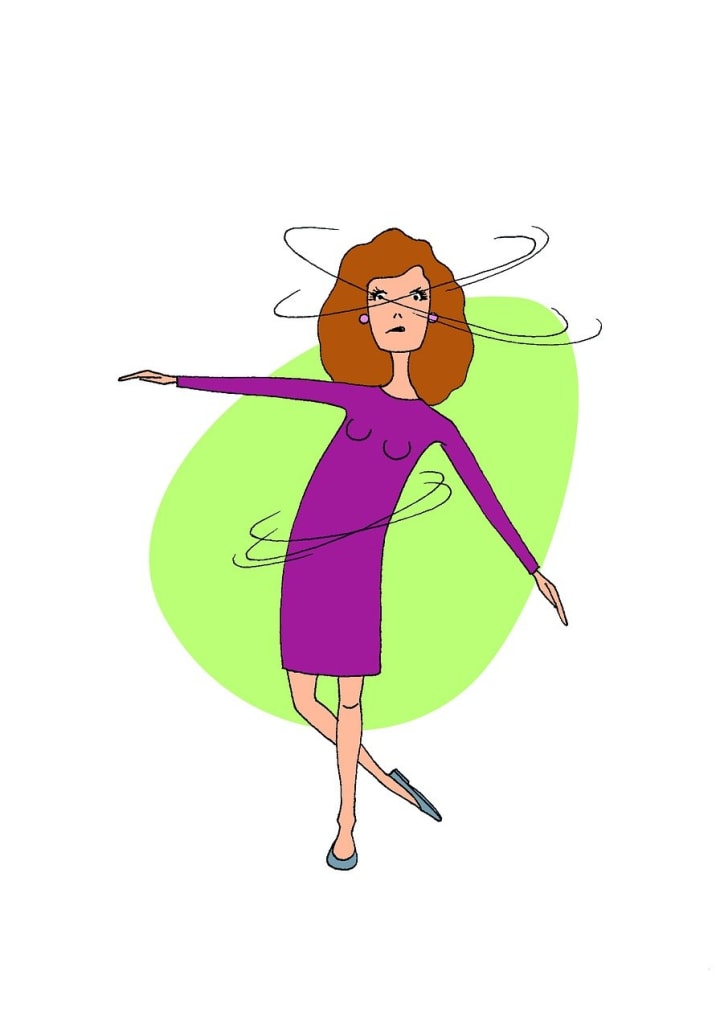
Because vertigo has taken on such a general description of various symptoms, it is often helpful to form a more specific diagnosis; these diagnoses may include Meniere's disease or vestibular neuritis, however, the most common cause of vertigo is Benign Paroxysmal Positional Vertigo (BPPV).
Benign Paroxysmal Positional Vertigo (BPPV) is a disorder that causes vertigo, dizziness, and other symptoms due to debris that has collected within a part of the inner ear elicited by certain critical provocative positions. The ‘debris’, while sometimes referred to as “ear rocks”, is actually otoconia deposits. Otoconia are small crystals of calcium carbonate, which is a natural substance produced by the body, and typically gets re-absorbed.

BPPV occurs when these deposits migrate into the semi-circular canals of the inner ear, and while they remain in there, they will continue to create spells of dizziness and loss of balance.

The semi-circular canals are one of the structures responsible for a person’s sense of balance. Therefore, these tiny particles, while small in size, can cause big trouble in the canal. By improperly stimulating the vestibulocochlear nerve, commonly known as the balance nerve, which lies within the canal, it can cause havoc in the person’s ability to balance and feel a sense of equilibrium.
BPPV was first characterized by an Austrian physician named Robert Bárány in 1921. In 1952, English otologist Charles Skinner Hallpike and his assistant Dr. Margaret R. Dix were the first to clearly describe the provoking positioning technique and the clinical indicators of BPPV. Dix and Hallpike created the widely known Dix-Hallpike test. This test is used to duplicate the symptoms associated with BPPV. To this day, it is one of the most popular and reliable assessment tools used to diagnose this disorder.
In addition to dizziness and balance difficulties, people who suffer from this disorder may also experience blurred vision, fatigue, headaches, a general continuous feeling of motion sickness, lightheadedness, and nausea. These symptoms are often brought on as a result of a change in position (e.g., rolling over in bed, getting out of bed). Furthermore, they typically last a few seconds to a few minutes and are intermittent (i.e., come and go). The combination of the type, the duration, and the onset method of the symptoms, can often indicate whether they can be considered cardinal characteristics of BPPV.
Other peripheral vestibular disorders, such as, Meniere’s disease and vestibular neuritis have similar signs and symptoms to those of BPPV. However, symptoms of Meniere’s disease and vestibular neuritis include hearing loss, ringing in the ears (tinnitus), and ear pressure, that often lasts hours to days, as well as vertigo, imbalance and nausea. The differences in types of symptoms and how long they last become extremely significant when it is time for the diagnosis.
In addition to peripheral vestibular disorders, there are also central vestibular disorders. These include strokes and severe migraines. Central vestibular disorders can produce symptoms such as vertigo, double vision, headaches, nausea, vomiting, and lack of coordination. Being able to tell the difference between a central vestibular disorder and a peripheral vestibular disorder can also be crucial when diagnosing.
A diagnosis of Benign Paroxysmal Positional Vertigo (BPPV) can be made based on medical history, a physical examination, and vestibular and auditory tests. For example, history of either a serious or repetitive head trauma can be a cause of BPPV. This, along with ear infections and even aging, can cause damage to the inner ear and create a way for the otoconia to escape into the canals. A physical examination, along with neurological testing, can help determine a central versus a peripheral vestibular disorder. Also, the auditory tests can help with diagnosing Meniere’s disease, which usually has hearing loss, and BPPV, which doesn’t.
As previously mentioned, one of the best tools used to diagnose BPPV is the Dix-Hallpike test. In this test, a person is brought from sitting to a supine (on your back, face up toward the ceiling) position, with the head turned 45 degrees to one side and extended about 20 degrees backward. A positive test will show nystagmus of the eyes (jumping/wiggling of the eyes) in a rotary movement. Another key observation is if the patient feels dizzy while being brought into a supine position. This is important because changing positions almost always triggers BPPV. A physician or physical/occupational therapist in a medical setting typically performs this test. Once diagnosed, it is up to the person how and if they want to treat their BPPV.
Like most disorders, Benign Paroxysmal Positional Vertigo can be treated. One of the most common ways to treat BPPV is by taking medication.

While medications are not used to cure BPPV, they can be used to control the uncomfortable symptoms produced by it. Medications that are used to reduce the whirling sensation of vertigo are called vestibular suppressants. These include Antihistamines (such as Dramamine, Antivert, Benadryl), Scopolamine (such as Transderm-Scop) and Sedatives (such as Valium, Klonopin). You can also take medications for the nausea and vomiting that comes with vertigo. These are called antiemetics. They include Phenergan, which contains Promethazine, and Compazine, which contains prochlorperazine, both medications stop nausea and vomiting by reducing the activity of the central nervous system. Although the medications are able to control the symptoms, it’s important to know that medications that calm the inner ear (vestibular suppressants) may also slow down the brain's ability to adjust to the abnormal balance signals triggered by the particles in the inner ear. They should be taken only for 1 to 2 weeks to control severe symptoms. Definitely talk with a physician and/or a pharmacist prior to starting a medication regimen.

Another avenue that can be taken to control the symptoms of vertigo is the use of natural remedies. There are many different herbs & essential oils available to treat these symptoms.

For example, there is a product called MotionEaze on the market that is supposed to relieve symptoms of motion sickness such as, nausea, vomiting, and the sensation of spinning. However, it is also marketed for people who suffer from various types of vertigo. MotionEaze is said to contain natural oils that are absorbed through the skin, located behind the ear at the Temperomandibular joint, into the blood stream. The oils have a sedative effect on the nerves in the inner ear. It contains soothing herbs such as lavender, chamomile, and ylang ylang. This particular product is said to have the ability to stop symptoms once they have started and also to prevent them from occurring. It is important to remember that the natural remedies and medications simply target the symptoms, not necessarily the cause of the disorder. Definitely talk with a physician and/or a pharmacist prior to starting a natural remedy regimen.
After the medications and natural herbs have worn off, or can no longer be taken, the opportunity to treat the disorder, rather than the symptoms, is still available. The two most commonly used methods of treatment are known as the Epley and Semont Maneuvers. These are typically done in the clinical setting under the supervision of a physician or physical/occupational therapist. Both maneuvers are designed to move the otoconia deposits out of the sensitive canals. Each of them only takes about 15 minutes to perform. The maneuvers involve the person being moved from lying on one side to lying on the other in a very brisk manner. They are normally about 90% effective after 4 treatments.
There are also home treatment exercises that can be done after leaving the physician or therapist. These are known as the Brandt-Daroff Exercises. The typical prescription for these exercises consists of 2-3 times a day for 2-3 weeks. The exercises are begun in a sitting position. This is followed by moving into side-lying with the head tilted upward halfway. The side-lying position is held for 30 seconds. Return back to the sitting position, stay there for 30 seconds, and lay on the opposite side for 30 seconds. This cycle is continued for 5 repetitions, which should equate to 10 minutes. These exercises have a 95% success rate when done correctly. Although BPPV has been known to come back after periods of time, these exercises can be done whenever symptoms occur.
In conclusion, Benign Paroxysmal Positional Vertigo (BPPV) is one of the most common causes of vertigo, otherwise known as dizziness. In fact, about 20% of all dizziness is due to BPPV. Most people don’t even know that they have the disorder. While it is not life threatening, it can be disabling when the symptoms reach their peak. All in all, it may feel like just a dizzy spell but there are a number of causes for it, and Benign Paroxysmal Positional Vertigo could be one of them.
About the Creator
Megan Bald
Medical Professional turned writer.
Keep reading
More stories from Megan Bald and writers in Unbalanced and other communities.
Wild Card Weekend Recap: What Happens Now?
I think I figured out why I love Wild Card Weekend so much. It's because it's the first playoff anything of the calendar year. The NFL season starts in the fall, and once upon a time, the champion was crowned either on or slightly before New Year's. The evolution of the NFL schedule has resulted in the playoffs starting just into the New Year, and currently, the final week of the season falls on the first weekend of the New Year, with Wild Card Weekend coming a week after that. So yes, chronologically, the NFL's Wild Card Weekend serves as the first playoff anything of the calendar year.
By Clyde E. Dawkinsabout 24 hours ago in Unbalanced
Christian Kirk: From Rising Prospect to Proven NFL Playmaker
Christian Kirk has steadily carved out a reputation as one of the NFL’s most reliable wide receivers, blending speed, versatility, and consistency to become a key offensive weapon. While he may not always dominate national headlines, Kirk’s journey reflects the value of development, adaptability, and quiet professionalism in modern American football.
By Asad Alia day ago in Unbalanced




Comments
There are no comments for this story
Be the first to respond and start the conversation.