
A Look at the 1986 New York Mets
The New York Mets' second championship season remains one of the most memorable and famous years in baseball history

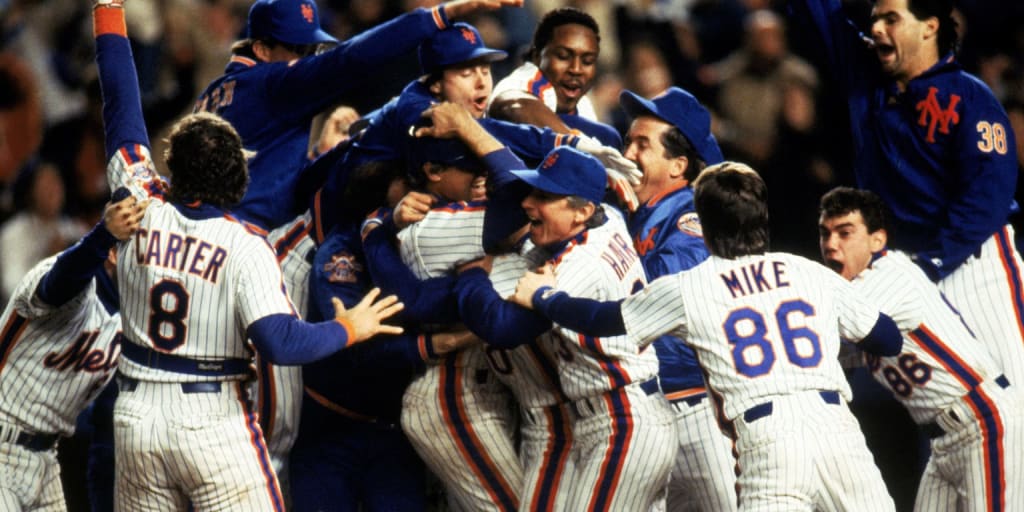
Say what you want to about the New York Mets (and many baseball fans do), but one thing is for sure, when they show out, they show out in grand fashion. In 1969, the team's eighth season in play, the team was down big in the newly formed National League East, but they came back, finished first, and won the whole thing. Four years later, they were down big again, but they rallied their way to another pennant; that was their famous "Ya Gotta Believe!" season. Now, it had been tough for the Mets after that, but 1986 saw everything click for the franchise.
The team had one hell of a roster, and one of their leaders was Jerry Seinfeld's buddy, Keith Hernandez. Hernandez led the team in batting average (.310) and hits (171), catcher Gary Carter was the RBIs leader with 105, and his 24 home runs only trailed Darryl Strawberry's 27 for the team lead. Lenny Dykstra was the main base stealer with 31, while Strawberry had 28 and Mookie Wilson (remember that name!) had 25 of his own. The Mets had quite the stacked rotation, consisting of Ron Darling, Bob Ojeda, Sid Fernandez, Rick Aguilera, and Dwight "Doc" Gooden, each one a big time threat on the mound.
1986 was the greatest season in the history of the New York Mets. A record of 108-54; winning an even 2/3 of their games. They ran away with the NL East, winning the division by 21.5 games over the second place Philadelphia Phillies, who were the only team to actually finish with a winning record against the Mets that year (Phillies went 10-8 vs the Mets in 1986). The Mets faced off against the Houston Astros in the National League Championship Series; yes, once upon a time, the Astros won division titles without the use of microphones and trash cans.
This was a battle between two teams who debuted in MLB in the same year: 1962. The Mets were supposed to have home field advantage because it was the East's turn to have it, but because of the NFL's Houston Oilers having to play a home game at the Astrodome on the same day as Game Four of that series, home field was given to the Astros to avoid conflict. The Astros shut out Doc Gooden and the Mets, 1-0, in Game One, but they would take Game Two against Nolan Ryan (a former 1969 Met), and would also win Game Three at Shea Stadium in walk-off fashion. The Astros evened it up in Game Four, but the Mets would take Game Five in 12 innings, and would win a wild sixteen-inning Game Six by a score of 7-6 to take the pennant--their first in 13 years. Mets reliever Jesse Orosco won three of the four games--the first time that a reliever picked up three wins in a single postseason series. Yet he wasn't named NLCS MVP. Strange.
The Mets faced off against the Boston Red Sox in the World Series, and we know the story with Boston. 68 years without a championship. Hadn't won since Babe Ruth as was sold to the Yankees. It had been 38 years since Babe Ruth, the Sultan of Swat, passed away, yet the black cloud that formed since that sale had still hovered over the team. The pennants were few and far in between for Boston, their last was in 1975. The Mets had home field because it was the National League's turn, but the Red Sox stymied them in Games One and Two. The Series shifted to Fenway, with the home team two wins away from ending the curse, but the Mets would win Games Three and Four, outscoring Boston 13-3 in those two games. However, the Red Sox took Game Five and beat Gooden again, forcing the Mets to have to win twice at home.
And then there was Game Six, played on the evening of October 25, 1986 at Shea Stadium. The Red Sox scored the first two runs, but the Mets tied it up in the fifth inning with a pair of runs. Boston took the lead in the seventh, only for New York to tie it up at three. That was the score after nine innings, but in the tenth inning, Dave Henderson hit a solo shot, and another RBI followed to make it 5-3. Nothing more was scored, but the Red Sox were just three outs away from ending the suffering, while the Mets needed, dare I say it, a miracle.
The miracle would need to be a big one, as the first two Mets batters were taken down. As Gary Carter stepped up to the plate, the words "Congratulations Boston Red Sox, 1986 World Champions" were accidentally displayed on the scoreboard. Oh boy. Carter singled, so that put a slight kibosh to that celebration. Well, it began the kibosh. Kevin Mitchell pinch-hit for the pitchers' spot, and he singled as well, so the tying runs were on base. Ray Knight was next, and his single drove in Carter and advanced Mitchell to third base. 5-4 Red Sox, two outs, the tying run was 90 feet away, and the winning run was on first.
And that's where the real fun began.
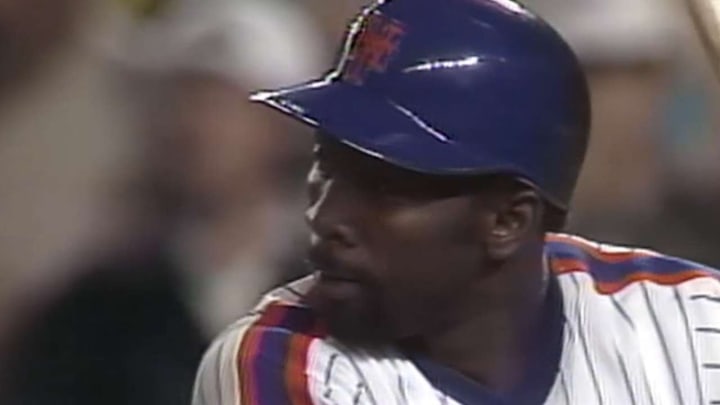
This man, the bringer of epic moments, is William Hayward Wilson, though we know him by his familiar nickname, "Mookie." Mookie Wilson came up to bat with the winning runs on base, and after six pitches, it was 2-2. Boston was still one strike away from a championship. Well, they were. A wild pitch that went to the backstop saw Mitchell, under Wilson's urgency, score from third, and Knight advanced to second. So the game was tied at five, and Boston's championship aspirations were put on hold. The winning run was now in scoring position, but the madness would not end there.
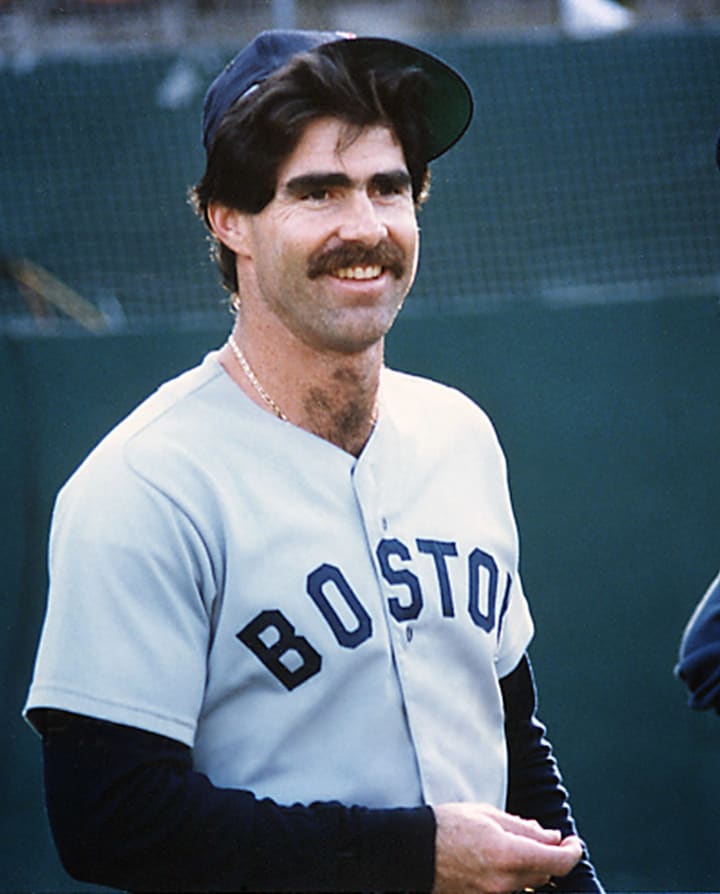
This man, who--even as a Yankees fan--I feel for immensely, is William Joseph Buckner. In two decades, Buckner hit .289 in his career and drove in 1,208 runs in what was an amazing career. Despite all of those amazing numbers, Buckner is sadly remembered for what I'm about to state. Mookie's at bat reached nine pitches, and pitch #10 saw Mookie put the ball in play right to Buckner. We know what happened. The ball went right between his legs, and Knight ended up scoring from second base. Mets won Game Six, 6-5, in 10 innings, to force Game Seven in Shea Stadium. The Red Sox led again, this time 3-0, but it was all Mets the rest of the way, resulting in an 8-5 win in the final game.

The Mets clinched their second (and most recent) World Championship on Monday, October 27, 1986. Game Seven was supposed to be played on the previous day, but a rainout forced the game to be moved to that Monday night. Meanwhile, something else was going on in that area: Monday Night Football at Giants Stadium. The New York Giants hosted Washington that night, and Giants fans were also paying attention to Game Seven that night, and it was during the third quarter of said game that the Mets clinched their championship, drawing a loud roar from the crowd in East Rutherford, New Jersey. Ray Knight, who scored the winning run in Game Six, was named World Series MVP, as he hit .393 in that Series and had nine hits.
Before I continue about the Mets, I have to talk about you-know-who.

It always bothered me that Bill Buckner basically carried that burden over Game Six for the rest of his life pretty much. Many people, including and especially Red Sox fans, blamed Buckner for that Series loss. Never mind the fact that Boston still needed to win one more game after that Game Six loss, it was all Buckner's fault. Here's the thing: Buckner wasn't supposed to be out there. John McNamara had many chances to replace him during that game, but he didn't. So really, that was on the manager, not Buckner. Even so, Buckner was scapegoated. Even when the curse was broken 18 years later, Buckner remained on the receiving end of unfair blame for "prolonging the curse," even more so than the Bucky Dent home run in 1978.
Despite all of this, you know who was one person took all of this in stride? None other than Bill Buckner himself. The biggest example of this came in 2016, where Buckner and Mookie Wilson appeared in a commercial together to commemorate the 30th anniversary of that moment. I remember this ad so well, and it saw the two hanging out together and Buckner was catching everything heading at him, but when a ground ball rolled near them, the vets laughed it off. At commercial's end, Mookie drops his car keys when they're tossed at him. Buckner's response: "I've been there."
Bill Buckner passed away on May 27, 2019 at the age of 69, and I thought about two things when I heard about his passing: the blame he got for Game Six, and that ad with Mookie Wilson. Though as the commercial showed, Buckner definitely had one hell of a sense of humor, bonafide proof that he was a total class act.
As for the Mets, as I stated before, this was their best season in franchise history. It would be tough for the Mets after that. They would win the NL East again two years later, but after that, it would be another 11 years before they would see the postseason again. The Mets would add two more pennants in 2000 and 2015, but neither one would result in a third championship. As I said before, people have said what they wanted to about the Mets, but one thing they have to say is that when they do show out, they do it in grand fashion. 1986 was the biggest, best, and brightest example.
About the Creator
Clyde E. Dawkins
I'm a big sports fan, especially hockey, and I've been a fan of villainesses since I was eight! My favorite shows are The Simpsons and Family Guy, etc.
Keep reading
More stories from Clyde E. Dawkins and writers in Unbalanced and other communities.
South America's 1st-Ever NFL Game Was Definitely One for the Books
I do love that the NFL continues to branch out and play their games all over the world, and they're continuing to play in new cities across the globe. Regarding this year, it was announced months prior that an actual NFL game would take place in São Paulo, the most populous city in Brazil--the largest country in South America. The teams participating in this historic game: the Philadelphia Eagles and the Green Bay Packers.
By Clyde E. Dawkinsabout a year ago in Unbalanced
Vikings slide past Hayes
In a period of seven days, Northland (7-4) has had two games that have been decided by a two-point margin. The Vikings are 2-0 in those contests as seniors Diante James and Daneal Krylov have made big shots that won both games respectively. On Jan. 3, at Columbus Academy, James knocked down a shot with less than two seconds remaining to deliver Northland to its biggest win so far this season. On his way to 19 points, James has proven to be one of the most confident shot makers in central Ohio. His big time basket led Northland to a 58-56 win over Westland which is currently 7-2.
By Winners Only4 days ago in Unbalanced
Alex Eala
Tennis has always been a sport where stories of discipline, sacrifice, and quiet resilience shape champions long before trophies do. In recent years, one name has steadily gained international attention for embodying those qualities with grace and ambition: Alex Eala. Still early in her professional journey, Eala represents more than individual success. She symbolizes a shift in global tennis, where talent now rises from regions once considered outside the sport’s traditional power centers. From junior Grand Slam glory to appearances on the professional tour, Eala’s path reflects patience, planning, and belief. Her performances, including moments connected to tournaments like the Auckland Open and the ASB Classic, show a player learning to translate promise into lasting impact. Early Foundations of a Rising Star Alex Eala’s story begins with a strong foundation built on family support and access to elite training. Unlike many players who rise through local circuits alone, Eala’s development was guided by a long-term vision. That vision led her to the Rafa Nadal Academy, an environment known for shaping technically sound and mentally strong athletes. At the academy, Eala refined her baseline game, improved her court movement, and learned how to compete with intention rather than emotion. These lessons were evident in her junior career, where she achieved milestones that placed her among the most promising young players of her generation. What stood out was not only her results but her composure. Eala played with a maturity that suggested she understood tennis as a marathon, not a sprint. Junior Success and Global Recognition Eala’s junior achievements opened doors to the international tennis spotlight. Winning major junior titles placed her name alongside players who would later become tour regulars. For many fans, this was the first time they encountered Alex Eala, and it quickly became clear she was not just another short-term prospect. Her left-handed style added variety to her game, creating angles that disrupted opponents. Combined with strong court awareness, this made her matches engaging to watch and difficult to predict. Junior success, however, is only a stepping stone, and Eala approached the professional transition with measured expectations. Rather than rushing into high-pressure events, she balanced growth with experience, a strategy that often separates sustainable careers from fleeting hype. Stepping Into the Professional Arena The move from juniors to the professional circuit can be unforgiving. Higher intensity, physical demands, and mental pressure test even the most gifted athletes. For Alex Eala, this transition has been deliberate rather than dramatic. She has taken part in ITF and WTA-level events, gaining experience against seasoned players. Each match has contributed to her understanding of pace, consistency, and endurance at the professional level. Losses have been treated as lessons, and victories as confirmation of progress. Events connected to the Auckland Open and the ASB Classic are particularly meaningful in this phase. These tournaments attract a competitive field while still offering young players exposure to high-quality opposition. For Eala, participation in such events represents an opportunity to measure herself against established professionals. Auckland Open and ASB Classic: Learning on a Bigger Stage The ASB Classic, held in Auckland, is more than just a warm-up event for the tennis season. It has a reputation for blending experienced tour players with emerging talent. Competing in or around the Auckland Open environment allows players like Eala to experience elite tournament structures, media attention, and crowd energy. For a young athlete, these elements matter. They teach how to manage nerves, expectations, and recovery over consecutive matches. Even brief appearances in such tournaments contribute significantly to development. Alex Eala’s connection with events like the ASB Classic highlights her gradual integration into the professional ecosystem. Each appearance adds confidence and clarity about what needs improvement, whether it is serve consistency, shot selection, or physical conditioning. Style of Play and Competitive Identity Eala’s game is built around controlled aggression. She prefers constructing points rather than rushing winners, relying on precision and movement. Her left-handed forehand remains one of her most effective weapons, creating angles that pull opponents off the court. Equally important is her defensive awareness. Eala often turns defense into offense, a trait that reflects her disciplined training background. While power tennis dominates many modern matches, her style emphasizes balance and adaptability. As she continues to evolve, adding strength and depth to her serve and net play will likely be key areas of focus. These improvements often come with time, experience, and physical maturity. Representation and Inspiration Beyond the Court Alex Eala’s rise carries significance beyond rankings and results. She represents hope for aspiring players from underrepresented regions, proving that access to global stages is possible with commitment and support. Her journey inspires younger athletes to believe that tennis is not limited by geography. Every appearance she makes, whether in major tournaments or developmental events, reinforces the idea that talent can emerge from anywhere. This broader impact gives Eala a unique position in the sport. She is not only building her own career but also helping expand tennis’s global narrative. The Road Ahead The future for Alex Eala remains open and full of possibility. Tennis careers are shaped over years, not seasons, and her measured approach suggests a focus on longevity rather than quick success. Continued participation in international tournaments, including those linked to the Auckland Open and ASB Classic, will provide valuable benchmarks for growth. As rankings fluctuate and competition intensifies, the true test will be consistency and resilience. Based on her journey so far, Eala appears well-equipped for both. Final Thoughts Alex Eala’s story is still being written, but its early chapters reveal a player grounded in discipline, learning, and quiet confidence. From junior triumphs to professional challenges, she has approached each step with intention. In a sport where pressure can derail even the brightest prospects, Eala’s calm progression stands out. Whether competing in global events like the ASB Classic or continuing her steady rise through the tour, Alex Eala represents a future built on patience, skill, and belief. For tennis fans watching the next generation take shape, her journey is one worth following closely.
By Saboor Brohi 6 days ago in Unbalanced




Comments (1)
This has been one of your most incredible stories yet, and it didn't just fascinate me because I'm an '80s kid. :)