
A Look at the 1979 Pittsburgh Pirates
The Pittsburgh Pirates' road to their fifth World Championship was not an easy one, but they got it done


We are closing in on the month of September, which is the last full month of the MLB season, so I thought I'd get back on track with the stories centering on the most memorable championship runs in baseball history. Now, here's the thing. I normally don't reveal my original plans for stories, but originally, my next story under this theme was going to be about the 1985 Kansas City Royals. But a few days ago, I looked at the standings, and saw that a certain team had been slipping down in the postseason race, and I was quite heartbroken by this. I'm not a fan of this team, but they fascinate me; in fact, the way that the city's sports teams carry themselves fascinates me. So I decided to give the spotlight to that certain team: the Pittsburgh Pirates.
I've been enthused and fascinated by Pittsburgh sports for a very long time. I've loved the way they do things. The Pirates, Steelers, and Penguins all have that same "scratch-and-claw" mentality. They don't do things the easy way. They don't get things handed to them. They work their asses off and fight against all odds. I know the Steelers have that mentality; I've read about it and I've seen it for myself for years. The Penguins definitely have that same mentality, and I've seen it from the Pirates as well. All three teams also had hardships as well, but regarding the Pirates, their emergence came at the same time as the Steelers: the 1970s.
1970, the second year of Divisional Play in MLB, was the Pirates' first postseason appearance since winning the World Series a decade prior, and started a string of five National League East division titles in six seasons. During that stretch, the Bucs only won the World Series once, in 1971, with Roberto Clemente as the World Series MVP. The following year, the Bucs fell to the Cincinnati Reds in the NLCS, and sadly, on New Year's Eve that same year, 38-year-old Clemente and four other humanitarian workers were killed in a plane crash. The group was on their way to Nicaragua to deliver relief supplies to earthquake victims, and as we know, as great as Clemente was on the field, he was much, much, much greater off the field.
The Bucs finished third in the NL East in 1973, and after back-to-back division titles in 1974 and 1975, they finished second in the division for three years straight. Which brings us to 1979, and the city of Pittsburgh was already celebrating prior to the baseball season, as the Steelers won Super Bowl XIII in January 1979. The Pirates boasted a strong hitting lineup led by Willie Stargell's 32 home runs. Dave Parker was second with 25 homers, but led the team in RBIs with 94, and also had a .310 batting average. Bill Madlock led the team with a .328 BA in 85 games, homered seven times, and drove in 44 runs.
Regarding pitching, John Candelaria, nicknamed "The Candy Man," went 14-9 with of 3.22 ERA. Candelaria was one of the Pirates' six ten-game winners, with one of them being Bert Blyleven, who led the team in strikeouts with 172. The NL East was close, but the race ended with the Pirates on top and winning their sixth and last division title of the 1970s. The team finished 98-64 and won the NL East by only two games over the rising Montréal Expos. 98 wins matches their third-highest season win total in team history; they've only had two 100+ win seasons, but those were all the way back in 1902 and 1909, the latter year seeing the Pirates win their first World Championship.
In the National League Championship Series, the Pirates faced off against a familiar foe: the National League West winning Cincinnati Reds. The Reds had been the Pirates' kryptonite during their run in the 70s, but in 1979, the Bucs finally had the right stuff against their foes. The Reds had home field advantage, but the Pirates took both games in Cincinnati in extra innings--Game One in 11 innings, Game Two in 10 innings. With the Pirates up 2-0, they had the chance to clinch it at home, and they did just that, a 7-1 victory behind a dominant pitching performance by Bert Blyleven.
The Pirates won their first pennant since 1971, and they would face the same team they defeated in that year's Fall Classic: the Baltimore Orioles, who defeated the California Angels in the American League Championship Series. The O's had home field, and they took Game One easily by a score of 5-4, with all five Baltimore runs scored in the first inning. The Pirates salvaged a split with their Game Two victory, but the scene shifting to Three Rivers didn't help the Bucs. The Orioles won Game Three, 8-4, and won Game Four, 9-6, putting the Pirates in a 3-1 hole with one final home game left. On that final home game of the season, the Pirates did dominate the Orioles with a 7-1 win, but they would still need to win both games in Baltimore. In Game Six, John Candelaria shut down the O's and led the Pirates to a 3-0 victory to force a deciding Game Seven, which saw the Orioles score first in the 3rd inning, but it would be all Pirates after that. Two runs in the 6th inning, and two more in the 9th would seal it for the Bucs.
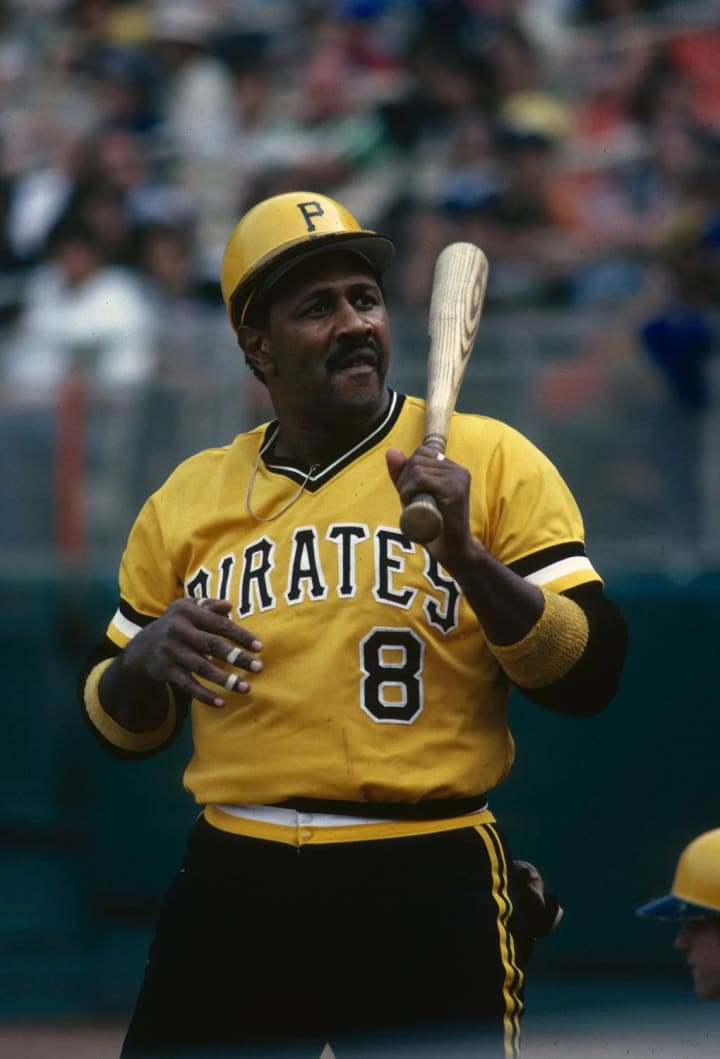
The Pittsburgh Pirates clinched their fifth World Championship on October 17, 1979, coming back from a 3-1 Series deficit to win the whole thing. They became the fourth team to come back from down 3-1 in a World Series to win it, and they are the only team to do so twice, they first did this back in 1925. Willie Stargell was named World Series MVP, after receiving that same nod for the NLCS. Overall, Stargell hit .415 during the entire postseason and hit five home runs--two in the NLCS and three in the World Series. Stargell, at age 39, became the oldest player to be named World Series MVP (surpassing the aforementioned Roberto Clemente, who was 37 when he earned the nod in 1971), and he would retire at the age of 42 in 1982, having played all 21 seasons with the Pirates. Nicknamed "Pops" later in his MLB career, Stargell passed away on April 9, 2001 at the age of 61; he is forever remembered as one of the greatest players in Pittsburgh sports, and an icon for the Pirates, and MLB overall.
The Pirates' 1979 championship continued a big sports celebration for Pittsburgh, as the 1979 NFL season ended with the Steelers winning Super Bowl XIV and repeating as champions. However, while the Steelers did add two more rings, the Pirates would fall on hard times following their 1979 championship. For starters, this was the Pirates' last championship to date, and also the last time they won an actual postseason series. The team only had 10 winning seasons from 1980 up to now, and regarding postseason appearances, the Pirates kicked off the 1990s with three straight NL East titles, with 1992 marking their last division title to date. 1992 was also their last postseason appearance until 2013, when the Pirates served as one of the National League's two Wild Cards. They defeated the Reds in the Wild Card Game, their first postseason win since 1979, but they are still looking for a series win.
Another thing I love about Pittsburgh sports: the championships are pretty much symmetrical. Pittsburgh has six Super Bowls, five Stanley Cups, and five World Series. The Pirates' 2024 season looked to have some promise, but the month of August has not been kind to them. At some point in July, the Pirates were one game behind the playoff line and looked to be closing in. Now? Eight games out. I really want something good for the Pirates. The team deserves something good. The city of Pittsburgh deserves to see something good happen to the Pirates. While this year seems unlikely, I would love to see the Pirates involved in October baseball as soon as next year. As for that 1979 season, it was a great year for the Pirates, as they do what Pittsburgh teams do best: scratch, claw, and persevere against all odds.
About the Creator
Clyde E. Dawkins
I'm a big sports fan, especially hockey, and I've been a fan of villainesses since I was eight! My favorite shows are The Simpsons and Family Guy, etc.
Keep reading
More stories from Clyde E. Dawkins and writers in Unbalanced and other communities.
A Look at the New 12-Team College Football Playoff Format
The NFL is just over two weeks away from starting, but regarding NCAA football, that is literally around the corner. The 2024 season of Division I football starts on Saturday, August 24 with a plethora of games all over the country and all around television. As long as I can remember, while the NFL owned Sundays, NCAA football owned Saturdays. Here in the West Coast, games aired as early as 9AM Pacific Standard Time, and the day of action usually spanned 12 hours.
By Clyde E. Dawkinsabout a year ago in Unbalanced
Rolland Courbis: A Defining Voice in French Football Management
Rolland Courbis is a name that evokes strong reactions in French football. To some, he is a sharp tactician and fearless leader; to others, a controversial figure whose career has been marked by both success and turbulence. Regardless of opinion, Courbis remains one of the most influential and recognizable personalities in France’s football landscape, known for his managerial stints, media presence, and uncompromising honesty.
By Asad Ali3 days ago in Unbalanced
Indiana stuns Oregon as viral sideline moment draws national attention
Introduction Indiana’s decisive victory over Oregon delivered one of the most surprising results of the college football sminated the scoreboard, attention online briefly shifted to a viral broadcast moment involving the family of Oregon quarterback Fernando Mendoza.
By Saad 5 days ago in Unbalanced


Comments
There are no comments for this story
Be the first to respond and start the conversation.