
1964 : Yankee Tidbits from Dog Days by Philip Bashe
The Horace Clarke Years

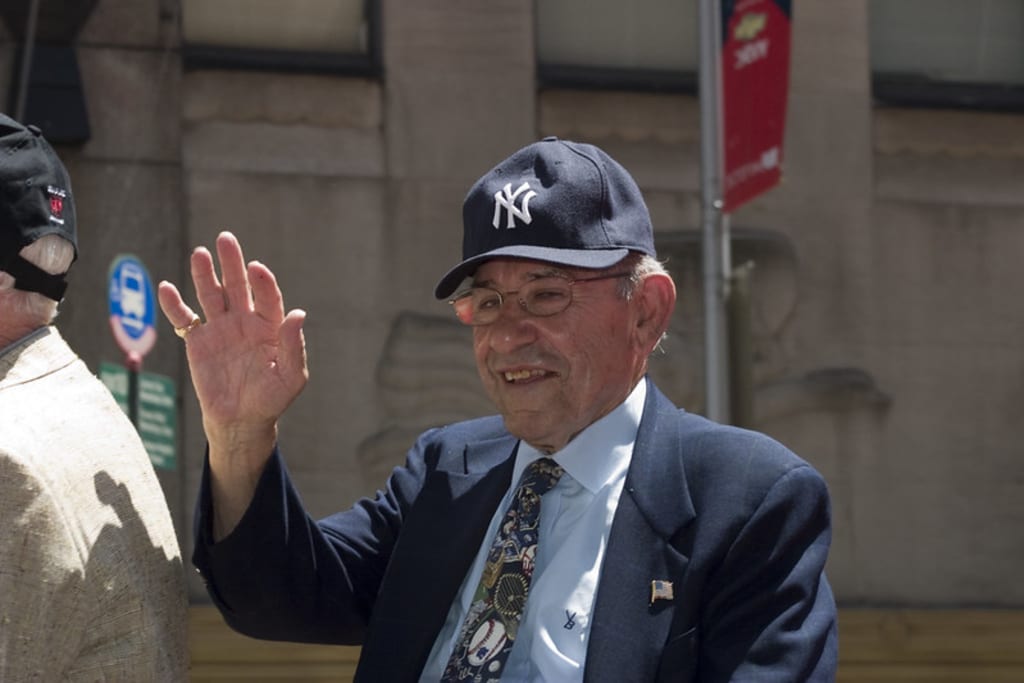
Photo by Rubenstein
Dog Days : The Yankees fall from Grace and Return to Glory - 1964-1976
By Philip Bashe, the 1994 novel is not only one of the best sports book I have ever read, for me, it’s one of the best books period. Maybe a time Yankee fans would like to forget, the people behind the unraveling provide just as human a story as all the glory that proceeded. That said, Bashe does a masterful job conveying anecdotals and keeps you wanting more. So I just wanted to provide some tidbits and here is my first installment. 1965 will be next.
After Casey Stengel managed the Yankees to the seventh game of the 1960 World Series, ownership thought he was too old. So the Yankees prepared a resignation statement, and in hopes of saving face, they made Casey read it. Backfiring, the awkward moment left a reporter seeking clarification. “Were you fired,” so Casey went off script.
“You’re goddamn right I was fired,” the sage shot back
The Yankees looked soulless, and in 1963, a retiring Yogi Berra gave the Bombers the chance to repair the damage. But that wasn’t the only issue at hand. The Yankees didn’t want to see Yogi in another uniform - especially in Met attire. In accordance, attendance dropped by 200,000 despite winning their fourth straight pennant in 1963, and across town, 120 losses had the Mets right in the same neighborhood. 1.3 million for the Yankees and 1.1 for the Mets, Yogi stealing headlines sounded like a good way to reassert from the revelry at the Polo Grounds. Baseball wise, the Yankees also felt that any man at the helm could bring home another first place finish, but the switch from labor to management was not an easy one, according to Tom Tresh. “It was tough for veterans to differentiate between Yogi the teammate and Yogi the manager,” he remembered.
And it was no easier with the younger players either. Squatty and inarticulate, Yogi was a bit of a joke, according to Bobby Richardson. “There was probably not the respect there should have been,” said the 1960 World Series MVP.
So bumpy for sure, while the strategic learning curve could be forgiven, Yogi stood in stark contrast to Ralph Houk. Beloved by his players, Houk knew how to assuage players when their confidence suffered, while Yogi only knew success as a player and never needed to be talked down. At the same time, Houk refused to publicly criticize his players, but Yogi often made his feelings known in earshot of teammates. Still Yogi persisted. He had a ton of injuries to aging stars, and the leadership component always in question, the Phil Linz harmonica incident went a long way to bonding the team and their relationship to the manager. That aside, Jim Bouton had the perfect summation. “Yogi’s strength was that he was low key, easy going and played down controversies. If you got a good team, you mostly want the manager to get out of the way and just let the good guys play ball and Yogi did that,” remembered Bouton. “I thought he did a very good job.”
Otherwise, the defining moment of the season came in under the radar on September 5. For two players to be named later, the Yankees traded for the pitcher who had the worst record in the American League since 1960. Pedro Ramas obviously came in unheralded and ended up saving six games and winning one. 5.5 games out on August 22, the Yankees went 29-12, and Ramos was on the mound for the clincher. Only 15,000 people in attendance for game 161, the fans took winning for granted, and the reliever was shocked that the players were of the same vain. He expected an outburst of emotion and simply got a few handshakes. “It was just like another game,” remembered Ramos.
Onto the World Series, the turnabout of events didn’t provide for the tidy ending Ralph Houk hoped for. In August the decision had already been made to fire Berra, and as Keane had already decided to leave St Louis, the transition to the new manager would be easy. Instead, the sale of the Yankees mostly required that the action be put off until season’s end, and the Cardinals even more improbable success made things more difficult for Keane. In 1965, he was going to be managing the team faced in the fall classic.
Nonetheless, Gibson won game 7, and the disappointment still had Yogi posing a straightforward question for Bobby Richardson on the plane ride home. “Should I ask for one year or two?”
The next day Yogi was fired, and on the St. Louis side, Keane really threw a curve. 30 minutes before the announcement of his rehiring, the manager handed Gussie Busch his letter of resignation. Four days later, he was hired by Houk, and accusations of tampering were put on Ford Frick’s desk. He cleared Houk but not really to the satisfaction of Maury Allen. “It’s an absolute lie,” the writer accused.
Messy indeed but more impropriety may have had an impact on game 7. Ralph Terry was one of the two players to be named later, and despite throwing two scoreless innings in game 4, the Yankees wanted no part of having the former 20 games winner bring home the series. “That’s why they hardly even let me near the bullpen. Because suppose Yogi or Houk know they’ve put me in an irrevocable trade, pitch me in the seventh game and I win it. They’re going to look bad trading me, aren’t they,” Terry reasoned. “I knew I wasn’t getting anywhere near that mound in the last game.”
And the dysfunction was just beginning.
All quotes and material from Dog Days : The Yankees fall from Grace and Return to Glory - 1964-1976 by Philip Bashe
About the Creator
Rich Monetti
I am, I write.
Keep reading
More stories from Rich Monetti and writers in Unbalanced and other communities.
Somers Blowout Aims for a Three-peat
Click for all fall slideshows In the previous three rounds of the playoffs, Somers has trailed early and Coach Anthony DeMatteo wasn’t looking to continue the string in the semifinals of the states. “So the stress all week was to come out flying in the first quarter,” he revealed, and the point was definitely taken.
By Rich Monettiabout a year ago in Unbalanced
Slap Shot! Did You Know These NHL Players Are Jewish?
Despite what people may think, hockey is a great sport for Jewish fans looking for fellow Jews to support. With several Jewish prospects in the works, there are quite a few Jewish players who have already made the National Hockey League (NHL) and are prospects sitting in the American Hockey League (AHL).
By Jenika Enoch5 days ago in Unbalanced
Impressive Raducanu into Indian Wells Third Round
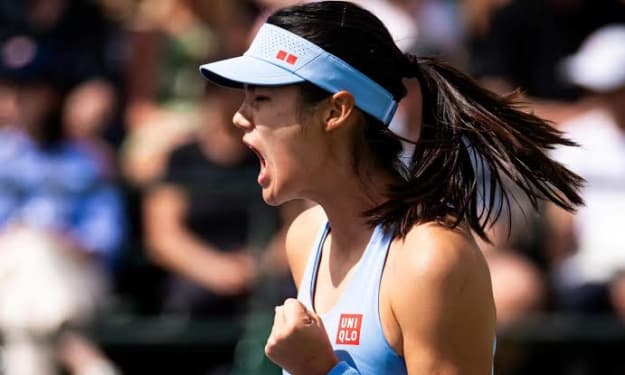
British tennis star Emma Raducanu produced one of her most confident performances of the season to reach the third round of the prestigious Indian Wells Open, defeating Russia’s Anastasia Zakharova in straight sets. The victory, achieved with a commanding 6–1, 6–3 scoreline, marked another step forward for the 23-year-old as she continues her resurgence on the WTA Tour. Raducanu entered the tournament looking to build momentum after a mixed start to the year. The former US Open champion has endured several challenging seasons since her remarkable breakthrough victory in New York in 2021, dealing with injuries, coaching changes and fluctuating form. Yet in the Californian desert she looked composed, focused and determined, displaying the aggressive baseline tennis that first propelled her into global stardom. From the opening game against Zakharova, Raducanu dictated the tempo of the match. Her powerful forehand and sharp return game put immediate pressure on the Russian player, who struggled to match the Briton’s pace and consistency. Raducanu quickly broke serve and surged to a 4–0 lead in the first set, drawing loud applause from the crowd at the Indian Wells Tennis Garden, one of tennis’s most iconic venues. The British player’s movement around the court was particularly impressive. Sliding confidently across the hard court surface, Raducanu chased down several difficult balls and turned defense into attack with remarkable efficiency. Observers noted that her fitness and court coverage appeared significantly improved compared to earlier tournaments this season. Zakharova attempted to regroup in the second set, briefly matching Raducanu in longer rallies. However, the British star maintained her composure, breaking serve again midway through the set to seize control of the match. Her serve, often considered a developing part of her game, proved reliable when it mattered most, allowing her to close out the contest without facing serious pressure. For Raducanu, the victory was more than just progression to the third round—it represented growing confidence in her game and a sign that her training adjustments are beginning to pay off. After the match, she acknowledged that consistency has been a major focus of her recent preparation. “Tournaments like this are about building momentum,” Raducanu said. “I’m trying to play each point with clarity and enjoy the competition. The support from the crowd really helped me today.” Indian Wells is widely regarded as one of the most prestigious tournaments outside the four Grand Slams. Often described as the “fifth Grand Slam,” the event attracts the world’s best players and draws massive global audiences. For Raducanu, a strong run here could provide valuable ranking points and renewed confidence as the season progresses toward the clay-court swing and eventually the summer Grand Slams. Tennis analysts believe Raducanu’s biggest strength in this match was her tactical discipline. Instead of rushing points or forcing risky winners, she constructed rallies patiently, waiting for the right moment to attack. This mature approach reflected the lessons she has learned since bursting onto the professional scene as a teenager. The Briton’s next challenge will come against American Amanda Anisimova, a powerful hitter known for her aggressive style. The matchup promises to be one of the most intriguing contests of the round, as both players possess the ability to dominate rallies from the baseline. For British tennis fans, Raducanu’s performance in Indian Wells is an encouraging sign. While expectations around her career have often been immense, the young star continues to evolve and adapt on the tour. With improved physical conditioning, growing tactical awareness, and the confidence gained from victories like this, Raducanu appears determined to reestablish herself among the elite players in women’s tennis. If her performance against Zakharova is any indication, the former Grand Slam champion may be rediscovering the fearless tennis that once captivated the sporting world. As the tournament continues under the bright desert sun, Raducanu’s journey at Indian Wells is quickly becoming one of the most compelling stories of the event.
By Fiaz Ahmed 5 days ago in Unbalanced
Hottest in the Office
Dear Rafi, You’re very distracting to work around. For the first second I saw you the other day, I thought you were some type of executive. It took a moment to realize no, you were just the new guy, dressed up for the job he wants. Be still, my heart.
By Gabriel Shames2 days ago in Pride



Comments
There are no comments for this story
Be the first to respond and start the conversation.