
Wiring Devices Market Trends & Summary
Global Wiring Devices Market Set to Reach US$100.03 Billion by 2033 Amid Smart Infrastructure Expansion

Introduction
The global wiring devices market is witnessing steady expansion as the world moves toward smarter infrastructure, energy-efficient buildings, and advanced electrical systems. Wiring devices serve as the backbone of modern electrical networks, enabling safe electricity distribution and efficient power control in residential, commercial, and industrial environments.
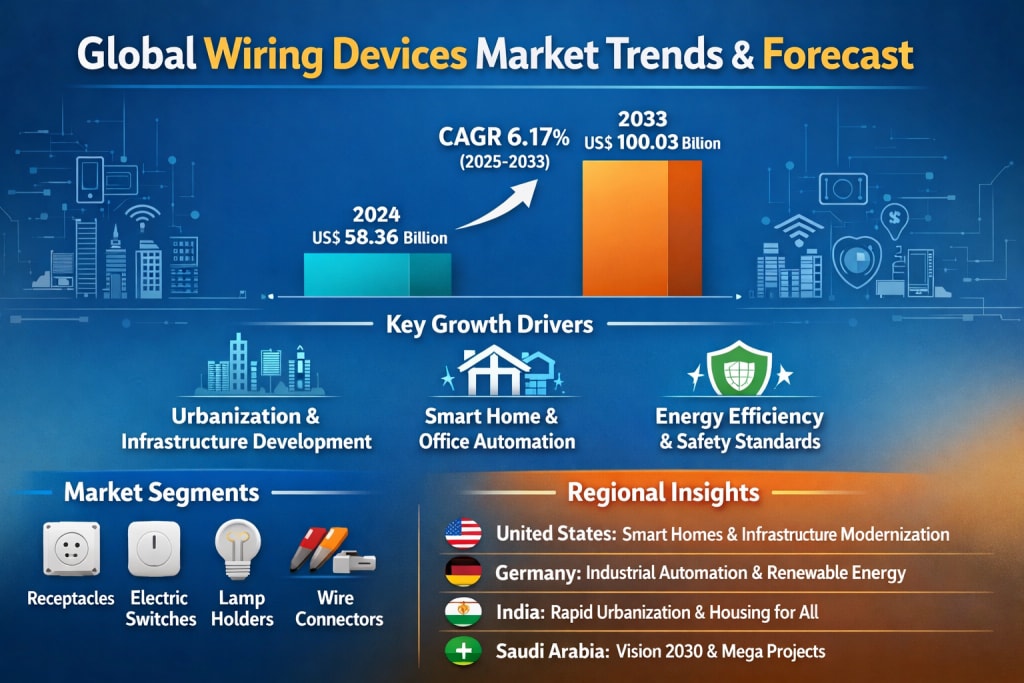
According to Renub Research, the global wiring devices market is projected to grow from US$58.36 billion in 2024 to US$100.03 billion by 2033, registering a compound annual growth rate (CAGR) of 6.17% from 2025 to 2033. This strong growth trajectory is driven by rapid urbanization, infrastructure expansion, and increasing adoption of smart homes and connected technologies.
From traditional switches and sockets to advanced smart dimmers and IoT-enabled connectors, wiring devices have evolved into intelligent solutions that support modern power management systems. With global construction activities rising and governments focusing on energy efficiency and electrical safety, the demand for advanced wiring devices continues to grow across multiple industries.
Understanding Wiring Devices and Their Role in Modern Infrastructure
Wiring devices are essential electrical components used to connect, control, and protect electrical circuits. Common examples include electric switches, receptacles, outlets, dimmers, plugs, connectors, lamp holders, and circuit protection devices.
These devices ensure reliable electricity distribution and allow users to safely control electrical installations. Without wiring devices, modern electrical systems would lack the safety mechanisms and operational flexibility required in today’s technologically advanced environments.
In residential settings, wiring devices such as wall switches and power outlets enable everyday electrical functions like lighting control and powering appliances. Safety-focused designs, including tamper-resistant outlets and circuit protection components, protect households from electrical hazards.
In commercial spaces, wiring devices support energy-efficient lighting systems, building automation technologies, and advanced HVAC controls. Offices, retail centers, hospitals, and educational institutions depend on these devices to manage power consumption and maintain operational efficiency.
Meanwhile, industrial facilities require robust wiring devices capable of handling heavy machinery, automation systems, and high electrical loads. Industrial-grade connectors, switches, and safety devices ensure uninterrupted operations and minimize risks associated with electrical faults.
As buildings become smarter and more connected, wiring devices are increasingly integrated with IoT technologies, enabling remote monitoring, automation, and intelligent power management. Smart switches and dimmers allow users to control lighting and appliances through mobile apps or voice assistants, improving convenience and energy efficiency.
Key Growth Drivers in the Wiring Devices Market
Rapid Urbanization and Infrastructure Development
One of the most significant drivers of the wiring devices market is the accelerating pace of urbanization worldwide. As cities expand and populations grow, demand for residential housing, commercial buildings, and public infrastructure continues to increase.
Emerging economies in Asia-Pacific, Latin America, and the Middle East are experiencing large-scale construction activities, which require reliable electrical systems. Wiring devices play a critical role in ensuring safe electricity distribution within these infrastructures.
Governments and private investors are also investing heavily in smart city initiatives and infrastructure modernization projects. These developments require advanced electrical components capable of supporting connected technologies, automation systems, and energy-efficient designs.
For example, in January 2025, Goldman Sachs Alternatives introduced a new open-ended global infrastructure strategy focused on private infrastructure investments, highlighting the growing opportunities in infrastructure development and electrical system upgrades worldwide.
Rising Adoption of Smart Homes and Smart Offices
The rapid adoption of smart technologies in homes and workplaces is significantly boosting demand for advanced wiring devices. Consumers increasingly prefer smart switches, outlets, and dimmers that enable remote operation and energy monitoring.
These devices integrate with IoT platforms, allowing users to control lighting, appliances, and power consumption using smartphones or voice assistants. As smart home ecosystems expand, wiring devices are becoming essential components of connected living environments.
Businesses are also adopting smart office solutions that rely on intelligent electrical systems to optimize energy usage, enhance productivity, and support collaborative workspaces.
In January 2025, SMART Technologies introduced new interactive display solutions and collaboration tools for businesses and educational institutions, highlighting the increasing demand for connected technology environments that depend on advanced electrical infrastructure.
Growing Focus on Energy Efficiency and Electrical Safety
Energy efficiency and safety standards are becoming increasingly important in electrical system design. Governments worldwide are introducing stricter regulations to reduce energy consumption and improve electrical safety in buildings.
As a result, consumers and businesses are adopting advanced wiring devices equipped with features such as:
Overload protection
Fire-resistant materials
Energy-saving capabilities
Smart monitoring functions
Manufacturers are investing in innovative materials and technologies to develop safer and more efficient electrical components.
In May 2024, ABB opened a €20 million injection molding facility in Evergem, Belgium, designed to produce sustainable electrification components using energy-efficient manufacturing technologies. Such investments demonstrate the industry's commitment to supporting the transition toward safer and greener electrical infrastructure.
Challenges Facing the Wiring Devices Market
High Cost of Advanced Wiring Devices
Despite their benefits, advanced wiring devices often come with higher costs compared to traditional electrical components. Smart switches, IoT-enabled outlets, and safety-enhanced connectors require additional technology integration, which increases production costs.
In price-sensitive markets, particularly in developing economies, consumers may prefer conventional wiring devices due to affordability concerns. This cost barrier can slow the adoption of advanced technologies, especially in lower-income residential segments.
Manufacturers are therefore focusing on cost optimization strategies and developing affordable smart solutions to expand their reach in emerging markets.
Lack of Standardization and Compatibility Issues
Another challenge for the wiring devices market is the lack of universal standardization across regions. Electrical standards and regulatory requirements vary significantly from one country to another, making product design and manufacturing more complex.
Additionally, compatibility issues may arise when integrating wiring devices with third-party smart systems or automation platforms. These challenges can limit seamless integration and slow the widespread adoption of connected electrical devices.
To address these concerns, industry players are working toward improving interoperability and developing globally compatible solutions.
Market Insights by Product Type
Receptacles
Receptacles are among the most commonly used wiring devices, providing connection points for electrical appliances and equipment. They are widely used in residential, commercial, and industrial environments.
Modern receptacles now include advanced safety features such as tamper-resistant designs and weatherproof enclosures, ensuring safe usage in different environmental conditions. Innovations like USB-integrated receptacles are also gaining popularity, allowing users to charge electronic devices without separate adapters.
Electric Switches
Electric switches are fundamental components used to control electrical circuits. They are widely used in lighting systems, appliances, and industrial equipment.
The growing popularity of smart switches has transformed the traditional switch market. These devices allow remote control, scheduling, and automation of electrical systems, making them ideal for smart homes and modern workplaces.
Increasing construction activities and the rising demand for energy-efficient lighting systems continue to drive the growth of electric switches globally.
Lamp Holders
Lamp holders are wiring devices designed to securely hold light bulbs while providing electrical contact. They are used in residential lighting fixtures, decorative lighting systems, and industrial lighting installations.
The shift toward LED lighting solutions has increased demand for modern lamp holders compatible with energy-efficient lighting technologies. Additionally, rising construction of high-rise buildings and commercial complexes continues to drive the need for reliable lighting systems.
Market Insights by Application
Residential Sector
The residential sector represents one of the largest markets for wiring devices. Growing housing construction, rising disposable incomes, and the increasing popularity of smart homes are driving demand for advanced electrical solutions.
Modern homes require reliable electrical systems that support lighting control, appliance connectivity, and smart automation. Wiring devices such as switches, outlets, and dimmers are essential for ensuring safe and efficient power distribution in households.
Construction Sector
The construction industry plays a major role in driving the wiring devices market. Every building project—whether residential, commercial, or industrial—requires extensive electrical installations.
Wiring devices are necessary for power distribution, lighting systems, and network connectivity. As global construction activities continue to expand, particularly in emerging economies, demand for advanced electrical components is expected to increase significantly.
Sustainable building practices and green construction initiatives are also encouraging the adoption of energy-efficient wiring devices.
Regional Market Insights
United States
The United States represents a significant market for wiring devices due to strong adoption of smart home technologies and ongoing infrastructure modernization. Demand is particularly high in residential and commercial construction sectors.
Strict electrical safety regulations and growing interest in renewable energy integration further support the demand for advanced wiring devices.
In September 2024, Sonepar launched North America's first Automated Cable Cut and Storage and Retrieval System at Lumen's central distribution center in Laval, Quebec, highlighting technological advancements in electrical component distribution.
Germany
Germany’s wiring devices market is driven by its strong focus on industrial automation, renewable energy, and smart building technologies. The country is known for advanced engineering capabilities and strict energy efficiency standards.
In May 2024, construction began on the NeuConnect interconnector, the first power cable connecting the United Kingdom and Germany. The €2.8 billion project aims to provide green electricity connectivity between the two countries by 2028, reinforcing Germany’s commitment to sustainable energy infrastructure.
India
India is emerging as one of the fastest-growing markets for wiring devices. Rapid urbanization, rising disposable incomes, and large-scale housing development programs are driving demand for electrical components.
Government initiatives such as “Housing for All” and rural electrification projects are further expanding the need for reliable wiring devices across the country.
In August 2024, V-Marc launched Flexi Tough HFFR wires and eB+ Power Cables, featuring advanced Electron Beam Cross-Linked technology designed to enhance safety and durability in electrical installations.
Saudi Arabia
Saudi Arabia’s wiring devices market is benefiting from the country’s Vision 2030 strategy, which emphasizes infrastructure development, smart cities, and renewable energy investments.
Mega projects such as NEOM are creating strong demand for advanced electrical infrastructure, including wiring devices designed for modern smart cities.
In August 2022, stc introduced the Saudi Vision Cable, a high-speed submarine cable in the Red Sea connecting major cities including Jeddah, Yanbu, Duba, and Haql. Such projects highlight the growing demand for electrical connectivity solutions across the region.
Competitive Landscape
The wiring devices market is highly competitive, with major global companies focusing on technological innovation, product development, and strategic partnerships to strengthen their market positions.
Leading companies operating in the global wiring devices market include:
Siemens AG
ABB Ltd.
Eaton Corporation
Panasonic Corporation
Honeywell International Inc.
General Electric Company
Hager Group
Molex LLC
Rockwell Automation Inc.
Emerson Electric Co.
These companies continue to invest in smart electrical solutions, energy-efficient technologies, and advanced manufacturing capabilities to meet the growing global demand for modern wiring devices.
Final Thoughts
The wiring devices market is entering a transformative phase as the world shifts toward smart infrastructure, energy efficiency, and digital connectivity. From traditional electrical switches to advanced IoT-enabled devices, wiring components are becoming increasingly sophisticated and essential for modern power systems.
With global urbanization accelerating and construction activities expanding, demand for reliable electrical infrastructure will continue to grow. Meanwhile, smart home technologies and sustainable building initiatives are pushing manufacturers to innovate and deliver advanced wiring solutions.
As the market moves toward US$100.03 billion by 2033, companies that prioritize safety, affordability, and smart integration will be best positioned to lead the next generation of electrical infrastructure development.
About the Creator
Philippines Ice Maker Market 2026: Hospitality Expansion, Beverage Demand & Commercial Refrigeration Innovation
Philippines Ice Maker Market Overview The Philippines ice maker market is an important segment of the country’s commercial refrigeration and foodservice equipment industry. Ice makers are widely used in restaurants, cafés, hotels, bars, healthcare facilities and retail outlets to produce ice for beverages, food preservation and medical applications. With the expansion of the hospitality sector and rising demand for cold beverages, ice-making machines have become essential equipment for businesses across the Philippines.
By Manisha Dixit3 days ago in Trader
Australia Power Cables Market Growth, Forecast, and Strategic Insights by 2034
Power cables form the backbone of modern electrical infrastructure, enabling the transmission and distribution of electricity across cities, industries, and homes. As Australia continues to expand its energy infrastructure and transition toward renewable energy sources, the demand for advanced and reliable power cable systems is increasing rapidly.
By Amélie Bellea day ago in Trader



Comments
There are no comments for this story
Be the first to respond and start the conversation.