
Why it is important to have knowledge of candles in the Forex market?
candlesticks in the Forex market is crucial for any trader aiming to succeed in this dynamic and high-stakes environment.


Understanding candlesticks in the Forex market is crucial for any trader aiming to succeed in this dynamic and high-stakes environment. Candlestick charts are one of the most widely used tools in technical analysis, providing traders with essential visual insights into market psychology, price movements, and potential reversals.
The Importance of Candlestick Knowledge in the Forex Market
Introduction
The Forex market, or the foreign exchange market, is the largest and most liquid financial market in the world, with an average daily trading volume exceeding $7 trillion as of 2024. This global, decentralized marketplace facilitates the trading of currencies between institutions, governments, businesses, and retail traders. To navigate this fast-paced market successfully, traders rely on various forms of analysis—chief among them being technical analysis, with candlestick charts as a foundational tool.
Candlestick charting is not merely a method of plotting prices; it’s a form of storytelling that conveys trader sentiment and market dynamics through visual patterns. This essay delves into the critical importance of understanding candlesticks in Forex trading, covering the historical roots of candlestick charts, their construction and interpretation, key patterns, practical application in trading strategies, and their psychological underpinnings.
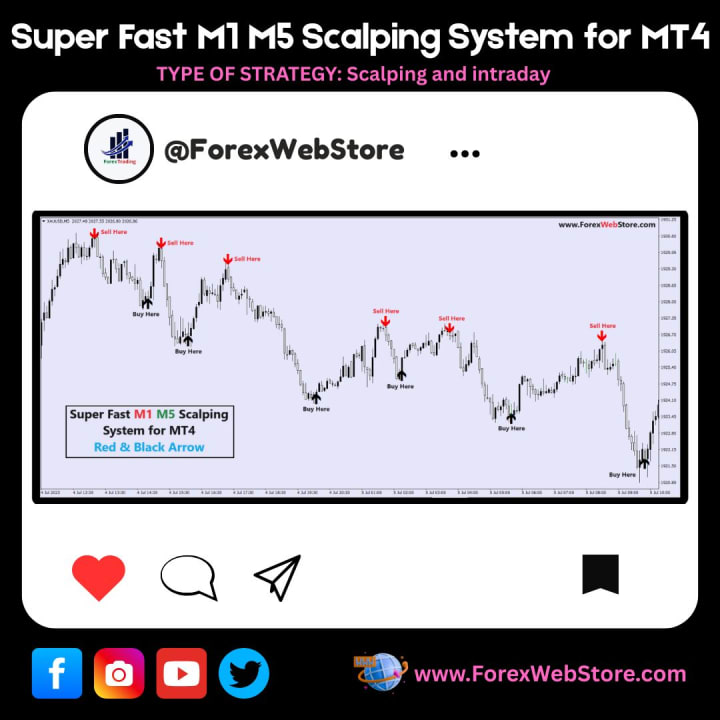
1. Historical Background of Candlestick Charts
Candlestick charting originated in Japan during the 18th century and was developed by Munehisa Homma, a rice trader who is often credited with laying the groundwork for modern candlestick analysis. Homma recognized that trader psychology and emotions played a critical role in price movement and sought to record this through visual representation. His methods eventually evolved into what we now call candlestick charts.
Candlestick charts were introduced to the Western world in the late 20th century by Steve Nison, who popularized them in his book Japanese Candlestick Charting Techniques. Since then, they have become an indispensable tool in the arsenal of traders across all financial markets, including Forex.
2. Anatomy of a Candlestick
Understanding candlesticks begins with knowing their basic components:
Body: Represents the range between the opening and closing prices.
Wicks (or Shadows): Indicate the high and low prices during the session.
Color (or Fill): Traditionally, a green (or white) candle indicates a bullish move (close higher than open), while a red (or black) candle indicates a bearish move (close lower than open).
Each candlestick encapsulates vital information about price action over a specific time frame—ranging from one minute to one month. This compact visual data enables traders to quickly assess market sentiment and make informed decisions.
3. Why Candlestick Knowledge is Essential in Forex
3.1 Enhanced Market Visualization
Candlestick charts offer an intuitive and visually rich way to interpret price movements. Unlike bar or line charts, they provide more detailed insights into price behavior, including opening, closing, high, and low prices, which are essential for analyzing volatility and market sentiment.
3.2 Understanding Market Psychology
Every candlestick tells a story of a battle between buyers and sellers. For example, a long lower wick might indicate that sellers pushed the price down, but buyers regained control and pushed it back up, suggesting potential bullish reversal. This psychological insight is invaluable for predicting future price movements.
3.3 Signal Identification and Trade Timing
Candlestick patterns can serve as signals for potential market entries and exits. For instance, patterns like Doji, Hammer, or Engulfing can suggest reversals or continuations, helping traders time their trades more accurately.
3.4 Universality and Flexibility
Candlestick patterns are applicable across all time frames and currency pairs, making them versatile tools for all types of Forex traders—whether scalpers, day traders, swing traders, or position traders.
4. Key Candlestick Patterns and Their Significance
Recognizing patterns is at the heart of candlestick analysis. Here are some crucial patterns every Forex trader should know:
4.1 Reversal Patterns
Hammer and Hanging Man: These single-candle patterns signal a possible reversal. A hammer at the bottom of a downtrend may indicate bullish reversal; a hanging man at the top may suggest bearish reversal.
Engulfing Patterns: Bullish engulfing occurs when a small red candle is followed by a larger green candle, completely “engulfing” it. This often signals a reversal to the upside.
Doji: A candlestick with a very small body and long wicks, representing indecision. In trending markets, it may signal a potential reversal.
Morning and Evening Stars: These are three-candle reversal patterns that signify potential trend changes.
4.2 Continuation Patterns
Rising and Falling Three Methods: These patterns suggest that the trend is likely to continue, providing confidence to traders holding positions.
Marubozu: Candles without wicks, showing strong directional movement, which often indicates a continuation of the current trend.
5. Candlestick Patterns in Combination with Technical Indicators
While candlesticks are powerful on their own, their reliability increases when combined with other tools:
5.1 Support and Resistance Levels
Candlestick patterns near key support or resistance zones often provide stronger signals. For instance, a bullish engulfing pattern near a support level adds conviction to the idea of an upward move.
5.2 Moving Averages
Combining candlesticks with moving averages helps traders confirm trends. A reversal candlestick pattern near the 200-day moving average can be a powerful signal.
5.3 RSI, MACD, and Stochastic Indicators
Momentum indicators, when aligned with candlestick signals, offer confirmation. For example, a bullish divergence in RSI combined with a hammer candlestick provides a higher probability trade setup.
6. The Role of Candlesticks in Risk Management
Effective Forex trading hinges on managing risk, and candlestick analysis plays a crucial role in this area:
6.1 Precise Entry and Exit Points
Candlesticks can fine-tune trade entries and exits. Entering trades at the close of a confirmation candle and placing stops just beyond key levels defined by candlesticks enhances control over risk.
6.2 Stop Loss Placement
The high or low of a candlestick pattern often serves as a logical place for stop-loss orders, helping to contain potential losses.
6.3 Position Sizing
Understanding the strength of a candlestick signal can influence position size. Strong reversal patterns may justify larger positions, while weaker signals may call for more conservative sizing.
7. Psychological Mastery and Discipline through Candlesticks
Trading is as much a mental game as it is analytical. Mastering candlesticks can enhance a trader’s psychological edge:
7.1 Confidence in Decision-Making
Recognizing familiar patterns builds confidence. When a trader sees a textbook setup, they can act decisively without hesitation.
7.2 Emotional Control
Clear candlestick signals reduce the urge to make impulsive trades based on fear or greed, promoting discipline and consistency.
7.3 Pattern Recognition Builds Patience
Waiting for specific candlestick formations fosters patience—an essential trait in successful trading.
8. Real-World Application: Candlesticks in Trading Strategies
8.1 Scalping and Day Trading
In short timeframes, candlestick patterns can quickly signal momentum shifts. Patterns like pin bars and engulfing candles are frequently used to capture small but frequent profits.
8.2 Swing Trading
Swing traders use daily or 4-hour candlesticks to identify trend reversals or continuations. Evening stars, morning stars, and three-bar reversals are particularly useful.
8.3 Position Trading
Long-term traders use weekly and monthly candlesticks to set macro-level entries and exits, relying on broader patterns like triple tops or bottoms supported by candlestick formations.
9. Limitations and Misconceptions of Candlestick Analysis
Despite their utility, candlesticks are not infallible:
9.1 Subjectivity
Pattern interpretation can be subjective. What one trader sees as a Doji, another may view as indecisive noise. Experience helps mitigate this.
9.2 False Signals
Not all patterns result in the expected outcome. Hence, confirmation from volume or indicators is essential.
9.3 Overreliance
Relying solely on candlestick patterns without considering fundamentals, news, or macroeconomic events can be risky.
10. andlestick Analysis in the Context of Algorithmic Trading
In the age of algorithmic trading, candlestick data is still relevant. Quantitative strategies often include candlestick pattern recognition as part of their models. Machine learning tools can be trained to identify high-probability candlestick setups, integrating them into broader trading algorithms.
11. Educational Path: How to Master Candlestick Analysis
11.1 Study and Repetition
Use educational resources like books, videos, and courses to study patterns. Practicing on historical charts helps engrain the patterns.
11.2 Demo Trading
Applying candlestick strategies in a risk-free environment helps build confidence and proficiency.
11.3 Journaling Trades
Keeping a trading journal with screenshots of candlestick setups improves pattern recognition and discipline over time.
12. Cultural and Regional Differences in Candlestick Use
Different markets and regions may interpret candlestick patterns differently based on trading styles and liquidity. Forex, being a 24-hour market, also sees variations in candlestick behavior during different trading sessions (Asia, Europe, New York).
13. Integrating Candlestick Knowledge into a Trading Plan
A comprehensive trading plan should include:
Specific candlestick patterns to trade
Timeframes for analysis
Rules for entry, exit, and stop-loss placement
Risk-reward ratio criteria
Guidelines for confirmation tools
This structured approach reduces emotional decision-making and enhances consistency.
Conclusion
The importance of candlestick knowledge in the Forex market cannot be overstated. Candlesticks provide a window into market psychology, enabling traders to make informed decisions rooted in technical evidence. From identifying reversals and continuations to fine-tuning risk management strategies, candlestick patterns are foundational to successful Forex trading.
However, they should not be viewed as magical predictors. Like any tool, they work best when combined with other forms of analysis and applied with discipline, practice, and psychological awareness. Mastery of candlesticks offers traders not only analytical precision but also the confidence and patience required to thrive in the volatile and competitive world of Forex trading.
About the Creator
Pooja Verma
Forexwebstore.com Discover the Best Forex Indicators for a Simple Strateg. This page features key technical indicators for the most popular currency pairs in real time.
Keep reading
More stories from Pooja Verma and writers in Trader and other communities.
Why forex or stock market not easy?
The foreign exchange (forex) and stock markets are two of the most actively traded and closely monitored financial arenas in the world. These markets offer immense opportunities for profit, financial independence, and wealth generation. However, despite the allure and accessibility, success in trading and investing remains elusive for many participants. The notion that forex and stock trading is a quick path to riches is often dismantled by the harsh reality of consistent losses, unexpected market movements, and emotional decision-making. This article delves deeply into why trading these markets is not easy, examining factors such as complexity, volatility, market psychology, competition, and more. The forex and stock markets are not easy for several reasons, many of which come down to complexity, uncertainty, and human psychology. Here's a breakdown:
By Pooja Verma10 months ago in Trader
Industrial Enzymes Market Size and Forecast 2026–2034
Introduction The global industrial enzymes market is experiencing substantial growth as industries worldwide move toward more sustainable and efficient production processes. Enzymes have become a key component in many manufacturing systems because they enable chemical reactions under mild conditions, reduce energy consumption, and limit the use of hazardous chemicals.
By shibansh kumar7 days ago in Trader




Comments
There are no comments for this story
Be the first to respond and start the conversation.