
Why has bitcoin been recognized a top performing asset for 2022?
Twitter is pushing its efforts to introduce bitcoin payments across the social media platform. This further illustrates that the future is already here and that bitcoin is not going to become, but has already become, a global currency which is gradually penetrating all areas of life.

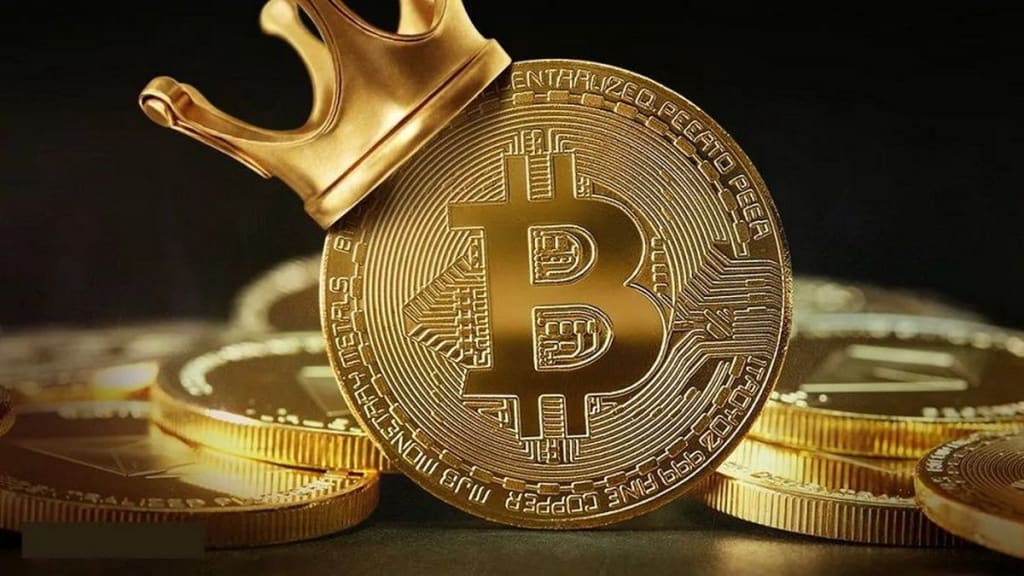
Twitter, owned by Elon Musk, has decided to simplify payments, in particular by allowing users to pay with bitcoin or other cryptocurrencies. According to the Financial Times, Twitter has applied for regulatory licenses in the US. Moreover, in December 2022, the social network added a feature allowing users to see a price graph with the bitcoin exchange rate when searching for $BTC in the search bar.
I'd like to remind you that the former CEO of Twitter, Jack Dorsey, who has been a long-time advocate of bitcoin, has expressed similar ideas regarding integrating crypto payments into the social network he used to manage. In 2018, he predicted that "bitcoin will unite the world" and that "it will be just one bitcoin among other cryptocurrencies, which could be here within 10 years or even less". As I have written before, Dorsey's predictions are coming true.
It's hard to imagine Dorsey and Musk being so different, but there's something that unites two leaders – an understanding of bitcoin's prospects. The irreversibility of bitcoin growing and becoming a global native currency. This is why, under both Dorsey and now Musk, bitcoin's integration into the Western world's main social network is on the cards.
And, by the way, another example of this understanding is Tesla, which is also owned by Musk and which, despite the bear market, has not sold any bitcoins throughout the year, but has only stored them. As of 31 December 2022, Tesla held 10.8 thousand bitcoins with a total value of $184 million, according to the financial report. It would seem that when the cryptocurrency price falls, it should be sold, but the company's management is not doing so. They understand the growth potential of bitcoin and expect the price to rise.
This understanding is becoming commonplace, even among traditionalists. In support of this idea, I would like to quote the report by the investment bank Goldman Sachs, which recognised bitcoin as one of the most effective assets in 2023. The document compares the cryptocurrency in terms of profitability to the S&P 500 stock index, gold, real estate, and the US Nasdaq 100 stock index. With a total return of 27% and a risk ratio of 3.1, bitcoin outperformed them all.
The January report by the deVere Group consultancy also highlights the globalisation of cryptocurrencies. 82% of USD millionaires sought advice on investing in bitcoin, even against a bearish backdrop. In 2020, their figure was 73%. Traditionally, this category of investors has been more conservative, as they are focused on preserving the capital they have already accumulated. But even they understand the advantages of bitcoin in today's global world: stable operation, decentralization, digital and superpower features.
Let me explain this in detail. There are risks in the traditional financial system, including out-of-control inflation. Let's see, last year annual inflation peaked at 85% in Turkey and 100% in Lebanon. Bitcoin can help to remedy this situation and reduce the risks. Cryptocurrencies ensure economic equality and financial inclusion. After all, it's a currency that requires no intermediaries for transfers around the world, designed to be deflationary, open, with decentralized and no permissions protocol.
Today, most experts agree that blockchain is the technology of the future. It's hard to argue with that, because as Steve Wozniak aptly noted, bitcoin is a "mathematical miracle". So perhaps the only argument that the sceptics of bitcoin have is the one about the negative impact on the environment. After all, the mining of bitcoin requires a lot of electricity. Indeed, there are several global green mining initiatives. However, there is a tendency for companies to switch to using either residual power, hydroelectric power or flared gas (using harmful emissions from refining oil to generate electricity). I have always supported green mining and will continue to do so.
It is worth noting that the legalisation of bitcoin is directly linked to green mining. The example of Kazakhstan is more than telling. The country's Senate deputies passed the Law On Digital Assets. The document stipulates that only when there is energy left over will miners in the country buy electricity from the general system at auctions.
Let me remind you that after China banned bitcoin, some miners moved to Kazakhstan. In October 2021, 18% of the world's hash rate was concentrated in this country. However, Kazakhstan's mining industry has mainly been powered by fossil fuel energy. As a result, the authorities have reduced bitcoin mining operations in view of the scale of emissions into the atmosphere. Today, only 6% of the world's bitcoin is mined in Kazakhstan. And this has led to the fact that, according to statistics, the majority of the world's bitcoin is now produced using clean energy.
The transition of the mining industry towards carbon neutrality is another example of the irreversibility of integrating bitcoin into the architecture of modern civilization as its universal and modern financial foundation.
About the Creator
Serhiy Tron
Ukrainian entrepreneur, investor, Founder of White Rock Management
Keep reading
More stories from Serhiy Tron and writers in Trader and other communities.
The Three Dave Ramsey Baby Steps You Should Reconsider
Dave Ramsey has helped a lot of people stop doing dumb things with money. That alone deserves respect. If you're buried in credit card debt, stressed, disorganized, and living on financial fumes, the Baby Steps can pull you out of chaos.
By Destiny S. Harrisabout 9 hours ago in Trader
How to Succeed at the Benson Directory®
Congratulations and welcome to the Benson Directory® employee #22391! As our newest call handler, you will have the privilege of speaking with dozens of unique and interesting people on a daily basis as well as the opportunity to earn bonuses for high performance. Contained within this handbook you will find a set of ease to follow instructions designed to help you settle in to your new role and begin paving the way to success.
By S. A. Crawford2 days ago in Fiction



Comments
There are no comments for this story
Be the first to respond and start the conversation.