
“Who Rules Global Business After 2025? The New Top 10”
From Tech Titans to Green Giants: The Companies Reshaping the Global Economy
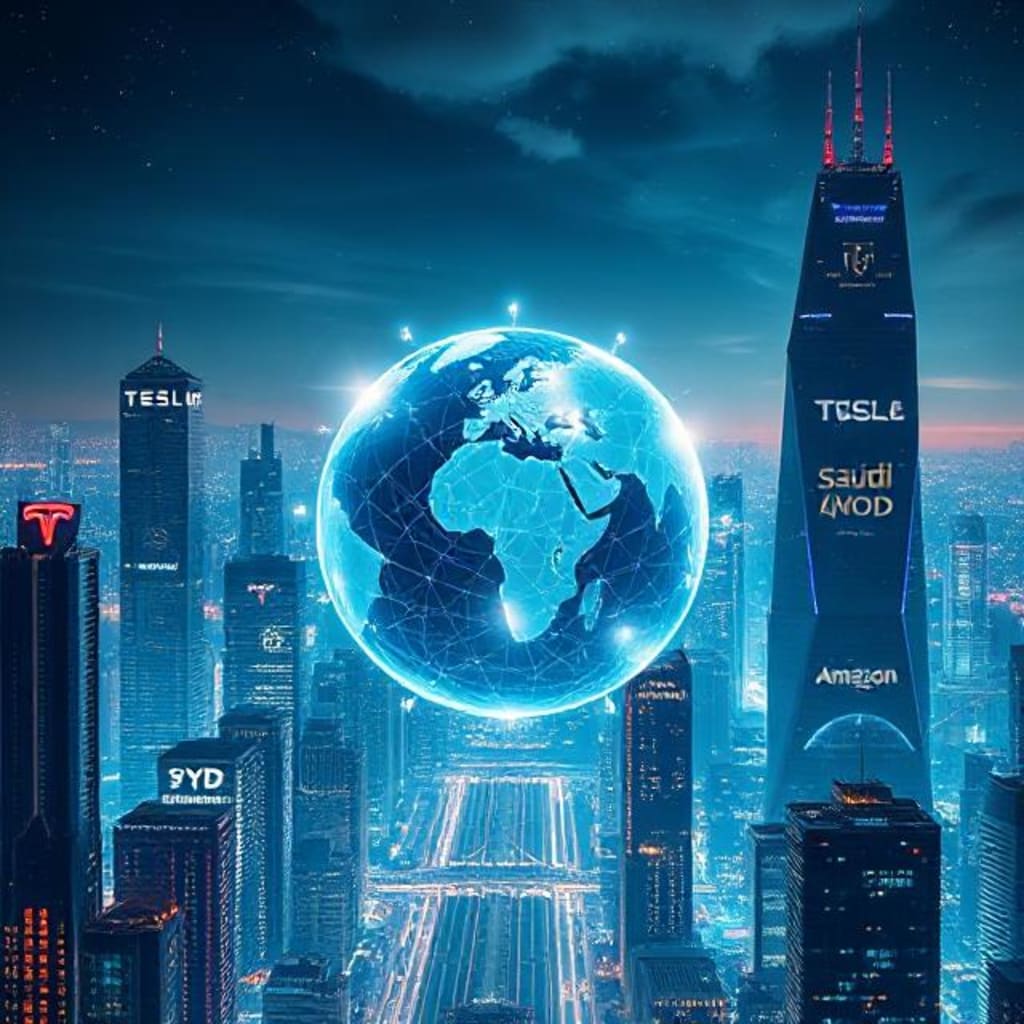
Introduction: A Changing Throne Room of Power
For over a century, the titans of global business were predictable. Oil companies, banks, and Western tech giants reigned supreme, shaping everything from politics to culture. ExxonMobil, JPMorgan, Apple, and Google seemed immovable, their dominance baked into the very structure of globalization.
But the post-2025 business landscape tells a different story. Power has shifted—not just from one company to another, but from one industry to another, and even from one continent to another. Artificial intelligence, renewable energy, biotechnology, and digital infrastructure have rearranged the hierarchy of influence.
The question is no longer who sells the most oil or the most phones, but who controls the future’s engines—data, clean power, supply chains, and human attention.
Here are the ten players redefining global business after 2025—and what their rise means for all of us.
1. OpenAI – The Architect of Intelligence
In the mid-2020s, AI stopped being an accessory to business and became the core infrastructure of business itself.
OpenAI, once a research lab, transformed into the most powerful provider of large-scale AI intelligence. Its models now sit at the heart of industries as varied as education, healthcare, finance, logistics, and creative work. The company’s revenue model shifted from licensing to infrastructure: governments and corporations alike pay to plug into what’s essentially the operating system of modern life.
OpenAI doesn’t sell a product—it sells thinking power. And that makes it arguably the most influential company of the decade.
2. Tesla & SpaceX (Musk’s Empire) – Mobility and Beyond
Elon Musk’s empire remains controversial, but unstoppable. Tesla’s dominance in electric vehicles only grew as governments phased out combustion cars, while SpaceX’s satellite internet network (Starlink) became critical infrastructure for countries, militaries, and businesses worldwide.
The merger of clean mobility and space-based connectivity gave Musk not just billions in revenue, but direct control over how people move, power their lives, and access information. Few companies in history have wielded such a combination of influence.
3. BYD – The Silent Giant of Electric Power
While Tesla captured headlines, China’s BYD quietly became the world’s largest electric vehicle manufacturer. Its low-cost, high-quality EVs and batteries dominate markets across Asia, Africa, and Latin America—regions where Tesla’s luxury appeal holds little sway.
BYD isn’t just a car company; it’s a battery empire, supplying the very cells that power global transport and energy grids. Its rise reflects a broader shift: economic power flowing East.
4. Saudi Aramco – Oil’s Last King
Despite the renewable revolution, oil isn’t gone. In fact, in a world of unstable geopolitics, Saudi Aramco remains a financial colossus, using its wealth to diversify into green hydrogen, tech investments, and global infrastructure.
What makes Aramco unique is that it straddles two eras: it’s both a fossil fuel giant and a renewable energy investor, hedging its bets as the world stumbles toward a post-carbon future.
5. Microsoft – The Reinvented Titan
Microsoft could have been a dinosaur, but under Satya Nadella’s leadership, it became the backbone of digital business. Its Azure cloud services dominate enterprise AI, while its partnership with OpenAI cemented its role as the corporate middleman between AI power and global industry.
In 2025 and beyond, Microsoft is less about Windows and Office, and more about being the corporate nervous system of the planet.
6. Amazon – From Shopping to Infrastructure
By 2025, Amazon stopped being just an online store. Its logistics empire, cloud services (AWS), and growing healthcare division made it a quasi-governmental infrastructure provider.
You may not buy from Amazon, but your country’s digital economy likely runs on its servers. The company now shapes global trade routes, labor markets, and even drug distribution. Few corporations have blurred the line between private business and public necessity so deeply.
7. ByteDance (TikTok & Beyond) – Master of Attention
While Meta struggled, ByteDance conquered. Its AI-driven platforms dominate not just entertainment, but commerce, education, and political messaging across continents.
Attention is currency, and ByteDance owns the printing press. Its algorithms not only entertain billions but influence what they think, buy, and believe. In a fragmented media world, it is the closest thing humanity has to a global broadcast channel.
8. NVIDIA – The Hardware Empire
All AI dreams run on hardware, and NVIDIA became the undisputed king of chips. Its GPUs power everything from OpenAI’s servers to self-driving cars to quantum research labs.
By cornering the market on computational muscle, NVIDIA doesn’t just sell chips—it decides who gets access to progress. In the hierarchy of 2025, the ability to fuel AI development is nearly as powerful as creating the AI itself.
9. Pfizer & Moderna (Biotech Titans)
The pandemic was only the beginning. Pfizer and Moderna parlayed their mRNA vaccine breakthroughs into dominance across biotechnology, tackling cancer, rare diseases, and even regenerative medicine.
By 2025, medicine shifted from reactive to predictive and personalized. These biotech titans hold patents that determine not just who lives longer, but how societies handle aging, healthcare costs, and public health crises. In many ways, they rule over life itself.
10. BlackRock – The Shadow Banker of the World
Often unnoticed by the public, BlackRock’s $10+ trillion in assets under management makes it more powerful than many governments. Through its ownership stakes in nearly every major corporation, BlackRock isn’t just a company—it’s a meta-company, shaping corporate governance, ESG policies, and even climate strategy.
In 2025 and beyond, when you ask who rules business, the quiet answer is often: whoever BlackRock allows to rule.
What This New Order Means for the World
The new corporate hierarchy tells a story about our collective priorities:
AI is the new electricity. Whoever builds, trains, and distributes intelligence sits at the center of everything.
Energy is still king—but cleaner. Oil isn’t gone, but batteries, EVs, and hydrogen are defining tomorrow’s empires.
Biology is the next frontier. Medicine and genetics are shaping not just health but entire economies.
Media isn’t neutral. The fight for attention has geopolitical consequences.
This isn’t just about which companies make the most money—it’s about which companies define how we live, work, think, and even age.
The Big Picture: Business as Governance
One truth is clear: corporations after 2025 don’t just make products. They function as global institutions—sometimes more powerful than nation-states.
When OpenAI controls how children learn, when Amazon shapes trade routes, when BlackRock decides which industries get funding, and when ByteDance directs what billions see daily… these aren’t just companies. They are governments without borders.
The 2025 top ten prove that business empires don’t merely follow history—they write it.
About the Creator
Keep reading
More stories from Hamza Habib and writers in Trader and other communities.
Australia POS Device Market Growth, Forecast, and Strategic Insights
The rapid shift toward digital commerce and contactless payments is transforming the way businesses handle transactions. Point-of-Sale (POS) devices—once limited to simple payment terminals—have evolved into integrated systems capable of managing sales, inventory, customer data, and financial analytics in real time. Across Australia, businesses ranging from small retailers to large hospitality chains are adopting advanced POS devices to improve operational efficiency and customer experience.
By Amélie Bellea day ago in Trader
TUS NUA - ch 53
TUS NUA – ch 53 New Beginnings – Mia and Midnight (*)(*)(*) Finola knew Ali’s brother-in-law needed to put his mind at rest. She fed her arm through his and led him outside. “We’ll sit here. If you like, I can put a block around us so our conversation will be private.”
By Margaret Brennan5 days ago in Fiction


Comments
There are no comments for this story
Be the first to respond and start the conversation.