
What is Market Sentiment and How to Use it Effectively?
How Can We Learn and Use About Market Sentiment Effectively?

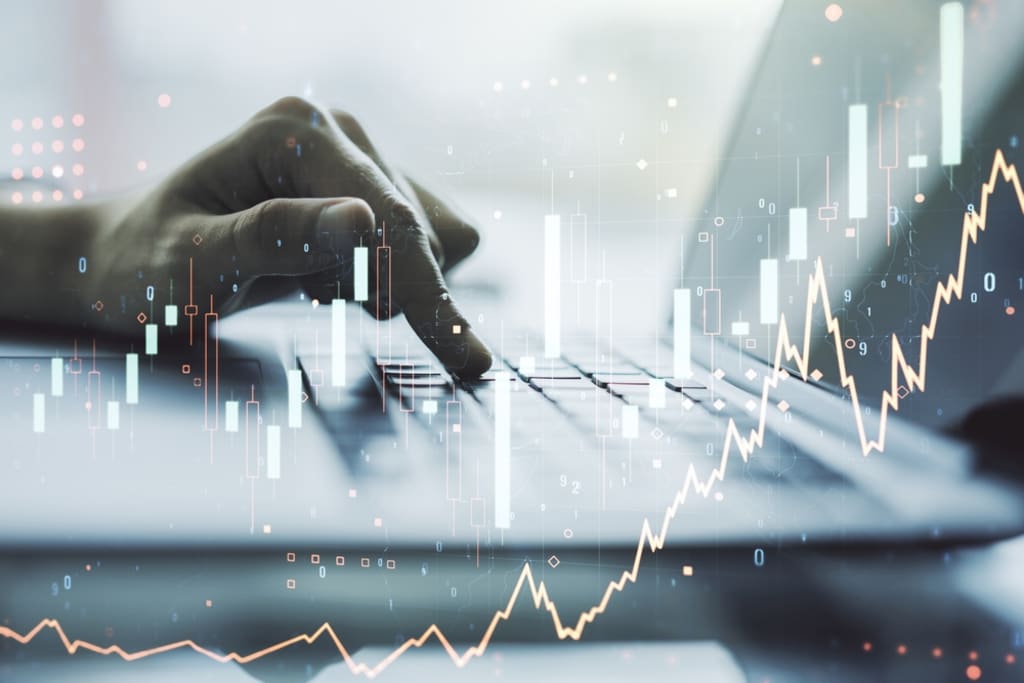
Let’s talk about the mood of the market today and this is not any rocket science.
To understand the sentiments of the market, think about this- have you ever walked into a room and instantly felt the vibe? Like, you just know whether people are excited, anxious, or completely chill even without anyone saying a word?
Well, whether you believe it or not, financial markets also have a vibe like that, and that vibe is called market sentiment.
But what really is market sentiment? Let’s learn about it in the blog below.
What is Market Sentiment?
Market sentiment involves the overall attitude or feeling investors have toward a particular market or asset at a given time. These are of two types:
• Bullish sentiment: If the traders are optimistic and piling in, then it is known as bullish sentiment.
• Bearish sentiment: If the traders are nervous and pulling out, then it is considered a bearish sentiment.
Well, this is not always because of the hard data or deep forex technical analysis, instead, it’s more like a gut-level reaction from the masses. You can consider it like crowd psychology but with money on the line.
As per experienced traders, it’s logical sometimes, while the rest it is totally irrational.
But it moves prices. Yes, a lot.
Wait! Why does it matter?
To answer, this means that the market is not driven by any news or huge numbers, instead, it is the people and their reactions that act to those factors. And those feelings and reactions are the reasons for the created trends. They cause sudden spikes and create opportunities as well.
Bullish vs. Bearish
The difference is quite simple. Let’s break it down quickly.
• Bullish: This is when investors believe prices will go up, i.e., they're optimistic. In such a situation, they will buy.
• Bearish: This is when investors believe prices will go down, i.e., they're pessimistic. In such a situation, they will sell.
That sounds simple, right?
But here’s where it gets more interesting.
Sometimes, leaving aside the fundamental analysis in forex, people become so bullish that prices of the assets rise very fast and this creates a bubble. But other? The rest of the time, they’re so bearish that prices sink far below an asset’s real value.
Yes, that’s true! And that is why sentiments are so powerful and so dangerous if it is not used wisely.
How do you measure market sentiment?
Okay, now you must be thinking about- How can I read the market’s mood? And that too correctly.
Well, that’s a very good question.
Haha! To measure the market sentiments, you don’t need to be a mind reader. But the good news is that there are actual tools and indicators that help. Here is a guide to it:
News Headlines & Social Media Buzz: Do you know what is one of the easiest ways to check and predict the market sentiment while trading during the forex market hours?
It cannot be simpler! Just look at the news.
And what does it mean?
Does this mean that you should check if the headlines are shouting “Stock Market Soars to Record Highs”? Yes, if you are seeing it there, that’s bullish energy.
And what if Twitter panicked over a crash?
Yep, you guessed it completely right. That’s bearish vibes.
There are a lot of platforms like Reddit, X (formerly Twitter), or even YouTube that are full of real-time sentiment. It is raw, emotional, and often chaotic. But super useful.
The Fear & Greed Index: Have you ever heard of this gem?
If not, then you are surely losing my friend.
CNN’s Fear & Greed Index looks at various factors (like market volatility, stock price momentum, etc.) and tells you whether people are feeling greedy (ready to buy) or fearful (ready to sell).
It’s like checking the market’s emotional weather report.
Volatility Index (VIX): Traders have nicknamed the Volatility Index as the “fear gauge”. The VIX tracks how much volatility traders expect in the near future. A high VIX means high anxiety in the market.
And, a low VIX? People are chill.
Put/Call Ratio: Now without getting too technical on this, let’s learn about the idea behind put/call ratio:
• A high ratio means more puts than calls, and this is a bearish sentiment
• Low ratio means more calls than puts, i.e., bullish sentiment
You can say that it’s just another way to see what traders betting are on.
Final Thoughts
To conclude, market sentiment isn’t about being psychic, but it’s about reading the room. It’s the invisible force that drives markets up and down. And while it’s not perfect, it’s a powerful tool when combined with technical and fundamental analysis.
So next time you see the market going wild, don’t just ask, “What’s happening?”, but ask, “Why is everyone feeling this way?”
That one question could change how you trade forever.
About the Creator
Ethan Williams
I am an experienced trader who has spent over many years working in the financial markets and I have developed strategies that work well over time. I like to share what I know, giving helpful tips and advice to make trading easier.
Keep reading
More stories from Ethan Williams and writers in Trader and other communities.
The Impact of Economic News on Forex Markets
The forex market also known as the foreign exchange market is one of the prominent and most liquid markets in the financial world. With trillions of dollars worth being traded every day. Its movements are not random. Currency values change according to a complicated interaction of economic, political, and worldwide factors. Of all these, economic news has a central role in determining forex trends, bringing opportunities as well as risks for traders.
By Ethan Williams11 months ago in Trader
Mexico E-Commerce Platform Market Growth, Trends, and Future Opportunities 2026-2034
Mexico E-Commerce Platform Market Growth, Trends, and Future Opportunities The Mexico e-commerce platform market is undergoing a major transformation as digital technologies reshape how consumers shop and businesses sell online. Rapid internet penetration, widespread smartphone adoption, and improving logistics infrastructure are accelerating the shift toward digital commerce across the country. As online shopping becomes increasingly convenient and accessible, e-commerce platforms are emerging as a critical component of Mexico’s retail ecosystem.
By Kim Soo hyun2 days ago in Trader
Bitcoin Market Update on March 1: ETF Inflows Pick Up as Long-Term Holders Stay Firm
Bitcoin (BTCUSD) is back in focus on March 1 as fresh inflows into spot Bitcoin ETFs signal renewed institutional interest, while long-term holders—often referred to as “diamond hands”—remain largely unmoved by short-term price swings. This combination of returning capital and steady holder behavior has helped stabilize sentiment after recent volatility in the crypto market.
By Hammad Nawaz6 days ago in Trader
"Scream 7" (2026): Running out of Fresh Screams
This is the seventh time we’ve had a Ghostface crisis. Scream 7 is the latest edition of the Scream franchise. Sydney Prescott and her family are under attack by another anonymous killer dressed in a Ghostface costume. While having issues with her daughter, Tatum, they run from the bloody murders, trying to determine who is behind it all.
By Marielle Sabbag6 days ago in Horror


Comments
There are no comments for this story
Be the first to respond and start the conversation.