

The Democratic Republic of the Congo (DRC), often referred to as the DRC, is believed to possess trillions of dollars' worth of rare earth minerals and untapped natural resources. Surprisingly, despite its abundance of valuable resources, the country is considered one of the poorest nations in the world. The DRC boasts a wealth of assets such as timber, oil, gas, iron ore, gold, diamonds, as well as minerals essential for the energy transition like cobalt and copper. It is also renowned for its exceptional biodiversity. However, as of 2022, it ranked 96th out of 223 countries in terms of GDP according to the World Bank. This begs the question: why does this disparity exist?
The Democratic Republic of the Congo, the largest nation in sub-Saharan Africa, possesses extraordinary natural resources. These include the world's second-largest rainforest, vast cobalt and copper mines, significant hydroelectric potential, and ample arable land, among others. Despite these advantages, over 70 percent of its population lives in extreme poverty, making it one of the world's poorest nations. In 2022, approximately 60 million Congolese struggled to survive on less than $2.15 per day.
One of the primary causes of the nation's poverty is political unrest. The DRC has experienced decades of strife, violence, and political upheaval, resulting in a serious humanitarian crisis. Numerous armed groups and militias vie for control over the country's resources, exacerbating the situation. Authoritarian governance and instability further contribute to the challenges faced by the nation.
Moreover, since the conclusion of the Congo Wars in 2003, a significant number of Congolese have been forcibly displaced. This ongoing displacement, coupled with the history of conflict, has intensified the nation's woes. Corruption also remains a significant issue. Unscrupulous leaders in the past have embezzled billions of dollars from the national treasury, leaving limited funds for social and development initiatives. Consequently, there is a severe lack of resources to invest in vital infrastructure projects, such as roads, hospitals, and education, which are crucial for economic development and growth.
Furthermore, deforestation, mining, and other human activities have led to soil degradation, erosion, and loss of biodiversity, creating severe environmental problems in the DRC. These ecological challenges further impede sustainable development and exacerbate poverty.
In summary, the Democratic Republic of the Congo's vast wealth of natural resources stands in stark contrast to its status as one of the world's poorest nations. Political unrest, prolonged conflict, displacement, corruption, and environmental issues have all contributed to this predicament. Addressing these challenges requires stable governance, effective management of resources, investment in infrastructure, social programs, and sustainable environmental practices. Only through concerted efforts and international support can the DRC unlock its true potential and uplift the lives of its people. The Democratic Republic of the Congo (DRC) possesses vast natural resources, making it one of the world's wealthiest nations in terms of its resource potential. With an estimated value of $24 trillion in undiscovered minerals, the country boasts an array of valuable resources, including lithium, cobalt, copper, gold, and coltan. These minerals play a crucial role in various industries such as aerospace, automotive, renewable energy, and electronics. For instance, lithium, a reactive metal, is utilized in the production of batteries, ceramics, glass, and pharmaceuticals. While the full extent of lithium reserves in the DRC remains unexplored, it is believed to hold significant untapped deposits.
Cobalt, another abundant mineral in the DRC, is considered a vital resource, with experts suggesting that up to 60 percent of the world's cobalt originates from the country. A mere few grams of cobalt are required for the production of smartphones, tablets, or laptops, while electric vehicles necessitate approximately 22 pounds. As the world's leading cobalt producer, the DRC possesses an estimated reserve of 3.6 million metric tons. However, the mining of these minerals in the DRC has faced criticism and allegations of corruption, environmental damage, and human rights violations. The mining sector has been accused of exploiting child labor, with an estimated 40,000 children working in cobalt and other mines across the nation.
Despite these challenges, the DRC has the potential to play a significant role in the production of lithium and cobalt, given the increasing demand for electric vehicles, renewable energy storage systems, and high-tech goods. The country's natural riches could greatly enhance the living standards of many Congolese people if harnessed ethically. Responsible and sustainable management of the mining sector is crucial. Such practices would create employment opportunities, generate revenue for the government, improve infrastructure, and enable investments in essential services like healthcare and education.
Nevertheless, despite its wealth of natural resources, the DRC currently ranks among the world's lowest economies. However, there is potential for economic growth through capacity expansion, a rebound in global demand, increased investments, and exports within the mining sector. By leveraging these opportunities, the DRC can drive its development and improve its economic standing. However, the growth of the non-mining sector in the Democratic Republic of the Congo (DRC) was moderate, especially within the services sector. An increased current account deficit was driven by rising food and fuel costs, which could not be offset by higher export revenues. Nevertheless, foreign direct investments and external financing helped bolster reserves and mitigate excessive currency rate volatility. The protracted conflict in Ukraine had a global impact, increasing food and energy prices, which, in turn, exerted pressure on domestic inflation. From 2021 to 2022, despite efforts to generate increased income, capital and current spending outpaced income mobilization, resulting in a worsened budget deficit. This was attributed to favorable commodity prices and the digitization of revenue collection processes. Domestic revenues peaked in 2022, while expenditures rose due to additional security spending, debt repayments, salary adjustments, and fuel subsidies.
Looking ahead, the DRC has a promising medium-term prognosis, with projected growth reaching 7.5 percent by 2025. However, the country's economy remains vulnerable to fluctuations in commodity prices and the expansion rates of its primary trading partners. Geopolitical unrest can hamper these factors, driving up global food and fuel prices. The ongoing economic effects of the conflict in Ukraine could exacerbate poverty and inequality in the DRC by increasing the budget deficit, inflation, and household consumption.
Foreign investors face significant challenges when doing business in the DRC due to the country's history of violence and instability. Ethnic tensions, political rivalries, and disputes over land and natural resources have contributed to conflicts. The first Congo War (1996-1997) saw the deposition of President Mobutu Sese Seko, engaging various armed organizations, including the Rwandan Patriotic Army and Ugandan People's Defense Force. Tragically, the second Congo War (1998-2003) claimed millions of lives, leaving many homeless and suffering. The legacy of Belgium's colonization under King Leopold II still affects the nation, with ongoing violent disputes. In 2012, the primary political opposition party established a stronghold in the southern Kasai region, where chiefs hold significant authority and administrative control. However, in 2016, the party's leader, Pierre Pandi, was assassinated, triggering a large-scale conflict and displacing nearly 1.4 million people.
The DRC faces complex and challenging humanitarian situations due to intermittent waves of warfare across the country. It has one of the world's largest populations of internally displaced people, exceeding 5 million individuals. Corruption, lack of transparency, persistent violence, and insecurity have hindered economic progress and development, making it a difficult environment for foreign investors. To establish a secure and transparent economic climate that attracts international investment and benefits the Congolese people, the government must prioritize peacebuilding and good governance. As the world becomes more interconnected, there is hope for the future of the DRC. Despite the difficulties, ongoing efforts must address infrastructure, war, and corruption issues. While the road ahead may be challenging, the future of the DRC lies in the hands of its citizens and leaders.
About the Creator
Keep reading
More stories from Winnie Musyoki and writers in Trader and other communities.
Are we still evolving?
You know, the spleen is an organ that often goes unrecognized for its remarkable functions. It serves as a vital oxygen reservoir by storing red blood cells, which are responsible for carrying oxygen throughout the body. A larger spleen allows for a greater amount of oxygen to be released into the bloodstream, even during moments between breaths. Interestingly, certain diving mammals like whales and seals also possess enlarged spleens to optimize their diving capabilities.
By Winnie Musyoki3 years ago in History
Philippines Automotive Wiring Harness Market: Electrification, Vehicle Production & Industry Momentum
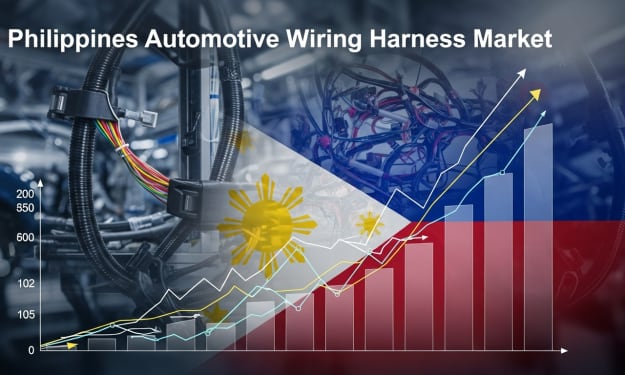
Philippines Automotive Wiring Harness Market Overview The Philippines automotive wiring harness market is expanding steadily as the country’s automotive production, vehicle electrification trends and aftermarket demands continue to grow. Automotive wiring harnesses — complex assemblies of cables and connectors that transmit electrical power and signals within vehicles — are essential components in all modern cars, trucks and commercial vehicles. The Philippines automotive wiring harness market size was valued at USD 1,788.99 Million in 2025 and is projected to reach USD 2,390.63 Million by 2034, growing at a compound annual growth rate of 3.27% from 2026-2034. This sustained growth reflects rising vehicle production volumes, increasing adoption of advanced electronics in vehicles, and expanding demand for electric vehicles (EVs) and hybrid models, all of which require intricate wiring solutions to support powertrain, infotainment, safety and connectivity systems.
By Manisha Dixit2 days ago in Trader



Comments
There are no comments for this story
Be the first to respond and start the conversation.