
Wait, Amazon Is Doing What Now?
Pivoting from ‘wow’ to what works.

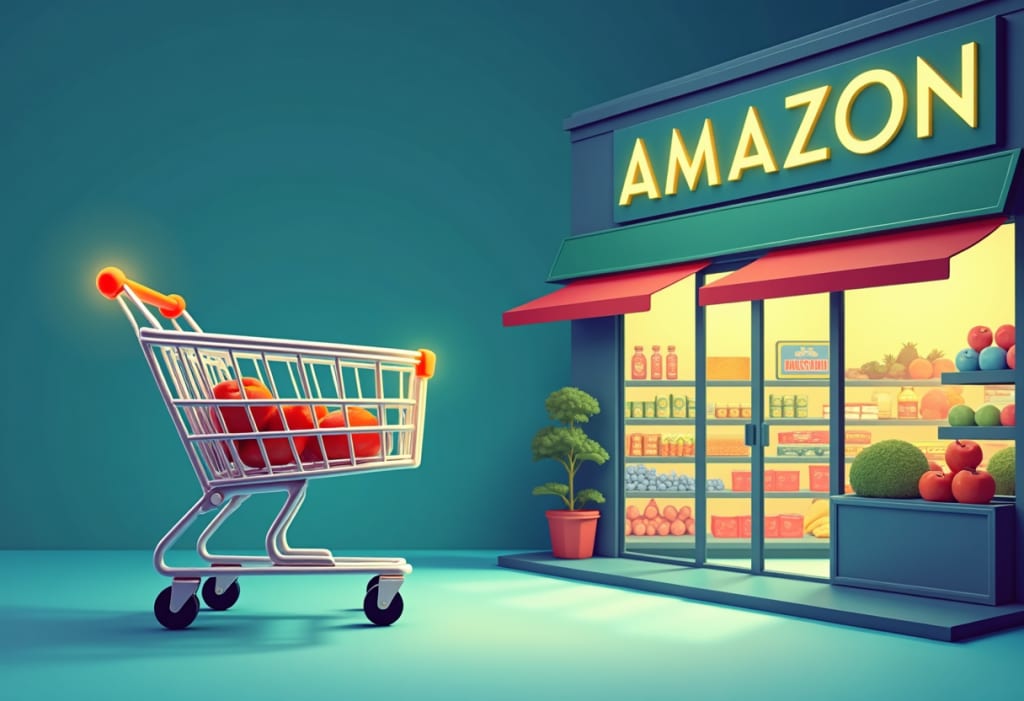
So Amazon spent years building fancy techy grocery stores… and is now like, “Yeah nvm, back to Whole Foods and delivery.”
Hmm... Let's talk about this.
1. What Amazon is Doing Now?
Breaking news...
These are the stores with the sleek tech and, in some locations, the whole “Just Walk Out” thing where you scan in, grab your stuff, and leave like a shoplifting raccoon with WiFi.
The official line is that they haven’t created a “truly distinctive customer experience” that also makes financial sense at a big scale.
Translation: the vibes were cool, the profits were not.
2. The Big Plot Twist: From Fresh To… Whole Foods Again
Instead of doubling down on their own Amazon-branded grocery chains, they’re pivoting back to the thing they bought in 2017: Whole Foods.
Some of the former Fresh and Go locations will literally be turned into Whole Foods stores, like a grocery version of “it’s not you, it’s me (but also I’m getting back with my ex).”
They’re planning to open over 100 new Whole Foods supermarkets over the next few years, plus five smaller “Whole Foods Market Daily Shop” stores in 2026 that carry a stripped-down, essentials-focused selection.
Think: less “20 kinds of artisanal kombucha,” more “grab what you need and go live your life.”
But, “Didn’t they build Amazon Fresh from scratch?”
The sad truth is, "“Yup, first store in 2020, and now it’s basically getting Marie Kondo’d out of existence.”
3. Why The Fancy Tech Groceries Didn’t Win
Amazon spent almost a decade trying to crack physical grocery under its own name: Amazon Go in 2018, Amazon Fresh in 2020, lots of tech like Just Walk Out, scanners, and app-based checkouts.
It sounded futuristic, but the reality is that groceries are a low-margin, brutally competitive business, and cute tech doesn’t magically fix that.
According to industry reporting, Amazon’s grocery market share is still much smaller than giants like Walmart and traditional supermarket chains.
So while the stores looked innovative, they didn’t stand out enough on price, selection, or convenience for everyday shoppers who mainly care about “Is this affordable and nearby?” not “Does this shelf use AI?”.
4. So, Who’s Winning the Grocery Hunger Games?
Short answer: big, boring, efficient players like Walmart are still the main inspiration and competition.
Amazon has even been planning a Walmart-style supercenter near Chicago, which tells you exactly who they’re studying for “how to win at groceries in real life.”
Meanwhile, Whole Foods gives Amazon a recognizable, premium brand with loyal shoppers and established systems.
So instead of running three different grocery experiments at once (Fresh, Go, Whole Foods), they’re consolidating around the one that already has a clear identity: the “healthy, slightly bougie, but you feel virtuous buying kale there” one.
5. Okay, So What About My Groceries?
Here’s what this all means in normal-people terms:
- If you liked Amazon Fresh or Amazon Go: Many of those stores are closing, and some will be reborn as Whole Foods locations. Your nearest “stand in line with a real human” store might just change its sign.
- If you shop Whole Foods: Expect more stores over the next few years, plus smaller Daily Shop locations for quick top-ups.
- If you live on delivery: Amazon already delivers groceries in around 5,000 US cities and towns and wants to expand this further, including same-day delivery for things like produce and ice cream. So yes, the “I’m in pajamas and refuse to interact with society” grocery lifestyle is safe.
In plain language: Amazon tested a bunch of grocery ideas, crunched the numbers, and decided the winner is a combo of Whole Foods in person and delivery to your door.
The shiny experiment stores just didn’t pull enough weight.
6. The Bigger Picture: What This Says About Our Future Shops
This isn’t just a gossip-y “Amazon drama” story; it’s a peek at where retail is heading.
Big retailers are constantly trying to balance three things: convenience, cost, and experience.
When something like Amazon Fresh doesn’t tick all three boxes, even a huge company will scrap it and move on.
It also shows that tech alone doesn’t save a bad business model.
You can have scanners, sensors, and apps, but if customers don’t feel a clear reason to choose you over Walmart, Target, or the shop down the street, you’re just an expensive science project with fluorescent lighting.
The real winners are the models that feel simple and reliable for us, even if the logistics behind them are wildly complex.
Final Thoughts
Even giants like Amazon must sometimes admit a strategy is not working, shut it down, and redirect resources toward something more sustainable.
It treats Amazon’s retreat from high-tech grocery formats as proof that fundamentals like price, convenience, and clear brand positioning matter more than flashy innovation in low-margin industries.
The closing takeaway is that changing course—whether in business or life—is not weakness but a necessary adaptation to reality, and doing so earlier usually hurts less than clinging to a failing path.
What’s one small thing you can tweak this year so future-you doesn’t want to time-travel back and yell at you?
About the Creator
Anie the Candid Writer Abroad
Hi, nice to meet you. I'm Anie. The anonymous writer trying to make sense of the complicated world, sharing tips and tricks on the life lessons I've learned from simple, ordinary things, and sharing ideas that change me.
Keep reading
More stories from Anie the Candid Writer Abroad and writers in Trader and other communities.
The Quiet Giant Behind CelcomDigi: Why Telenor’s Next Move Matters More Than You Think
So, Telenor. The name sounds like a mid-tier Viking metal band, but it’s actually a giant telecom player that quietly sits behind a lot of the phone calls, data, and connectivity people use every single day.
By Anie the Candid Writer Abroada day ago in FYI
Subscription E-Commerce Market Outlook: Redefining Online Retail
Overview — Subscription E-Commerce Market The subscription e-commerce market has emerged as a powerful growth model within the global digital retail ecosystem, reshaping how consumers discover, purchase, and engage with products and services. Instead of one-time transactions, subscription models focus on recurring revenue through scheduled deliveries, curated experiences, or continuous digital access. This approach enhances customer retention, improves demand predictability for businesses, and delivers convenience and personalization for consumers.
By James Smith5 days ago in Trader
novo nordisk stock: Rising Confidence, Market Pressure, and What Careful Investors Should See
novo nordisk stock remains a strong topic among investors who want growth backed by real demand. Many people see rising confidence in novo nordisk stock as interest keeps growing across global markets. At the same time, market pressure and competition still exist. This article explains why novo nordisk stock continues to attract attention, what supports its growth, and what careful investors should understand before making decisions.
By John.doe7987 days ago in Trader
One Hard Thing
Stop me if you’ve heard this one before: You have the number, you know your schedule- you’ve even picked out the perfect day and time to make this appointment. Shoot, you’ve even picked out alternative days and times just in case their schedules can’t accommodate you!
By Taylor Rigsby3 days ago in Motivation



Comments
There are no comments for this story
Be the first to respond and start the conversation.