
United States Seafood Market Size & Forecast 2026–2034
Health Trends, Sustainability, and Digital Commerce Reshape America’s Seafood Industry

United States Seafood Market Outlook
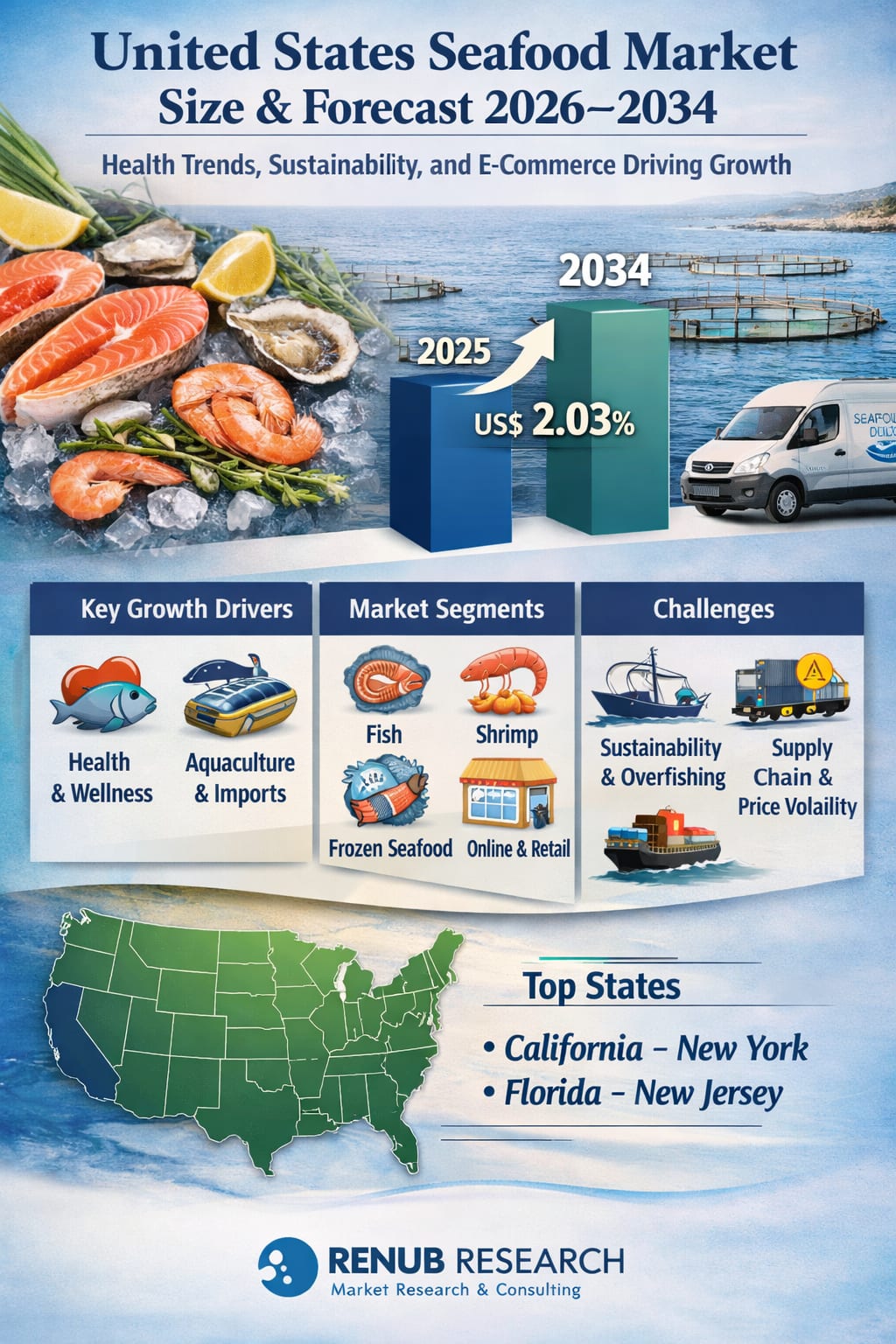
The United States seafood industry is entering a phase of steady and resilient expansion, supported by shifting consumer preferences, stronger health awareness, and evolving supply and distribution models. According to Renub Research, the U.S. seafood market is expected to grow from US$ 24.11 billion in 2025 to US$ 28.89 billion by 2034, registering a Compound Annual Growth Rate (CAGR) of 2.03% from 2026 to 2034. While this growth rate may appear moderate compared to some high-tech or pharmaceutical markets, it reflects a stable, consumption-driven industry that is deeply embedded in everyday American diets.
Seafood includes a wide variety of edible marine animals such as fish, shellfish, and other sea creatures. In the U.S., commonly consumed seafood includes shrimp, salmon, tuna, crab, and oysters. These products are valued not only for their taste and versatility but also for their nutritional profile. Rich in omega-3 fatty acids, high-quality protein, vitamins, and essential minerals, seafood is widely regarded as a healthier alternative to red meat and heavily processed protein sources.
In recent years, seafood consumption in the United States has benefited from a broader cultural shift toward healthier lifestyles and more mindful eating. Coastal regions have long been strongholds of seafood consumption, but inland markets are now catching up thanks to improved cold-chain logistics, better retail distribution, and the rise of e-commerce grocery platforms. Restaurants, food festivals, sushi culture, and the growing popularity of global cuisines have also played a key role in making seafood more mainstream across the country.
Looking ahead, the future of the U.S. seafood market will likely be shaped by two parallel forces: innovation in aquaculture and distribution, and rising expectations around sustainability and traceability. Together, these factors are redefining how seafood is produced, marketed, and consumed in the world’s largest consumer economy.
Key Growth Drivers in the United States Seafood Market
1. Rising Health and Wellness Awareness
One of the strongest drivers of seafood consumption in the U.S. is the growing focus on health and wellness. Consumers are increasingly aware of the benefits of diets rich in lean protein, omega-3 fatty acids, and low saturated fat. Seafood fits neatly into this lifestyle shift, especially for individuals concerned about heart health, weight management, and overall nutritional balance.
Public health campaigns and medical professionals frequently recommend fish as part of a balanced diet, further reinforcing positive perceptions. Salmon, in particular, has gained a reputation as a “premium health food,” and its popularity has surged across both retail and foodservice channels. Meal-kit services and ready-to-cook offerings have also made it easier for households to prepare seafood at home, reducing the barriers associated with cooking fish and shellfish.
This steady integration of seafood into everyday meal planning has helped transform it from an occasional indulgence into a regular protein choice for millions of American consumers.
2. Expansion of Aquaculture and Strong Import Supply
The U.S. seafood market is supported by a combination of domestic production and a well-established import network. Aquaculture has been expanding, especially in categories such as salmon, catfish, and shellfish, helping to reduce pressure on wild fish stocks while ensuring consistent supply.
At the same time, imports from regions such as Southeast Asia and Latin America play a critical role in meeting year-round demand. Countries like India, Ecuador, Indonesia, Chile, and Norway are major suppliers to the U.S. market, particularly for shrimp and salmon. This global sourcing strategy helps stabilize availability and pricing, even when domestic production faces seasonal or environmental constraints.
Regulatory frameworks such as the Seafood Import Monitoring Program (SIMP) are also strengthening transparency and traceability in the supply chain, ensuring that imported seafood meets legal and sustainability standards. Over the long term, improved aquaculture practices and better-managed imports are expected to remain key pillars of market growth.
3. Growth of E-Commerce and Direct-to-Consumer Channels
The rapid expansion of online grocery shopping has reshaped how Americans buy food—and seafood is no exception. E-commerce platforms, specialty seafood websites, and direct-to-consumer (DTC) brands now offer fresh, frozen, and value-added seafood products delivered straight to customers’ doors.
Advances in cold-chain logistics, packaging, and last-mile delivery have made it possible to ship seafood safely and efficiently across long distances. Subscription seafood boxes, curated selections, and brands focused on sustainability and traceability are gaining popularity, particularly among urban and higher-income consumers.
This digital shift is not just about convenience. It is also changing how consumers discover new products, learn about sourcing, and build trust with brands. As online food retail continues to grow, digital channels are expected to become an increasingly important driver of the U.S. seafood market.
Challenges Facing the U.S. Seafood Market
Sustainability and Overfishing Concerns
Despite its positive growth outlook, the seafood industry faces significant sustainability challenges. Overfishing, bycatch, and habitat degradation continue to threaten marine ecosystems, drawing attention from regulators, environmental organizations, and consumers alike.
Today’s consumers are more informed and more demanding when it comes to ethical and sustainable sourcing. Certifications, eco-labels, and traceability systems are becoming essential rather than optional. However, adopting sustainable practices often increases costs for producers and suppliers, which can put pressure on margins and, in some cases, on retail prices.
Balancing environmental responsibility with economic viability will remain one of the industry’s most important long-term challenges.
Supply Chain Disruptions and Price Volatility
Seafood supply chains are particularly sensitive to external shocks. Climate change, extreme weather events, geopolitical tensions, fluctuating fuel prices, and labor shortages can all disrupt production and transportation. Seasonal variations in catch volumes further contribute to price instability.
For consumers, this can mean fluctuating retail prices and occasional shortages. For businesses, it creates ongoing challenges in inventory management, cost control, and long-term planning. Building more resilient, transparent, and diversified supply chains will be crucial for maintaining market stability in the years ahead.
Key Segments of the United States Seafood Market
United States Fish Market
Fish remains the backbone of the U.S. seafood industry, driven by strong demand for species such as salmon, tuna, and cod. Salmon, in particular, stands out due to its health benefits, versatility in cooking, and strong presence in both retail and restaurant menus. Imports from countries like Norway, Canada, and Chile complement domestic production, ensuring consistent availability.
At the same time, there is growing interest in locally caught and sustainably sourced fish, adding further diversity to the market and supporting regional fisheries.
United States Shrimp Market
Shrimp is the most consumed seafood in the United States, making it one of the most important segments of the market. The majority of shrimp consumed in the U.S. is imported, with India, Ecuador, and Indonesia among the leading suppliers.
Consumer demand is increasingly focused on convenient formats such as peeled, deveined, and ready-to-cook shrimp. Quick-service restaurants and casual dining chains continue to feature shrimp heavily on their menus, reinforcing its popularity. While challenges such as disease management in shrimp farming and sustainability concerns remain, ongoing innovation in aquaculture is helping to keep this segment on a stable growth path.
Fresh and Chilled Seafood
The fresh and chilled seafood segment benefits from strong consumer perceptions around quality, taste, and nutrition. Supermarkets and specialty retailers are expanding their seafood counters, offering a wider variety of both local and imported products. Improvements in refrigeration, packaging, and logistics have extended shelf life and improved access, even in inland markets.
Although pricing can be a barrier for some consumers, demand remains strong among health-conscious and quality-focused buyers.
Frozen Seafood
Frozen seafood continues to gain traction due to its affordability, convenience, and year-round availability. Modern freezing technologies have significantly improved product quality, preserving taste, texture, and nutritional value. For busy households, frozen fillets, shrimp, and ready-to-cook meals offer a practical solution without sacrificing quality.
Retailers and online platforms are expanding their frozen seafood offerings, making this segment an increasingly important contributor to overall market growth.
Online Seafood Market
Online seafood retail is one of the fastest-growing channels in the industry. Consumers are turning to e-commerce for access to a broader range of products, transparent sourcing information, and convenient home delivery. Subscription services and premium DTC brands are particularly popular among urban consumers and younger demographics.
This channel is not only changing how seafood is sold, but also how brands communicate their values, quality standards, and sustainability commitments.
Seafood in Convenience Stores
Convenience stores are gradually expanding their seafood offerings, focusing mainly on packaged snacks, ready-to-eat items, and frozen products. As on-the-go lifestyles become more common, demand for quick, protein-rich food options is rising. While the ассортимент (assortment) remains smaller than in supermarkets, innovation in packaging and product formats is helping this channel gain relevance.
State-Level Market Highlights
California
California stands out as one of the most influential seafood markets in the U.S., supported by its long coastline, strong fishing industry, and health-conscious consumer base. Salmon, crab, and tuna are particularly popular, and the state’s diverse population drives demand for a wide range of global seafood cuisines. California is also a trendsetter in sustainability initiatives and alternative seafood technologies, making it a key market to watch.
New York
New York’s seafood market is shaped by its dense urban population, cultural diversity, and vibrant foodservice sector. From high-end restaurants to casual eateries, seafood plays a central role in the city’s culinary landscape. Proximity to major ports ensures strong supply chains, while the growth of e-commerce and specialty retailers continues to expand consumer access.
New Jersey
New Jersey benefits from a strong coastal fishing tradition and steady local demand. The state is well known for products such as clams, scallops, and bluefish, which are distributed both locally and nationally. Sustainability and aquaculture are becoming increasingly important in shaping the future of the state’s seafood industry.
Market Segmentation Overview
By Type:
Fish
Shrimps
Others
By Form:
Fresh/Chilled
Canned
Frozen
Processed
By Distribution Channel:
Off Trade:
Convenience Stores
Online Channel
Supermarkets and Hypermarkets
Others
On Trade:
Foodservice and Restaurants
Top States Covered:
California, Texas, New York, Florida, Illinois, Pennsylvania, Ohio, Georgia, New Jersey, Washington, North Carolina, Massachusetts, Virginia, Michigan, Maryland, Colorado, Tennessee, Indiana, Arizona, Minnesota, Wisconsin, Missouri, Connecticut, South Carolina, Oregon, Louisiana, Alabama, Kentucky, and the Rest of the United States.
All major companies in the market are analyzed across five viewpoints: Overview, Key Person, Recent Developments, SWOT Analysis, and Revenue Analysis.
Key Players Include:
Admiralty Island Fisheries Inc., Beaver Street Fisheries, High Liner Foods Inc., Inland Seafood Inc., Mowi ASA, NH Foods Ltd, Sysco Corporation, Thai Union Group PCL, The Kraft Heinz Company, and Trident Seafood Corporation.
Final Thoughts
The United States seafood market is not a story of explosive growth—but it is a story of resilience, consistency, and transformation. With the market projected to grow from US$ 24.11 billion in 2025 to US$ 28.89 billion by 2034 at a CAGR of 2.03%, the industry is clearly on a stable upward path.
Health-conscious consumers, expanding aquaculture, strong import networks, and the rapid rise of e-commerce are reshaping how seafood is produced, sold, and consumed across the country. At the same time, sustainability concerns and supply chain challenges are pushing the industry toward greater transparency, innovation, and responsibility.
For businesses, investors, and policymakers, the message is clear: the future of the U.S. seafood market will belong to those who can balance quality, convenience, and sustainability—while staying closely aligned with the evolving expectations of American consumers.
About the Creator
Australia’s Subscription E-Commerce Market 2026: Recurring Revenue, Consumer Convenience and Digital Retail Innovation
Australia Subscription E-Commerce Market Overview Australia’s subscription e-commerce market is reshaping how consumers access products and services, transitioning from one-off purchases to ongoing personalised engagements. From meal kits and beauty boxes to digital content bundles and curated lifestyle subscriptions, the recurring-revenue model is driving higher customer retention, predictable cash flows for brands and ongoing value for consumers. This trend reflects a broader shift in consumer behaviour toward convenience, tailored experiences and automated fulfilment.
By Amyra Singh7 days ago in Trader



Comments
There are no comments for this story
Be the first to respond and start the conversation.