
United States Proton Therapy Market Size & Forecast 2026–2034
Precision Oncology, Technology Innovation, and the Future of Advanced Cancer Care in America

Introduction
The United States proton therapy market is entering a decisive phase of growth, driven by the rising burden of cancer, the increasing adoption of precision oncology, and rapid technological advancements in radiation therapy systems. As healthcare providers and patients alike seek treatments that are not only effective but also safer and more targeted, proton therapy is emerging as one of the most promising solutions in modern cancer care.
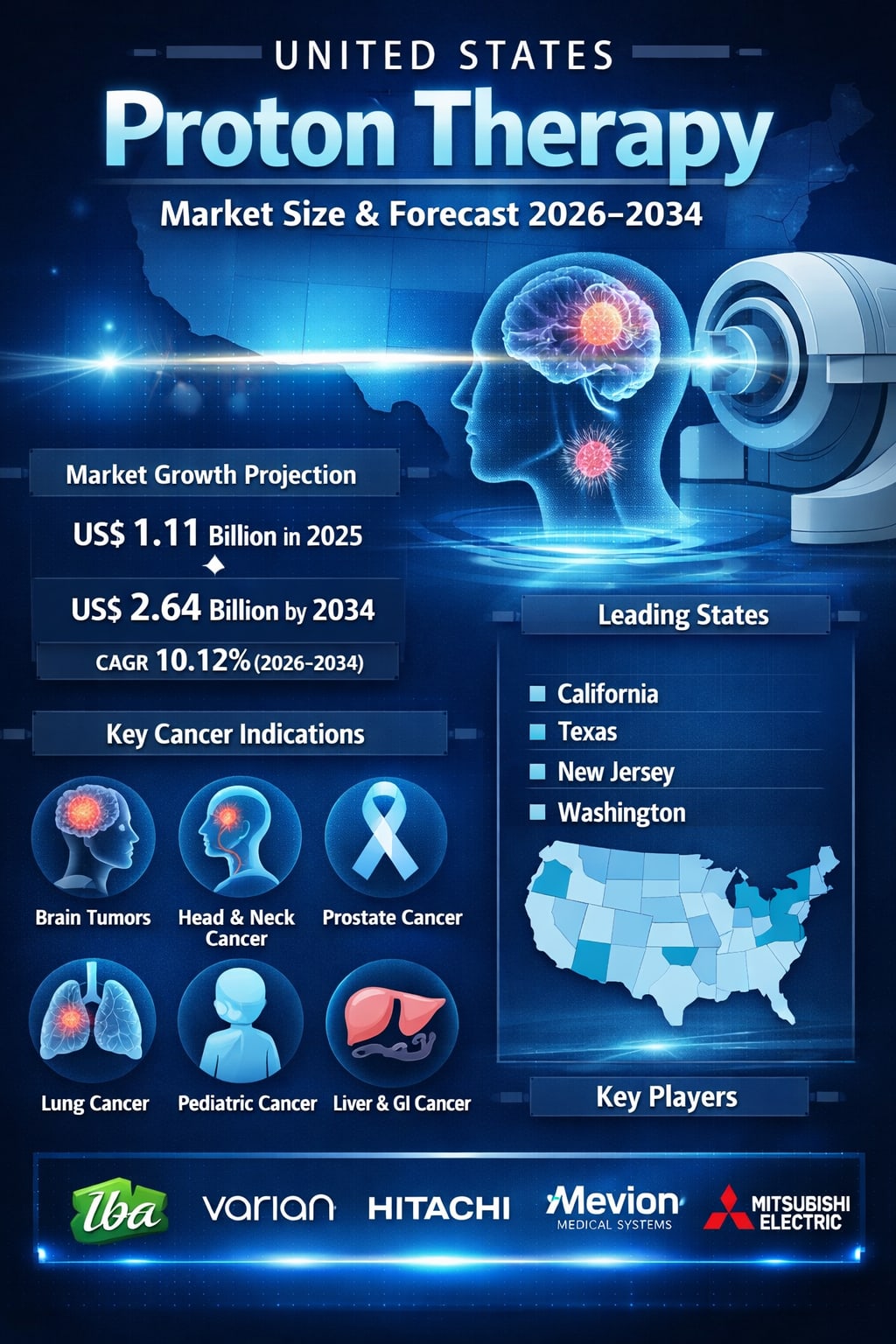
According to Renub Research, the United States proton therapy market is expected to expand from US$ 1.11 Billion in 2025 to US$ 2.64 Billion by 2034, registering a Compound Annual Growth Rate (CAGR) of 10.12% from 2026 to 2034. This robust growth reflects a broader transformation in oncology, where precision, personalization, and long-term quality of life are becoming as important as survival outcomes.
With the largest number of proton therapy facilities in the world, a strong clinical research ecosystem, and continuous investment in healthcare infrastructure, the United States remains at the forefront of this advanced radiation therapy segment. As clinical evidence grows and access improves through compact and single-room systems, proton therapy is steadily moving from a niche technology to a mainstream component of cancer treatment strategies.
United States Proton Therapy Market Outlook
Proton therapy represents one of the most advanced forms of radiation therapy used in cancer treatment today. Unlike conventional X-ray radiation therapy, proton therapy uses highly targeted proton beams that deliver the maximum dose of radiation directly to the tumor while minimizing exposure to surrounding healthy tissues. This unique physical property, known as the Bragg peak, allows clinicians to treat tumors with exceptional precision.
This precision is especially critical when treating cancers located near vital organs such as the brain, spinal cord, heart, and eyes. As a result, proton therapy is widely used in the treatment of pediatric cancers, brain tumors, head and neck cancers, prostate cancer, and lung cancer. By reducing unnecessary radiation exposure, proton therapy helps lower the risk of long-term side effects, which is particularly important for children and younger patients who have many years of life ahead of them after treatment.
In the United States, proton therapy has gained widespread acceptance due to the country’s well-developed cancer care infrastructure and strong focus on precision medicine. The availability of advanced treatment centers, growing patient awareness, and selective insurance coverage have all contributed to increased adoption. Technological innovations such as pencil beam scanning, image-guided proton therapy, and single-room proton therapy systems have further enhanced treatment accuracy and expanded accessibility.
As oncology continues to evolve toward more personalized and less invasive treatment approaches, proton therapy is expected to play an increasingly central role in the U.S. cancer care ecosystem.
Growth Drivers of the United States Proton Therapy Market
Rising Cancer Incidence and Demand for Precision Oncology
Cancer remains one of the leading causes of death in the United States, and its incidence continues to rise with the aging population. Estimates suggest that in 2025, the United States will record over 2 million new cancer cases and more than 600,000 cancer-related deaths. Prostate cancer, lung cancer, brain tumors, and pediatric cancers are among the most common and clinically challenging cases.
These cancers often require highly accurate radiation delivery to maximize treatment effectiveness while minimizing harm to healthy tissues. Proton therapy’s ability to precisely target tumors makes it particularly suitable for such cases. As the U.S. population continues to age and cancer prevalence increases, the demand for advanced, precision-based radiation therapies is expected to grow steadily, directly supporting the expansion of the proton therapy market.
Advanced Healthcare Infrastructure and Rapid Technology Adoption
The United States benefits from one of the most advanced healthcare infrastructures in the world, enabling rapid adoption of innovative medical technologies. Leading academic hospitals and comprehensive cancer centers are often early adopters of cutting-edge treatment systems, including proton therapy.
Continuous technological advancements—such as pencil beam scanning, real-time imaging, motion management, and compact single-room systems—have improved both the efficiency and accuracy of proton therapy. These innovations not only enhance clinical outcomes but also help reduce operational complexity and improve patient throughput.
The presence of strong research and development capabilities, combined with a highly skilled medical workforce, further accelerates market growth. As hospitals continue to invest in state-of-the-art oncology infrastructure, proton therapy is increasingly becoming an integral part of advanced cancer treatment offerings across the country.
Favorable Clinical Evidence and Evolving Reimbursement Support
The growing body of clinical evidence supporting the effectiveness of proton therapy in specific cancer indications is another major driver of market growth. Studies highlighting improved tumor control, reduced side effects, and better long-term quality of life have strengthened clinical confidence in this technology.
In addition, targeted insurance reimbursement—particularly for pediatric cancers and complex tumor cases—has improved patient access to proton therapy. While reimbursement policies still vary, the gradual expansion of covered indications is encouraging wider adoption. As clinical guidelines evolve and real-world evidence continues to accumulate, proton therapy is expected to gain further traction across U.S. healthcare systems.
Challenges of the United States Proton Therapy Market
High Capital Investment and Operating Costs
Despite its clinical advantages, proton therapy faces a significant barrier in the form of high capital and operational costs. Establishing a proton therapy center requires substantial investment in specialized equipment, large treatment vaults, advanced radiation shielding, and sophisticated infrastructure.
Beyond the initial setup, ongoing expenses such as equipment maintenance, technology upgrades, and the employment of highly specialized medical professionals add to the financial burden. These high costs mean that proton therapy facilities are primarily concentrated in large academic hospitals and major cancer centers, limiting access in smaller or rural healthcare settings.
Reimbursement Uncertainty and Limited Insurance Coverage
Reimbursement remains another critical challenge for the U.S. proton therapy market. While proton therapy is covered for certain indications, insurance policies vary widely, and approval processes can be complex and time-consuming. Some insurers require extensive documentation or deny coverage due to the availability of advanced photon-based alternatives.
This uncertainty can discourage both providers and patients from choosing proton therapy, even when it may be clinically appropriate. Delays in reimbursement approval can also impact treatment schedules, adding another layer of complexity to clinical decision-making.
Key Market Segments and Clinical Applications
USA Head & Neck Cancer Proton Therapy Market
Head and neck cancers often occur near critical structures such as the brain, spinal cord, salivary glands, and optic nerves. Proton therapy’s precision allows clinicians to deliver effective radiation doses while minimizing damage to these sensitive areas. This significantly reduces side effects such as dry mouth, swallowing difficulties, and vision problems. Growing clinical evidence and rising incidence rates are driving increased adoption in this segment.
USA Prostate Cancer Proton Therapy Market
Prostate cancer remains one of the most common cancers among men in the United States. Proton therapy offers precise targeting of the prostate while reducing radiation exposure to the bladder and rectum, leading to fewer urinary and gastrointestinal side effects. As patients increasingly seek treatments with better long-term quality-of-life outcomes, proton therapy is gaining popularity among selected prostate cancer cases.
USA Lung Cancer Proton Therapy Market
Treating lung cancer is particularly challenging due to the proximity of tumors to vital organs such as the heart and spinal cord and the movement of tumors during breathing. Advances in imaging and motion management have made proton therapy a valuable option for selected lung cancer patients, helping to protect healthy lung tissue and reduce treatment-related complications.
USA Single-Room Proton Therapy Market
Single-room proton therapy systems are transforming the market by lowering installation costs and reducing space requirements compared to multi-room facilities. These compact systems make it possible for mid-sized hospitals to offer proton therapy, significantly expanding patient access. Improvements in efficiency and simplified operations are further accelerating adoption across the United States.
Regional Market Highlights
California Proton Therapy Market
California leads the U.S. proton therapy landscape with its strong healthcare infrastructure, renowned academic institutions, and high patient volumes. The state’s large population and high incidence of cancers such as prostate, lung, and pediatric cancers drive strong demand for advanced radiation therapies. A culture of medical innovation and research further supports market growth.
Texas Proton Therapy Market
Texas is witnessing steady expansion in proton therapy adoption, supported by a large and diverse population and growing investments in oncology infrastructure. Major cities are increasingly home to specialized cancer centers offering advanced radiation therapies, improving access across the state.
New Jersey Proton Therapy Market
New Jersey benefits from its proximity to major medical research hubs and a well-organized healthcare system. High patient awareness and strong referral networks contribute to growing demand, particularly for complex and pediatric cancer cases.
Washington Proton Therapy Market
Washington’s focus on precision medicine and strong research ecosystem has made it an important market for proton therapy. Investments in oncology infrastructure and innovation continue to enhance patient access and clinical capabilities.
Market Segmentation Overview
By Indication:
Head & Neck Cancer
Sarcoma
Pediatric Cancer
Gastro-intestinal Cancer
Prostate Cancer
Lung Cancer
By Set-up Type:
Single Room
Multi-Room
By Top States:
Includes California, Texas, New York, Florida, New Jersey, Washington, and many others across the United States.
By Reimbursement Policy:
Reimbursement Policies for Patients
Reimbursement for Institutions, Stakeholders, and Manufacturers
By Components:
Proton Accelerator Systems
Beam Transport and Delivery Systems
Treatment Planning and Imaging Systems
Patient Positioning Systems
Human Resources and Clinical Expertise
Competitive Landscape and Key Players
The U.S. proton therapy market is characterized by the presence of leading global and regional technology providers. Key players include:
IBA
Varian Medical Systems
Hitachi Ltd.
Mevion Medical Systems
Mitsubishi Electric Corporation
These companies compete through technological innovation, strategic partnerships, system upgrades, and expansion of service offerings. Their focus remains on improving treatment precision, reducing system costs, and expanding the clinical applicability of proton therapy.
Final Thoughts
The United States proton therapy market is on a strong growth trajectory, driven by rising cancer incidence, increasing demand for precision oncology, and continuous technological innovation. With the market projected to grow from US$ 1.11 Billion in 2025 to US$ 2.64 Billion by 2034 at a CAGR of 10.12%, proton therapy is steadily moving from a specialized treatment option to a more widely accessible component of modern cancer care.
While challenges such as high capital costs and reimbursement uncertainties remain, advancements in single-room systems, growing clinical evidence, and expanding healthcare infrastructure are gradually reshaping the market landscape. As the U.S. healthcare system continues to prioritize personalized, patient-centric cancer treatment, proton therapy is poised to play a critical role in shaping the future of radiation oncology.
About the Creator
Sakshi Sharma
Content Writer with 7+ years of experience crafting SEO-driven blogs, web copy & research reports. Skilled in creating engaging, audience-focused content across diverse industries.
Keep reading
More stories from Sakshi Sharma and writers in Trader and other communities.
Animal Parasiticides Market Size and Forecast 2026–2034
Introduction: A Growing Pillar of Modern Animal Healthcare The global animal health industry is undergoing a significant transformation, and parasite control has emerged as one of its most critical pillars. According to Renub Research, the Animal Parasiticides Market is expected to reach US$ 18.06 billion by 2034, up from US$ 11.72 billion in 2025, growing at a compound annual growth rate (CAGR) of 4.92% from 2026 to 2034. This steady expansion reflects the rising importance of preventive veterinary care, the rapid growth of pet ownership worldwide, and the increasing need to protect livestock productivity against parasitic infections.
By Sakshi Sharmaabout 21 hours ago in Trader
Tire Market Accelerates with Smart Mobility, EV Expansion, and AI-Driven Manufacturing Innovations
Tire Market: Trends, Drivers, and Future Outlook The global tire market has been undergoing remarkable transformations in recent years, driven by rapid technological advancements, changing consumer behavior, and a growing emphasis on sustainability. Tires, an essential component of vehicles, are no longer just functional; they are now a crucial element in vehicle safety, fuel efficiency, and performance. From passenger cars to commercial vehicles, the demand for high-quality, durable, and eco-friendly tires is witnessing significant growth across the globe.
By James Smithabout 19 hours ago in Trader
Taiwan Advertising Market Size, Share, Industry Trends, Growth Factors and Forecast to 2033
Why Taiwan Advertising Market Is Transforming: Digital Growth, Media Trends & Market Forecast Market Overview The Taiwan advertising market has experienced substantial transformation over the past decade, driven by rapid digital adoption, widespread internet penetration, and changing consumer media habits. Taiwan ranks among Asia’s most digitally connected economies, with high smartphone usage and active social media participation shaping modern advertising strategies.
By Jackson Watson4 days ago in Trader




Comments
There are no comments for this story
Be the first to respond and start the conversation.