
United States Functional Food Market Size & Forecast 2026–2034
How Preventive Nutrition, Innovation, and Lifestyle Shifts Are Reshaping the American Food Industry

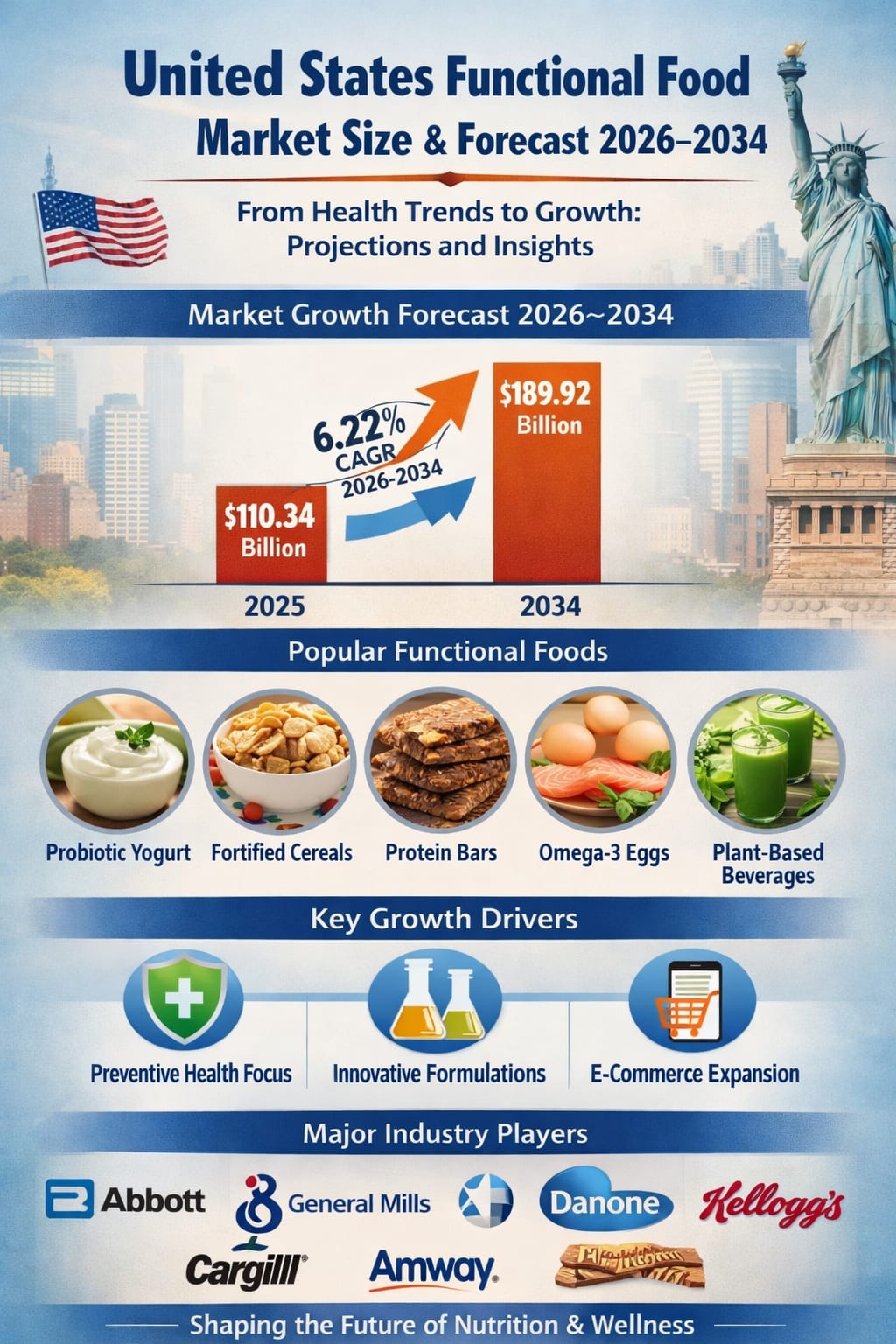
United States Functional Food Market Outlook
Driven by a nationwide shift toward preventive health, nutrition awareness, and lifestyle optimization, the United States functional food market is entering a strong growth phase. According to Renub Research, the market is projected to expand from US$ 110.34 billion in 2025 to US$ 189.92 billion by 2034, growing at a CAGR of 6.22% during 2026–2034.
This growth reflects a fundamental change in how Americans perceive food. No longer viewed solely as a source of calories, food is increasingly seen as a daily health tool—one that can support immunity, digestion, heart health, cognitive performance, and long-term vitality.
Functional foods are products enriched with bioactive compounds such as probiotics, vitamins, minerals, antioxidants, fiber, and botanical extracts. Examples include fortified cereals, probiotic yogurts, omega-3 eggs, protein bars, kombucha, plant-based beverages, and fiber-enriched snacks. These products allow consumers to integrate health benefits seamlessly into everyday eating habits—without the need for pills or medical interventions.
In the United States, the popularity of functional foods is fueled by rising chronic disease awareness, increasing healthcare costs, and a growing desire for self-managed wellness. Busy lifestyles, aging demographics, and a fitness-focused culture further accelerate adoption, positioning functional foods as a mainstream dietary solution rather than a niche wellness trend.
Key Growth Drivers in the United States Functional Food Market
Increasing Health Awareness and Preventive Wellness
One of the most powerful forces shaping the U.S. functional food market is the growing emphasis on preventive healthcare. Consumers are proactively choosing foods that help reduce the risk of illness, support immunity, and improve long-term health outcomes.
Functional foods offer a low-effort way to achieve these goals. A fortified cereal can deliver daily vitamins, a probiotic yogurt supports digestion, and an omega-3 snack can contribute to heart health—all without disrupting daily routines. This convenience makes functional foods especially attractive to working professionals, families, and aging consumers.
Public and private initiatives are reinforcing this shift. In February 2024, the Henry Schein Cares Foundation launched a multi-year public health campaign aimed at improving health literacy and encouraging preventive care. Such initiatives strengthen consumer confidence in nutrition-led wellness approaches and expand the functional food customer base.
Innovation in Formulation and Sensory Experience
Modern functional foods no longer compromise on taste. Earlier generations of health foods were often perceived as bland or medicinal, limiting repeat purchases. Today, advanced food science allows manufacturers to blend bioactive compounds with appealing flavors, textures, and formats.
Technologies such as microencapsulation, natural flavor masking, and improved ingredient stability ensure both effectiveness and sensory appeal. Functional snacks, indulgent protein bars, fortified smoothies, and ready-to-drink beverages now deliver health benefits without sacrificing enjoyment.
Innovation has also expanded into multi-benefit products, such as protein + probiotics, vitamin D + calcium blends, and adaptogen-enhanced beverages. Single-serve sachets, shelf-stable shots, and hybrid meal-replacement snacks cater to convenience-driven consumers.
In June 2025, Eshbal Functional Food Inc. announced its U.S. commercial launch of gluten-free pita bread alongside the acquisition of Swonder Bread, an Israeli bakery specializing in sprouted sourdough products—highlighting how innovation and acquisition strategies are shaping the competitive landscape.
Channel Expansion and Personalized Digital Commerce
Distribution innovation is another major growth catalyst. Functional foods are now widely available through supermarkets, pharmacies, wellness stores, fitness clubs, and online platforms.
E-commerce, in particular, has transformed how functional foods are marketed and consumed. Direct-to-consumer platforms allow brands to collect first-party data, personalize recommendations, and offer subscription models that boost customer lifetime value.
Digital nutrition apps and wellness platforms enable customized product bundles based on dietary preferences and health goals. In February 2024, General Mills Inc. launched a new line of functional cereals fortified with immune-supporting vitamins and minerals, reflecting the growing integration of health positioning into mass-market brands.
Key Challenges in the United States Functional Food Market
Regulatory Ambiguity and Evidence Expectations
Functional foods operate in a regulatory gray zone between traditional foods and dietary supplements. This creates uncertainty around allowable health claims, labeling standards, and ingredient approvals.
Consumers increasingly demand clinically supported benefits, yet conducting human clinical trials is expensive and time-consuming. Brands must carefully phrase claims to avoid regulatory scrutiny while still communicating value. Smaller companies often struggle to meet these evidence expectations, while large companies face reputational risks if marketed benefits fall short of consumer expectations.
Ingredient Sourcing, Cost Pressures, and Supply Chain Risk
Many functional ingredients—such as probiotics, specialty proteins, botanical extracts, and omega-3 concentrates—are vulnerable to supply chain volatility. Climate variability, geopolitical disruptions, and limited supplier bases can lead to shortages and price swings.
At the same time, consumers expect clean labels, traceability, and sustainability, requiring additional investment in supplier audits and certifications. Smaller brands are especially vulnerable to single-source dependencies and rising input costs.
Key Functional Food Segments in the United States
United States Breakfast Cereals Functional Food Market
Breakfast cereals have evolved into targeted nutrition platforms. Beyond basic fortification, modern cereals now contain prebiotic fiber, probiotics, plant proteins, omega-3s, and botanicals designed to support energy, immunity, and cognitive function.
Manufacturers focus on whole grains, low sugar content, and clean labels while offering convenient single-serve formats for busy consumers. Morning meals are increasingly positioned as opportunities for therapeutic nutrition rather than simple calorie intake.
United States Baby Functional Food Market
Parents are actively seeking functional baby foods that support brain development, immunity, and digestion. Products such as DHA-enriched purees, probiotic toddler drinks, and iron-fortified cereals are gaining traction.
Trust is paramount in this category. Brands emphasize transparent sourcing, allergen control, and pediatric endorsements. Convenient packaging formats—pouches, resealable containers, and portioned servings—further boost adoption among caregivers.
United States Probiotics Functional Food Market
Probiotics have become mainstream, extending far beyond yogurt into beverages, bars, cereals, and shots. Consumer awareness of the gut-brain axis has expanded probiotic use to mental wellness and immune support.
Brands now differentiate through strain specificity, CFU count, and survivability. Products that clearly communicate clinical benefits enjoy higher trust and loyalty among consumers.
United States Vitamins Functional Food Market
Vitamin-fortified foods are shifting toward occasion-based delivery—energy, immunity, mood, and stress management. Powdered mixes, fortified beverages, gummies, and snack bars offer flexible dosing and improved bioavailability.
Consumers increasingly prefer naturally derived vitamins and advanced delivery systems such as liposomal or chelated formulations, driving further innovation in this segment.
Distribution Channel Trends
Specialist Retailers
Natural food stores and wellness boutiques play a critical role in introducing new functional food trends. Their curated selections, knowledgeable staff, and in-store education foster consumer trust and accelerate adoption of niche innovations.
Online Functional Food Market
E-commerce allows brands to tell detailed ingredient stories, provide usage guidance, and build strong direct relationships. Subscription models and influencer-driven social commerce have become powerful growth engines, especially for niche and premium brands.
United States Sports Nutrition Market
Sports nutrition remains one of the strongest functional food segments. Protein powders, electrolyte mixes, recovery drinks, and performance bars are now used by both athletes and mainstream consumers seeking active lifestyles.
Innovation focuses on plant-based proteins, low-sugar formulations, and joint health ingredients such as collagen. Third-party testing and transparent labeling are essential for credibility in this segment.
Regional Insights
California Functional Food Market
California leads U.S. functional food innovation, driven by its wellness culture, startup ecosystem, and sustainability focus. In August 2025, Vitawest Nutraceuticals launched a functional foods division targeting gyms and athletes, highlighting California’s role as a trend incubator.
New York Functional Food Market
New York’s diverse population and fast-paced lifestyle support rapid adoption of functional foods. From grab-and-go wellness bowls to fortified bakery items, the city offers ideal conditions for product testing, visibility, and scaling.
Competitive Landscape: Key Players
Major companies shaping the U.S. functional food market include:
Abbott Laboratories
Amway
BASF SE
Cargill Incorporated
Clif Bar & Company
Danone S.A.
Kellogg Company
Kerry Group Plc.
Nestlé S.A.
Each company is actively investing in formulation innovation, clean-label transitions, and digital-first distribution strategies to capture long-term growth.
Final Thoughts
The United States functional food market is no longer a niche wellness category—it is becoming a cornerstone of modern American diets. As consumers increasingly seek health benefits from everyday foods, the industry is poised for sustained expansion through 2034.
With strong growth drivers such as preventive healthcare adoption, product innovation, digital personalization, and expanding retail access, functional foods are reshaping the future of nutrition. Companies that combine scientific credibility, great taste, clean labels, and consumer trust will lead the next decade of growth in this rapidly evolving market.
About the Creator
Best 10 Stocks to Buy Now: A Professional Investment Guide
**Best 10 Stocks to Buy Now: A Professional Investment Guide** Investing in stocks at the right time can significantly impact long-term wealth building. As global markets evolve and new economic trends shape investor behavior, many people are asking the same question: what are the best stocks to buy right now? This professional guide highlights ten stocks that are widely viewed as strong candidates based on growth potential, market leadership, innovation, and long-term demand. The companies mentioned span technology, healthcare, finance, energy, and industrial sectors, offering diversification for investors seeking balanced opportunities.
By America today 5 days ago in Trader
Australia Fortified Health Drinks Market Set to Nearly Double by 2033
The Australia fortified health drinks market reached a value of USD 1,212.1 million in 2024 and is projected to grow to USD 2,209.8 million by 2033, exhibiting a compound annual growth rate (CAGR) of 6.90% from 2025 to 2033. This strong forecast underscores the expanding appetite among Australian consumers for beverages that offer enhanced nutritional value — notably vitamins, minerals, probiotics and other functional benefits that go beyond basic hydration. The market’s evolution reflects broader shifts in consumer behavior, pervasive wellness trends, and opportunities for product innovation and new distribution strategies across both urban and regional areas.
By Rashi Sharma6 days ago in Trader




Comments
There are no comments for this story
Be the first to respond and start the conversation.