
United States Free-From Food Market Size and Forecast 2026–2034
From Allergy Management to Lifestyle Choice: How Free-From Foods Are Reshaping the American Grocery Basket

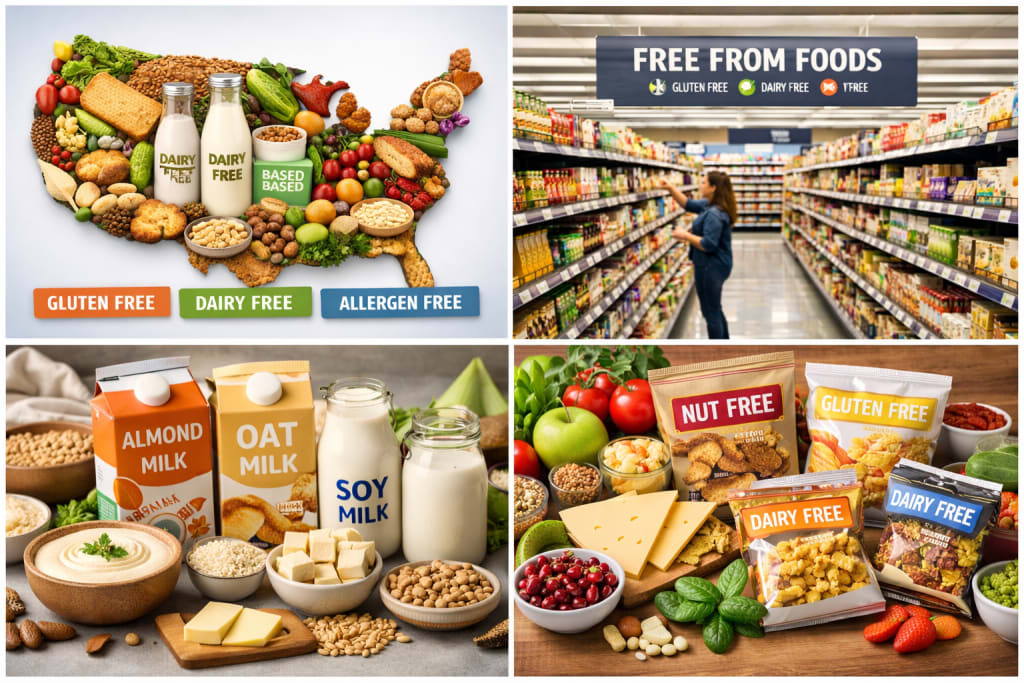
Introduction
The Free-From Foods industry in the United States is entering a powerful phase of long-term expansion, evolving from a niche dietary solution into a mainstream food movement. According to Renub Research, the U.S. Free-From Food Market is projected to grow from US$ 30.41 billion in 2025 to US$ 74.33 billion by 2034, registering a robust CAGR of 10.44% between 2026 and 2034.
This growth reflects a fundamental shift in consumer behavior. What once catered primarily to individuals with medical dietary restrictions has now become a lifestyle preference for millions of Americans seeking cleaner labels, improved digestion, and better overall health. Gluten-free, dairy-free, lactose-free, allergen-free, and additive-free foods are increasingly perceived as healthier, safer, and more transparent alternatives to conventional food products.
U.S. Free-From Food Market Outlook
“Free-from” foods are products manufactured without ingredients commonly associated with allergies, intolerances, or sensitivities. These typically include gluten, dairy, lactose, soy, eggs, tree nuts, artificial additives, preservatives, or genetically modified components. The category is designed to support individuals diagnosed with conditions such as celiac disease, lactose intolerance, and food allergies, while also appealing to health-conscious consumers without clinical diagnoses.
In the United States, free-from foods have gained traction as digestive wellness products, even among consumers who do not face medical restrictions. The broader clean-eating culture, combined with rising adoption of vegan, flexitarian, and fitness-oriented diets, has significantly accelerated demand. As a result, free-from foods are now deeply embedded across supermarkets, convenience stores, online platforms, and foodservice outlets.
Growth Drivers in the United States Free-From Food Market
Rising Incidence of Food Allergies and Sensitivities
The most influential driver of the U.S. free-from food market is the increasing prevalence of food allergies, intolerances, and sensitivities. Conditions such as lactose intolerance, gluten sensitivity, soy intolerance, celiac disease, and nut allergies affect a substantial portion of the population.
According to the U.S. Centers for Disease Control and Prevention, more than 80 million Americans suffer from some form of allergy. Approximately one in three adults and one in four children experience seasonal allergies, eczema, or food-related allergic reactions. Children are particularly vulnerable, and parental caution has significantly boosted demand for allergen-free packaged foods.
Medical advice recommending elimination diets has further normalized the consumption of free-from foods. Even among consumers without diagnosed allergies, many proactively remove certain ingredients from their diets to improve digestion and overall well-being.
Health, Wellness, and Clean-Label Consumer Trends
Health awareness in the U.S. has reached unprecedented levels. Consumers increasingly associate free-from foods with clean labels, fewer artificial ingredients, and minimal processing. Dairy-free and gluten-free products are widely perceived as lighter, easier to digest, and closer to natural food sources.
Fitness-focused consumers, weight-management followers, and lifestyle-driven eaters often select free-from foods as part of broader wellness routines. Manufacturers are responding by reformulating products to remove allergens while maintaining taste, texture, and nutritional value.
In April 2025, Maïzly introduced a plant-based corn milk in the U.S. market, available in original and chocolate flavors. The product is dairy-free, gluten-free, fortified with vitamins, and contains significantly less sugar than conventional dairy milk—highlighting how innovation aligns with consumer expectations.
Product Innovation and Category Expansion
Innovation has become a defining feature of the U.S. free-from food market. Food companies are investing heavily in alternative proteins, plant-based ingredients, and advanced food technologies to improve mouthfeel, flavor, and nutrition.
Free-from foods are no longer confined to basic staples. The category now spans bakery items, confectionery, snacks, beverages, frozen meals, sauces, and ready-to-eat products. Advances in packaging, shelf-life extension, and nutrient fortification have expanded shelf presence and improved consumer confidence.
In May 2025, Beyond Meat expanded distribution of its Beyond Chicken Pieces to 1,900 Kroger stores across the U.S., offering a product free from GMOs, cholesterol, hormones, and antibiotics while delivering high protein content.
Challenges in the United States Free-From Food Market
Higher Prices and Cost Sensitivity
One of the most persistent challenges facing the free-from food industry is higher pricing compared to conventional alternatives. Specialized ingredients, segregated manufacturing lines, certification requirements, and stringent quality controls significantly increase production costs.
These costs are often passed on to consumers, limiting accessibility among price-sensitive households. During periods of economic uncertainty or inflation, discretionary consumers may prioritize affordability over lifestyle-based dietary choices, potentially slowing market penetration.
Taste, Texture, and Shelf-Life Constraints
Despite technological advancements, some free-from foods still struggle with taste, texture, and shelf stability. Removing gluten, dairy, or eggs can negatively affect structure and flavor, particularly in baked goods and confectionery products.
Additionally, reliance on natural preservatives may shorten shelf life, increasing the risk of consumer dissatisfaction. Continued research and formulation improvements remain essential to sustaining long-term growth.
Segment Insights
United States Dairy-Free Free-From Food Market
The dairy-free segment is one of the fastest-growing categories within the U.S. free-from market. High lactose intolerance rates and strong plant-based diet adoption have driven demand for dairy-free milk, yogurt, cheese, and ice cream.
Almond, oat, soy, and coconut milk dominate the segment, with foodservice outlets such as coffee chains playing a crucial role in mainstream adoption.
U.S. Gluten-Free Free-From Food Market
The gluten-free category is one of the most mature segments in the market. Initially driven by celiac disease diagnoses, it has since evolved into a lifestyle choice. Gluten-free bread, pasta, snacks, and meal solutions are now widely available, with improved nutritional profiles and taste parity.
Bakery & Confectionery
Free-from bakery and confectionery products represent a premium yet high-potential segment. Consumers seek indulgence without allergic risk, driving innovation in alternative flours, egg substitutes, and plant-based fats.
Snacks and Convenience Foods
Snacks remain a key growth engine, particularly among parents seeking allergen-safe options for children. Chips, bars, crackers, and on-the-go snacks dominate impulse purchases.
Distribution Channel Trends
Supermarkets and hypermarkets remain the dominant sales channel, supported by clearly segmented free-from sections. Convenience stores are gaining importance for immediate-consumption items, while online marketplaces are rapidly expanding due to product variety, transparency, and subscription models.
Regional Market Highlights
California leads the U.S. free-from food market due to its health-driven culture, plant-based adoption, and food startup ecosystem.
New York benefits from dense urban populations, premium retail infrastructure, and strong e-commerce penetration.
Washington shows steady growth driven by sustainability-focused and wellness-oriented consumers.
New Jersey demonstrates consistent adoption supported by suburban retail access and healthcare awareness.
Market Segmentation
By Type:
Dairy-Free, Gluten-Free, Lactose-Free, Others
By End Product:
Bakery & Confectionery, Dairy-Free Foods, Snacks, Beverages, Others
By Distribution Channel:
Supermarkets & Hypermarkets, Convenience Stores, Online Channels, Others
Competitive Landscape
The U.S. free-from food market features a mix of multinational food corporations and specialized brands. Key players include:
Alpro UK Limited
Conagra Brands Inc.
Danone SA
Doves Farm Foods Limited
Dr. Schar AG/SpA
Ener-G Foods Inc.
General Mills Inc.
GreenSpace Brands Inc
Hain Celestial Group Inc
Mondelez International
Each company is analyzed across five viewpoints: overview, key personnel, recent developments, SWOT analysis, and revenue performance.
Final Thoughts
The United States Free-From Food Market is transitioning from a medical-necessity segment into a core pillar of the modern food industry. With strong backing from health awareness, allergy prevalence, clean-label demand, and continuous product innovation, the market is well positioned for sustained growth through 2034.
While pricing and formulation challenges remain, ongoing technological advancements and broader consumer education are expected to enhance accessibility and acceptance. As free-from foods become synonymous with transparency, wellness, and quality, their role in shaping the future of American food consumption will only continue to strengthen.
About the Creator
Sakshi Sharma
Content Writer with 7+ years of experience crafting SEO-driven blogs, web copy & research reports. Skilled in creating engaging, audience-focused content across diverse industries.
Keep reading
More stories from Sakshi Sharma and writers in Trader and other communities.
France Convenience Store Market Size and Forecast 2026–2034
France Convenience Store Market Overview The France Convenience Store Market is entering a decisive phase of transformation, supported by urbanization, evolving consumer behavior, and a strong shift toward fast, flexible retail formats. According to Renub Research, the market is expected to expand from US$ 26.52 billion in 2025 to US$ 44.54 billion by 2034, registering a CAGR of 5.93% during the forecast period 2026–2034.
By Sakshi Sharma2 days ago in Trader
Australia CCTV Market: Surveillance Sector Accelerates Toward a $6B Future
The Australia CCTV market is entering a period of rapid transformation and expansion. According to the latest IMARC Group research, the market reached USD 1.16 billion in 2024 and is projected to grow to approximately USD 6.02 billion by 2033, representing a robust CAGR of 17.90% during the 2025–2033 period.
By Rashi Sharma2 days ago in Trader
The Devil's Triangle
The sails ruffled in the breeze as we cruised along. The Sea Breeze was a mid-size catamaran that sailed out of Royal Naval Dockyard in Bermuda. We had booked this trip weeks in advance and were now looking at our Captain, Spike and two boat hands. Paddy and Wilson seemed like nice guys, joking around with the passengers and telling us some stories about Bermuda that only locals would know. Their island accents sounded almost British but they were pleasant to listen to.
By Barbara Gode Wilesabout 16 hours ago in Fiction


Comments
There are no comments for this story
Be the first to respond and start the conversation.