
Understanding Spread in Forex A Beginner’s Guide
Introduction

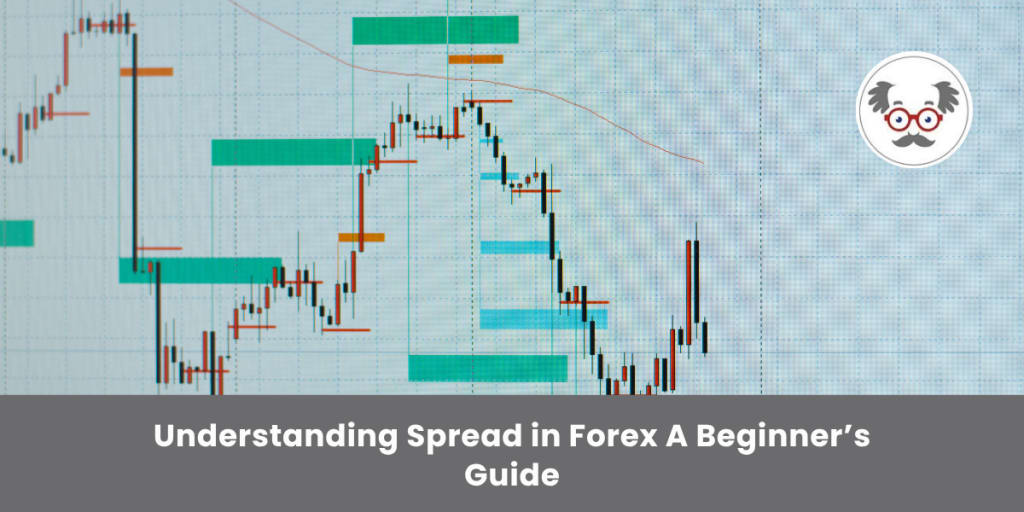
The spread in forex trading is an important topic that directly affects your profits and losses. Understanding how spreads function is critical for new traders and those honing their techniques. This post will explain what a spread in forex is, why it matters, and how it might influence your trading decisions.
What Is Spread in Forex?
In forex, the spread is the difference between the bid and ask prices for a currency pair. It is measured in pips (percentage points), the lowest unit of price fluctuation in forex.
For example, if the EUR/USD pair trades at 1.1050/1.1052, the spread is 2 pips. This distinction affects how brokers generate money, particularly those who provide commission-free trades.
Types of Spread in Forex Trading
There are mainly two sorts of spreads in forex:
- Fixed Spread: A fixed spread is constant in all market conditions. It is often provided by dealing desk brokers and is suitable for novices seeking consistent pricing.
- Variable (Floating) Spread: This spread varies based on market volatility. During periods of strong volatility (such as news releases), the spread can widen dramatically. This type is more widespread among ECN brokers and provides tighter spreads under typical situations.
Why the Spread in Forex Matters?
The spread in forex can have a substantial impact on both your trading costs and possible profits. Here's how.
- Cost of Entry and Exit: The spread is the amount you pay each time you start or close a deal. A big spread reduces your returns, particularly for short-term traders.
- Impact on Scalpers: Traders who utilize scalping tactics should opt for brokers with tight spreads, as even small discrepancies can reduce total profitability.
- Market Conditions: Spreads may widen in response to major economic events or periods of low liquidity. Knowing this allows traders to avoid entering deals at expensive times.
How to Reduce Spread Costs in Forex
Smart traders always aim to reduce the spread in forex in order to enhance their profits. Here's how.
- Choose the Right Broker: ECN brokers typically have tighter spreads but may charge a modest commission. Before deciding on a broker, compare multiple options.
- Major currency pairs, such as EUR/USD and USD/JPY, typically have lower spreads due to significant liquidity.
- Avoid Trading during Low Volatility: Trading during market openings or news releases might cause spreads to expand. Try to avoid trading during these periods.
- Use Limit Orders: During periods of volatility, market orders may result in wider spreads. Limit orders provide greater control over entry prices.
Spread in Forex vs Commission: What’s the Difference?
Forex brokers may charge a spread, a commission, or both. Understanding the difference will allow you to compute your total cost per deal.
- Spread-Only Brokers: The cost is incorporated into the spread. Ideal for novices seeking simplicity.
- Commission-Based Brokers: They provide tight spreads but charge a predetermined fee for each deal. Suitable for skilled traders and those who employ high-frequency methods.
- Hybrid Models: Some brokers use both, providing ultra-tight spreads for a low commission.
Always consider your whole cost before making a deal, not just the spread.
Conclusion
Every FX trading relies heavily on the spread. Even if it appears to be a tiny amount, it can soon pile up, particularly for aggressive traders. You may improve your trading results by learning what it is, what types of spreads are available, and how to handle them.
Choosing the proper broker, timing your transactions, and employing the appropriate tactics can help you stay ahead in the competitive forex market.
About the Creator
FX Einstein
Your go-to app for forex & commodities signals. Get real-time alerts, expert analysis, and market insights. Try it with a 10-day free demo. Download now!
Keep reading
More stories from writers in Trader and other communities.
Philippines Luggage & Bags Market: Travel Recovery, Consumer Convenience & Fashion Trends
Philippines Luggage & Bags Market Overview The Philippines luggage and bags market is gaining strong momentum as global and domestic travel demand continues to rebound, urban lifestyles evolve, and e-commerce channels expand product accessibility. Luggage and bags — encompassing suitcases, travel backpacks, trolley bags, duffel bags, handbags, weekenders and business travel kits — have become integral to modern mobility, blending function with fashion, convenience with durability. The Philippines luggage & bags market size was valued at USD 569.77 Million in 2025 and is projected to reach USD 1,041.45 Million by 2034, growing at a compound annual growth rate of 6.93% from 2026-2034. This growth is driven by rising tourist arrivals, increased domestic travel, shifting lifestyle preferences, and the convergence of technology and design in travel accessories that appeal to diverse consumer segments.
By Manisha Dixit4 days ago in Trader




Comments
There are no comments for this story
Be the first to respond and start the conversation.