
Trump’s Kevin Hassett: ‘Amazing’ Tariff Deals Secured, Recession 100% Not Coming
Global Trade Shake-Up: Who Really Benefits?
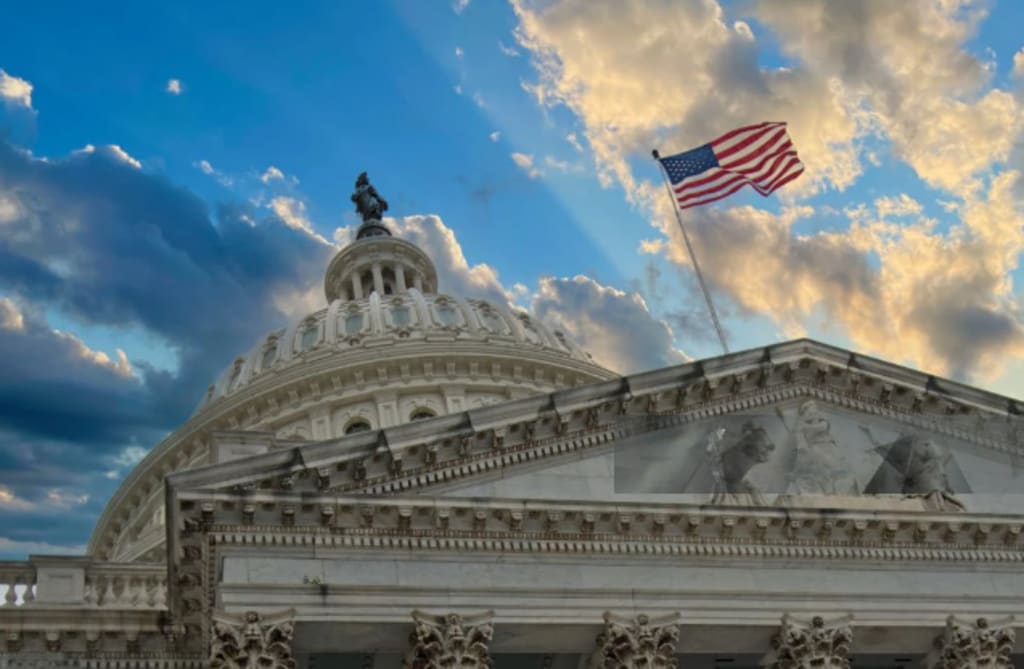
The former economic counselor of the White House Kevin Hassett recently made news when he said that the United States has received "amazing" proposals from major trading partners for tariff deals. Hassett underlined In an interview that the Trump administration's strong trade policies have forced other countries to engage in negotiations, which has led to advantageous conditions for American companies.
As concerns about global growth increased, Hassett stated that recession is 100% not happening. Hasset’s statement dismisses fears of one. The strong U.S. economy will only make our position stronger under the new tariff negotiations. His assurance stands in contrast to the cautions of several economists who cite manufacturing slowdowns and inverted yield curves as possible warning signs.
Are the Tariff Deals Really a Win for the U.S.?
Although top economic advisor Kevin Hassett praised the "amazing" tariff reductions made during trade negotiations. On the other hand, others have raised a variety of concerns. They believe that response from other nations is like, raising their own tariffs has led to money troubles and a lot of uncertainty for American workers. People are also worried that ongoing trade wars might break the global flow of goods, creating long-term trouble for both international businesses and everyday shoppers. Furthermore, several of the much-heralded trade successes—like the United States-Mexico-Canada Agreement (USMCA)—are seen as revisions or renegotiations of pre-existing agreements rather than as revolutionary agreements.
However, proponents of the administration's trade policy cite observable advantages. They highlight that China agreed to purchase more crops and products from American farmers. People in the American car business think it’s great that the EU and Japan are making it cheaper to trade vehicles. Furthermore, many think that the administration's stronger position against unfair trade practices reflects its more proactive and protective attitude to defending American economic interests on the international scene
Market Reactions and Expert Opinions
Financial markets have reacted to the changing nature of global commerce with a mix of excitement and prudence. On the one hand, following reports of encouraging trade developments, stock markets have seen notable rises, indicating investor optimism and rekindled confidence. Not all experts, though, have this upbeat perspective. They’re reminding everyone that trade policies don’t work overnight, and there could still be bumps ahead.
Another top economic advisor Larry Kudlow agreed with Kevin Hassett and said the White House remains confident about the economy. He confidently said that the U.S. economy is doing really well and believes the new trade deals could lead to even more growth soon.
International financial organizations such as the World Bank and the International Monetary Fund (IMF) have released more cautious projections in spite of these guarantees. Both groups warn that ongoing trade tensions present serious negative risks and only predict modest growth for the world economy. Their findings suggest that growing trade disputes may impede international investment, cause supply chain disruptions, and slow down the pace of the economy as a whole.
Will the U.S. Economy Stay Strong?
Hassett is helping to reinforce the idea pushed by the Trump administration: that things are going great with both the economy and trade. He supports the idea that the United States is prevailing on the international economic scene by emphasizing the alleged advantages of the tariff approach. However, economists and industry experts continue to disagree about the actual long-term effects of these levies. Others caution that they may result in increased consumer costs, supply chain interruptions, and strained international relations, while others see them as a tactical instrument to level the playing field.
Officials believe the economy will continue to grow moving forward. According to officials, the U.S. economy is holding up well, thanks to low jobless rates, solid consumer spending, and steady growth. They don’t see a recession coming soon. They believe the progress made in trade talks with countries such as Japan, Canada, and China shows that their plan is delivering results.
However, companies and investors are closely monitoring the outcome as trade negotiations continue and new agreements are put into effect. Now, the crucial question is whether these "amazing" tariff reductions and revised trade agreements will result in long-term economic advantages or if the immediate advantages will be outweighed by more significant difficulties down the road. Whether or if the administration's aggressive trade plans can live up to the hype will be determined in the upcoming months.
About the Creator
Keep reading
More stories from writers in Trader and other communities.
Encrypted Memory
The Things We Bury Don’t Stay Silent Memory is not a clean archive. It is not a library with labeled shelves or a hard drive that stores facts without bias. Memory leaks. It corrodes. It reshapes itself every time we touch it. Now imagine a world where memory can be encrypted—locked away, digitized, protected by algorithms stronger than emotion. A world where pain can be sealed, love preserved, trauma compressed into unreadable code. We like to believe that forgetting is a failure of the mind. But what if forgetting is a survival mechanism? In an age of artificial intelligence, neural networks, and digital permanence, we are approaching a terrifying and fascinating possibility: memory that can no longer fade. This is the story of encrypted memory—not just as technology, but as a mirror to what it means to be human. The Fragile Architecture of Human Memory Human memory was never designed to be permanent. It bends to emotion. It fractures under trauma. It edits itself for comfort. We misremember not because we are weak, but because the mind protects itself. Painful memories dull over time. Joyful ones glow brighter. Entire moments disappear—not erased, but quietly buried. Yet modern culture treats memory as data. Something to be stored, retrieved, verified. Photos timestamp our joy. Messages archive our heartbreak. Cloud servers remember what we wish we could forget. In trying to preserve everything, we may be losing something essential: the mercy of forgetting. Encrypted Memory: A Technological Dream The idea of encrypted memory emerges at the intersection of neuroscience and artificial intelligence. Researchers are already exploring: Brain-computer interfaces Memory mapping Neural data storage AI-assisted recall The goal sounds noble: To help patients with Alzheimer’s. To restore memory after trauma. To preserve identity beyond physical decline. But encryption adds a darker layer. Encryption means restricted access. It means memory can be locked—not just from others, but from ourselves. Who decides which memories are encrypted? And who holds the key? When Forgetting Becomes a Luxury For some, forgetting is not a choice—it is a curse. Survivors of trauma often relive memories they desperately want to escape. War veterans, abuse survivors, cancer patients—memory does not fade for them. It sharpens. Encrypted memory promises relief: Seal the moment of impact Isolate emotional overload Contain psychological damage But relief comes with risk. Pain shapes identity. Loss teaches depth. Suffering rewrites perspective. If we encrypt pain, do we also encrypt growth? Cancer, Survival, and the Weight of Remembering For those who survive life-threatening illness, memory becomes complicated. Cancer survivors often describe memory in fragments: Hospital smells White ceilings The sound of machines The look in loved ones’ eyes These memories do not fade easily. They return uninvited, encrypted into the nervous system itself. Survival brings gratitude—but also guilt. Hope—but also fear. What if encrypted memory could soften the sharpest edges of survival? What if positivity could be engineered? And what would be lost in the process? AI as the Archivist of the Self Artificial intelligence does not forget unless programmed to. It remembers patterns, not pain. Data, not meaning. If AI becomes the keeper of memory, memory stops being emotional—it becomes informational. A heartbreak becomes a dataset. A childhood becomes a timeline. A person becomes a profile. Encrypted memory, managed by AI, could outlive the human who created it. Imagine dying—and leaving behind a perfectly preserved version of your memories. Not stories. Not feelings. But records. Would that still be you? Love, Loss, and the Desire to Preserve Love is where encrypted memory becomes most dangerous. We already preserve love digitally: Photos of people we lost Voice notes we replay Conversations we never delete But love was never meant to be permanent. It was meant to be felt, not archived. If we encrypt memories of love—lock them away untouched—do we honor them, or freeze them unnaturally? Grief requires movement. Healing requires distortion. Love needs time to change shape. Encryption stops time. Privacy, Power, and Ownership of Memory Encrypted memory raises one terrifying question: Who owns your memories? If memory becomes data: Can it be hacked? Can it be sold? Can it be altered? If corporations manage memory encryption, identity becomes a subscription. Access becomes conditional. Your past could be: Restricted Monetized Rewritten The most intimate thing you own—your inner life—would no longer be fully yours. The Ethical Paradox of Perfect Recall Perfect memory sounds powerful. In reality, it is unbearable. Studies show that people with hyperthymesia—those who remember everything—often suffer deeply. They cannot escape regret. They cannot soften trauma. They cannot forget mistakes. Encryption promises control—but control over memory may cost emotional freedom. We need forgetting the way forests need fire: Destructive, yes—but necessary. Encrypted Memory as Metaphor Beyond technology, encrypted memory already exists inside us. We all encrypt parts of ourselves: Childhood wounds Unspoken grief Unreturned love Shame we never name We lock these memories away, protecting ourselves from their power. But encryption is not healing. It is postponement. What we do not process eventually demands attention. The Future: Choice or Illusion? As technology advances, encrypted memory may become optional—or mandatory. We may be offered: Memory backups Trauma filters Emotional firewalls Marketed as wellness. Sold as empowerment. But choice is only real when consequences are understood. The future will not ask whether we can encrypt memory. It will ask whether we should. Conclusion: The Courage to Remember Imperfectly Memory is not meant to be secure. It is meant to be alive. It fades, reshapes, and sometimes breaks us open. But in that imperfection lies meaning. Encrypted memory may protect us from pain—but it may also protect us from becoming fully human. To remember imperfectly is to live honestly. To forget partially is to survive gently. To feel deeply—even when it hurts—is to remain human in an age of machines. Perhaps the bravest act is not encrypting memory— —but trusting ourselves to carry it.
By Zahid Hussain7 days ago in Trader
What’s Your Initial Reaction to an Income Loss?
They either freak out and spiral — or they stay calm and get to work. Most people panic. They lose a job, a client pauses, an investment dips, or a revenue stream dries up, and suddenly their nervous system is on fire. Anxiety spikes. Sleep disappears. Decisions get sloppy. Fear starts driving behavior.
By Destiny S. Harris7 days ago in Trader




Comments
There are no comments for this story
Be the first to respond and start the conversation.