
Trump's $2,000 "Tariff Dividend" Proposal Is a Political Gimmick or a Promise?
President Trump's idea to issue Americans $2,000 cheques funded by tariff earnings has sparked excitement—and doubt. Experts caution that the math does not add up, and that global trade tensions may make the idea difficult to implement.

When President Trump promised over the weekend that "a dividend of at least $2,000 per person (not including high-income people!) will be paid to everyone," it drew attention—and sparked many concerns. The idea is simple: utilize the proceeds from progressively harsh tariffs to provide one-time payments (or refunds) to most Americans. However, when you get into the specifics, the road from concept to check is anything from definite.
At its foundation, Trump's proposal is to split the revenues of his administration's tariff increases, known as "Liberation Day" or "reciprocal" tariffs, with average Americans. The payouts would exclude "high-income people," albeit the definition of "high income" has not been explained. Treasury Secretary Scott Bessent went on to say that the "dividend" might arrive "in lots of forms, in lots of ways"—including tax cuts—rather than straight cash payments.
Supporters refer to the over $195 billion in customs duties announced in the first three quarters of fiscal year 2025 as proof that financing may exist. They contend that tariffs on imported items increased federal revenue without boosting income taxes, providing the administration the ability to disperse the monies.
This is when cracks begin to form. Analysts estimate that if a $2,000 dividend were distributed to, say, 150 million qualifying adults, the cost would be roughly $300 billion—and that's not including eligible children. However, tariff revenues received thus far (and net revenue if effects on other tax receipts are taken into account) are substantially smaller, at around $90 billion, according to one estimate.
In summary, the "idea money" (tariffs) does not yet equal the "give-away money" (dividends). That's not even taking into account the possibility that legal challenges, trade retaliation, and increased consumer costs would diminish future tariff receipts.
The project confronts not only financial, but also legal and political challenges. The Supreme Court is reviewing many of Trump's broad tariffs imposed under the International Emergency Economic Powers Act (IEEPA), signaling doubt about the administration's power to apply them.
If courts decide against the tariffs, most of the planned revenue may be lost or returned. On the legislative front, Congress must still adopt any legislation enabling the payments. There is currently no such legislation, and many Republican senators say that cutting the national debt is more important to them than providing refunds.
The concept of a "tariff dividend" has split the public. Many Americans, who are still struggling with high living expenses, perceive it as a welcome lifeline, particularly those who received previous stimulus cheques. Supporters on social media characterize the plan as "a fair way to return money to the people," presenting it as a populist attempt to share the benefits of trade protection. However, detractors contend that the idea oversimplifies economics, pointing out that tariffs frequently boost consumer costs, which means Americans may wind up spending more at the checkout than they would receive from any rebate.
Additionally, financial experts have advised against raising expectations. "Even if such a plan were enacted, distribution could take months or even years," noted one policy expert, adding that the Treasury Department presently lacks the capacity to handle direct "tariff dividends."
The tariff-dividend scheme also runs the danger of escalating tensions with important trading partners. China, the European Union, and Canada have already threatened retaliation measures if US tariffs continue to rise. Such retaliation might raise costs for crucial imports ranging from electronics to vehicles, thereby slowing economic development. Economists worry that global supply systems, which have already been stretched by years of trade fights, may encounter more difficulties, diminishing whatever short-term financial gains Americans may receive from a rebate.
In simple terms, while the notion of spreading tariff income seems good, the global economic effects may outweigh much of the intended benefit. Policymakers are recommending caution, arguing that "America First" must be balanced with long-term economic sustainability.
Politically, the tariff-dividend proposal appeals to a populist base: working- and middle-income Americans are guaranteed a share of "their" tariff bonanza. However, the economic implications may be more complex. Tariffs increase costs for firms and consumers, thereby reducing competitiveness and decreasing other tax collections when incomes or profits fluctuate.
Critics contend that the refunds might just be a cost shift rather than a new financial bonanza. Furthermore, if the payments are made, the debt consequences are significant—dividends of this size will create deficits unless offset elsewhere.
The offer of a $2,000 tariff dividend is audacious, and it taps into genuine emotions among Americans who feel left out of the economic picture. However, the gap between expectation and execution remains significant. Unless Congress passes legislation and the courts defend the revenue model, it will remain a proposal rather than a certainty.
For the time being, the best suggestion is to keep an eye out for updates, but don't expect the check to arrive soon.
About the Creator
Keep reading
More stories from Raviha Imran and writers in Trader and other communities.
No, New Stimulus Checks Are Not Being Sent by the IRS; Here's What Those "November Payments" Actually Are
Many Americans are asking as the Christmas season draws near: Will there be another government stimulus payout this year? With rumors circulating online and government officials implying additional refunds, it's important to sort reality from fiction.
By Raviha Imran2 months ago in Trader
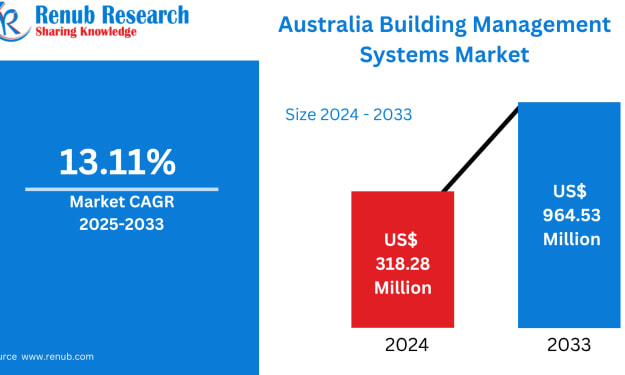
Australia Building Management Systems Market Size and Forecast 2025–2033
Introduction: Smart Buildings Power Australia’s Sustainable Future Australia’s buildings are undergoing a quiet but powerful transformation. As urban centers expand and sustainability goals tighten, the need for intelligent infrastructure has never been greater. At the heart of this transformation lies Building Management Systems (BMS)—digital platforms that automate, monitor, and optimize essential building functions such as energy use, climate control, lighting, and security.
By Marthan Sir4 days ago in Trader
Wild Card Weekend Recap: What Happens Now?
I think I figured out why I love Wild Card Weekend so much. It's because it's the first playoff anything of the calendar year. The NFL season starts in the fall, and once upon a time, the champion was crowned either on or slightly before New Year's. The evolution of the NFL schedule has resulted in the playoffs starting just into the New Year, and currently, the final week of the season falls on the first weekend of the New Year, with Wild Card Weekend coming a week after that. So yes, chronologically, the NFL's Wild Card Weekend serves as the first playoff anything of the calendar year.
By Clyde E. Dawkins7 days ago in Unbalanced



Comments
There are no comments for this story
Be the first to respond and start the conversation.