
Trends In Consumer Spending
Evolving Patterns and Changing Preferences


Consumer spending has been profoundly affected by the pandemic, but it's important to consider the larger context of the past two decades. Over the past twenty years, we've seen significant changes in how and where people spend their money. Before the pandemic, consumer spending was driven largely by the digital revolution. Online shopping and digital services were becoming increasingly popular, with a growing demand for delivery services, e-commerce, and streaming services. This digital trend was further accelerated by the pandemic, as many people switched to online services out of convenience and safety.
More broadly, income growth, low unemployment rates, and rising consumer confidence all contributed to higher consumer spending before the pandemic. Tax cuts, wage increases, and low-interest rates further supported this. The pandemic has caused a significant shift in consumer spending trends. We've seen a decrease in consumer confidence, reducing spending in certain sectors such as hospitality, travel, and retail. At the same time, people have been saving more, with nearly half of Americans expressing concern about their savings levels. Overall, consumer spending trends have been in flux over the past two decades. In recent years, the digital revolution and strong economic growth have been driving consumer spending. However, the pandemic has caused a significant shift, with people switching to online services, reducing their spending, and becoming more conscious of their spending. It remains to be seen how consumer spending will develop in the post-pandemic era.
Consumer spending remains an important indicator of economic health, and the pandemic has caused significant changes in spending habits. In the two years since the pandemic began, nominal year-on-year spending has stayed robust, with consumers continuing to spend money on different products and services. However, consumer sentiment has been dipping recently, likely due to the war in Ukraine. In recent months, spending intentions have bounced higher, as Americans respond to easing inflation. Savings levels, meanwhile, remain a concern, with nearly half of Americans still concerned about their level of savings. People have also become more conscious of their spending and are switching to different brands and retailers. The pandemic has had a dramatic impact on consumer spending habits in Nigeria over the past two decades. Before the pandemic, consumption in Nigeria had been driven by strong economic growth, low unemployment rates, and rising consumer confidence. Tax cuts, wage increases, and low-interest rates further supported this.
The pandemic has caused a major shift in Nigerian consumer spending trends. The dramatic drop in oil prices and increasing unemployment levels have led to reduced wages, resulting in decreased consumer spending. This has been particularly evident in the hospitality, travel, and retail sectors. In addition, the pandemic has accelerated the digital revolution in Nigeria, with a growing demand for online services, e-commerce, and streaming services. This has been a result of convenience and safety concerns, as well as cheaper prices. Overall, consumer spending in Nigeria has been significantly affected by the pandemic. While the digital revolution has been providing some relief to consumers, the impact of the pandemic on wages and unemployment has been negative. It remains to be seen how consumer spending in Nigeria will develop in the post-pandemic. In addition, the pandemic has caused an increase in online shopping and virtual services, as people are more likely to do their shopping from the comfort of their own homes. This has seen an increase in demand for delivery services and online retailers.
Over the past two decades, consumer spending worldwide has been undergoing a profound evolution. The digital revolution has been a major factor in this, with the proliferation of online services and digital products transforming the way people spend their money. This includes the growth of e-commerce, streaming services, and delivery services, as well as the increasing use of mobile wallets and payment apps. In addition, income growth, low unemployment rates, and rising consumer confidence have been driving consumer spending in many countries. Tax cuts, wage increases, and low-interest rates have further supported this trend.
However, the pandemic has caused a significant shift in consumer spending trends. We've seen a decrease in consumer confidence, reducing spending in certain sectors such as hospitality, travel, and retail. At the same time, people have been saving more, with nearly half of Americans expressing concern about their savings levels. Overall, consumer spending has been evolving dramatically over the past two decades. In recent years, the digital revolution and strong economic growth have been driving consumer spending. Still, the pandemic has caused a major shift, forcing people to become more conscious of their spending. It remains to be seen how consumer spending will develop in the post-pandemic era.
About the Creator
Keep reading
More stories from Arowoshere Joy and writers in Trader and other communities.
The Future of Work
The world of work is undergoing rapid transformations driven by technological advancements, changing preferences, and global events. Three major factors shaping the future of work are remote work, automation, and job market trends. This comprehensive article delves into each of these aspects, discussing their implications, benefits, challenges, and potential outcomes. By exploring the intricacies of these trends, we can gain a better understanding of what lies ahead for the workforce in the coming years.
By Arowoshere Joy3 years ago in Futurism
Automotive Actuators Market Size and Forecast 2026–2034
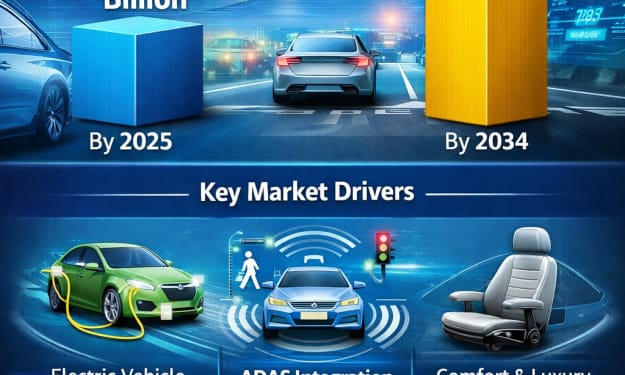
Automotive Actuators Market Outlook The global automotive industry is rapidly transforming as vehicles become increasingly electrified, connected, and automated. Within this evolving ecosystem, automotive actuators play a crucial role in enabling modern vehicle functions. According to Renub Research, the global Automotive Actuators Market is expected to grow from US$ 21.18 Billion in 2025 to US$ 34.91 Billion by 2034, expanding at a compound annual growth rate (CAGR) of 5.71% between 2026 and 2034.
By shibansh kumar4 days ago in Trader
TUS NUA - ch 53
TUS NUA – ch 53 New Beginnings – Mia and Midnight (*)(*)(*) Finola knew Ali’s brother-in-law needed to put his mind at rest. She fed her arm through his and led him outside. “We’ll sit here. If you like, I can put a block around us so our conversation will be private.”
By Margaret Brennan5 days ago in Fiction



Comments
There are no comments for this story
Be the first to respond and start the conversation.