
Trading Tips for Consistent Profits in Crypto
Learn how to minimize risk and make smarter trades

Crypto can mess with your head. You think you’re on the verge of a big win, then BAM, a wick spikes out of nowhere, a news headline flips the market, or a funding rate turns your setup into a gamble. The reality is the most successful traders aren’t getting rich from a secret formula or magic indicator. They’re winning because they understand one simple thing: risk management. They’re good at picking their spots, avoiding mistakes, and sticking to a plan that doesn't rely on luck.
Start with the only thing you control: risk
Pick a fixed risk per trade
Before you even think about entries, figure out how much you’re willing to lose if you're wrong. Not how much you want to make—how much you can lose without it throwing you off.
A good rule of thumb for most traders is to risk between 0.25% and 1% of your account per trade.
If you're still learning or using high leverage, keep it closer to 0.25% to 0.5%.
Why it works: It keeps you in the game long enough to learn from your mistakes. It also ensures that one bad day doesn’t wipe out your entire account.
Size your position from the stop (not the other way around)
Most beginners do this backwards: they choose a big position, then place a stop somewhere “not too far.” That’s how you end up with random stops or oversized risk.
Use it instead:
Position Size = (Account × Risk%) ÷ (Entry Price − Stop Price)
Here’s how it works:
Example:
- Account: $10,000
- Risk: 0.5% = $50
- Entry: $40,000
- Stop: $39,500 (distance = $500)
So, the position size calculation is:
Position size = $50 ÷ $500 = 0.10 BTC (or the equivalent in your platform)
The key takeaway:
If your stop needs to be wider, your size gets smaller automatically. That’s the whole point.
Make Your Plan Simple (Boring is Good)
Before you enter any trade on a crypto exchange, take one minute to write out a simple plan. If you can’t explain it clearly, then it’s probably not a trade, just a feeling. A well-thought-out plan removes the emotional guesswork.
Here’s a basic template for your trade plan:
- Setup: What are you trading, and why?
- Entry Trigger: What has to happen for you to enter? It could be a price level breaking or a specific indicator signaling to enter.
- Stop: Where is your idea invalidated? Know the price level at which you’ll accept that your trade idea is wrong and exit.
- Target(s): Where will you take profit? Decide your profit levels in advance, whether it's at a certain resistance level, a multiple of your risk, or based on a pattern.
- Management Rule: What will you do if the trade moves in your favor? This might be trailing stops, taking partial profits, or other strategies to lock in profits while letting the trade run.
- Exit Early Rule: What conditions would make you bail early? Knowing when to cut your losses and get out is just as important as knowing when to stay in.
- The market rewards strategies that allow winners to run. You can:
- Let profits ride
- Take partial profits as the price moves in your favor
- Look to buy pullbacks to key support levels rather than chasing green candles
- Use smaller position sizes to limit risk
- Take profits quicker and more often
- Be pickier about when and where you enter trades
- Higher Timeframe (4H/1D)
- Execution Timeframe (15m/1H)
- Stop Placement
- Simple Entry Triggers
- Certain events can cause big, unpredictable price moves in crypto, and these are times to be cautious. Some major events include:
- Macro news (CPI data, jobs reports, rate decisions)
- Exchange news (halts, delistings, legal issues)
- Protocol incidents (hacks, chain outages)
- You don’t need to predict the news. You just need to avoid overexposing yourself when volatility is unpredictable.
- Use 2FA (preferably an authenticator app, not SMS).
- Set strong, unique passwords (use a password manager for convenience).
- Never store long-term funds on exchanges.
- Be cautious of fake support messages—double-check URLs.
- Never share your seed phrase.
- Getting hacked is the worst stop loss you’ll ever take.
- Risk too much
- Trade too often
- Chase moves
- Don’t have a clear plan
- Don’t review their mistakes
Match Your Strategy to the Market Conditions
The market can behave very differently in a trending environment vs. a sideways market. The way you trade should match the current market conditions.
In Trending Markets:
Common mistake in trending markets:
Taking profits too quickly because you’re afraid of giving back your gains. Sometimes, staying in the trade longer gives you more rewards if the trend continues.
In Choppy Markets (Sideways Price Action):
When the market isn’t trending, it rewards more cautious and conservative tactics. You should:
Common mistake in chop:
Using trend-following tactics in a range can get you chopped up. This often leads to entering trades that have no clear direction and end up reversing quickly.
If you’re unsure what type of market you’re in, zoom out. A messy range on a 15-minute chart might be an obvious trend on a 4-hour or daily chart.
Improve Your Entries Without Overcomplicating Your Chart
Don’t fall into the trap of using too many indicators. The key is clarity. A simple strategy with clear rules is often more effective than trying to combine too many tools.
Here’s how many successful traders approach it:
Look at the overall trend direction and identify key support and resistance levels. This gives you the context for your trade.
Once you know the key levels, zoom in to the smaller timeframe for the actual entry trigger.
Your stop should be based on where your idea is invalidated, not where it "feels okay." Use logical levels for stops, like just beyond support/resistance.
Break and retest of a level
Rejection wick with clear follow-through
Range breakout, but only if volume or structure supports it (otherwise, it’s often a trap)
Most traders lose money by entering in the middle of nowhere. Levels matter because they give your trade a reason to work, and a clear point where you should exit if it doesn’t.
Protect Your Mind (Trading is Psychological)
The mental side of trading is often overlooked, but it’s critical. Emotional trading can lead to poor decisions and unnecessary losses.
Avoid Revenge Trading
If you’ve had a loss, resist the urge to “get it back.” This is often when traders make their worst mistakes. A good rule of thumb is: after two losses in a row, either reduce your position size or stop trading for the day.
Don’t Overdo It After a Big Win
Big wins can make you feel invincible, but they can also make you sloppy. Avoid sizing up too much after a win. This leads to overconfidence and more risk.
Know When Not to Trade (Risk Events)
Security is Part of Trading
This part is crucial, though not glamorous. Protect your assets from hackers:
The Bottom Line: Your Edge is Your Process
Most traders fail because they:
If you fix those issues, your strategy doesn’t need to be complicated. It just needs to be consistent and repeatable.
About the Creator
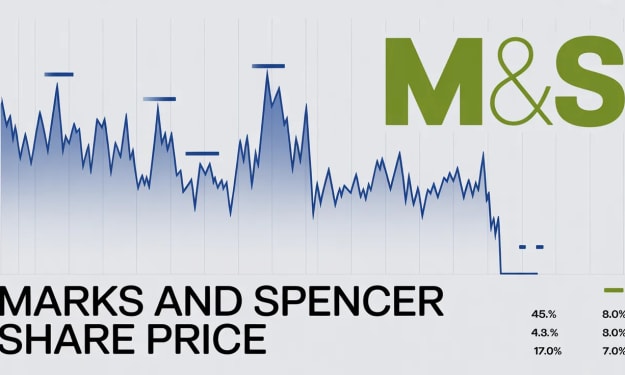
Marks and Spencer Share Price Outlook: What Investors Should Watch
The marks and spencer share price has been showing interesting trends recently, prompting investors to ask what’s driving the change. Understanding these movements is important before deciding to buy, hold, or sell. This article explores the factors influencing the marks and spencer share price, potential risks, and tips for investors. For a deeper look at similar retail stocks, see our guide on UK Retail Stocks Worth Watching.
By John.doe798about 7 hours ago in Trader



Comments
There are no comments for this story
Be the first to respond and start the conversation.