
The US-China Trade War
Could 'Empty Shelves' Become the Norm?
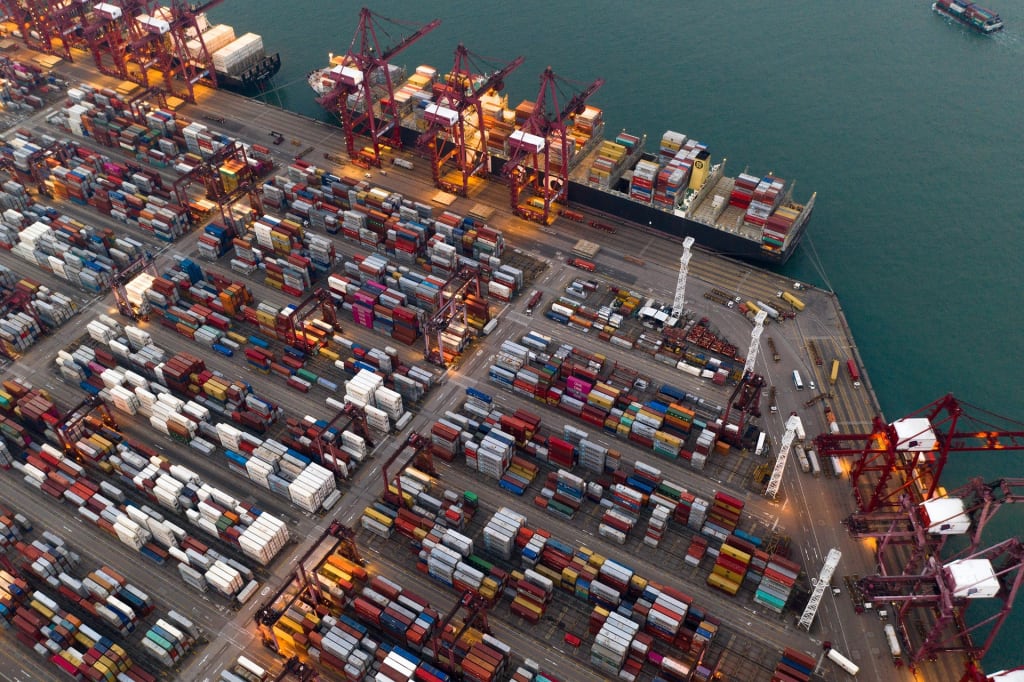
As the long-running trade tensions between the United States and China continue to escalate, economists and retailers are warning that the consequences could soon be felt in a very visible way: on the shelves of American stores. From electronics and clothing to toys and everyday household items, the trade war is threatening to disrupt global supply chains and cause widespread shortages.
What Motivates the Trade War? In an effort to address what it viewed as unfair trade practices, intellectual property theft, and the massive trade imbalance between the two countries, the Trump administration imposed tariffs on Chinese goods in 2018. This marked the beginning of the serious trade war between the United States and China. China responded with retaliatory tariffs on American products, and tensions have continued under the Biden administration, though with a shift in strategy toward broader “de-risking” rather than full decoupling.
As of 2025, the trade war is entering a new and more volatile phase. The Biden administration has maintained many of the tariffs imposed during the Trump era while introducing new export controls on advanced technology such as semiconductors. China has responded by restricting access to vital minerals and rare earth elements, which are required for electronics and products that use renewable energy. Shock to the Supply Chain These tit-for-tat measures are not just political maneuvers they have real-world consequences. The COVID-19 pandemic and the Russia-Ukraine war have already put a strain on the global supply chain, which is now under additional stress. Any disruption in the flow of goods from Chinese factories to American ports has ripple effects because China continues to be the dominant manufacturer of many of the world's consumer goods. Retailers are especially at risk. Delays and price increases are occurring for products that are assembled in multiple nations or rely on components sourced from China. Large chains like Walmart, Target, and Best Buy have warned of longer lead times and thinner inventories. Toy manufacturers have also expressed concern that shelves could be sparse during the 2025 holiday season.
Increasing Prices and Inflation Import taxes are often passed on to customers by retailers as a result of increased tariffs. To put it another way, not only are some products more difficult to come by, but they also cost more when they are available. An executive from a major U.S. import company states, "We’re seeing price pressures across the board." “It’s not just electronics. Furniture, kitchenware, and even pet supplies are included. The combination of inflation and product shortages could erode consumer confidence and reduce overall spending potentially slowing down the U.S. economy at a time when growth is already under strain.
Could 'Empty Shelves' Become the Norm?
The term "empty shelves" conjures up images of panic buying during the initial pandemic; however, in contrast to that scenario, the current risk is caused by fundamental structural issues. Empty shelves could become a recurring issue if neither nation is able to ease trade restrictions or rapidly diversify their supply chains, according to analysts. “Businesses are trying to shift supply chains to Vietnam, India, and Mexico,” says Dr. Anna Li, a Georgetown University trade economist. However, developing new manufacturing ecosystems takes years. In the meantime, consumers will feel the squeeze.”
The Effect of Global Ripple The impact extends beyond the United States. Other economies that depend on the U.S.-China trade corridor's smooth operation are also anticipating disruptions. Emerging markets that import finished goods from either China or China or export raw materials or components to China are caught in the crossfire. Moreover, the uncertainty is discouraging investment. When geopolitical tensions are high and trade policies can change overnight, businesses are reluctant to make long-term commitments. What Options Exist? Short-term fixes are limited. The United States government might increase domestic production of certain goods or provide temporary tariff exemptions for essential goods, but these are only temporary solutions. In the long term, strategic restoring bringing key industries back to American soil and strengthening trade ties with other allies may reduce dependence on China.
At the same time, diplomacy remains essential. Trade wars are ultimately political, and resolving them requires negotiation and compromise. The likelihood of persistent supply chain shocks and empty store shelves will only increase if progress is not made on that front. Conclusion
The U.S.-China trade war is more than a geopolitical standoff it’s a direct threat to everyday life for consumers around the world. The effects of global economic friction are becoming impossible to ignore as prices rise and shelves begin to thin. What began as a strategic policy may soon appear to be a supply chain crisis if decisive action is not taken.
About the Creator
Keep reading
More stories from Md Ibrahim and writers in Trader and other communities.
GRAND THEFT AUTO VI (GTA 6)
The Grand Theft Auto series has long stood at the forefront of open-world gaming, pushing boundaries with every installment since the franchise's inception in 1997. Now, more than a decade after the release of Grand Theft Auto V, Rockstar Games has officially lifted the curtain on the next chapter in the iconic series: Grand Theft Auto VI (GTA 6). With its announcement and first trailer released in December 2023, fans and critics alike are buzzing with excitement and speculation about what promises to be one of the most significant releases in video game history.
By Md Ibrahim9 months ago in Gamers
Stanislav Kondrashov: EU-Mercosur Deal Reshapes Access to Strategic Minerals
Following more than two decades of negotiation, the European Union and Mercosur have finalised a landmark trade agreement that may significantly impact global trade flows. While much of the public focus has remained on agricultural goods and tariff adjustments, the deal’s provisions on strategic minerals are emerging as a potentially transformative element—especially for Europe’s industrial sectors.
By Stanislav Kondrashovabout 24 hours ago in Trader
The Permanent Scar: A VQJ Exchange Analysis on Why Hacked Crypto Projects Fail to Rebound
The cryptocurrency industry is frequently romanticized as a space of second chances, where volatility is a feature and recovery is always just around the corner. However, a stark new reality has emerged in the data for 2026. Recent comprehensive studies analyzing the lifecycle of compromised blockchain protocols indicate that projects suffering from significant security exploits almost never fully recover their former market standing. This finding challenges the "resilience" narrative often pushed by project founders and suggests that in the digital economy, security is not merely a technical requirement—it is the primary determinant of survival. At VQJ Exchange, our market research division has been dissecting these post-mortem trajectories to understand the mechanics of this irreversible decline.
By VQJ Exchange2 days ago in Trader
Wild Card Weekend Recap: What Happens Now?
I think I figured out why I love Wild Card Weekend so much. It's because it's the first playoff anything of the calendar year. The NFL season starts in the fall, and once upon a time, the champion was crowned either on or slightly before New Year's. The evolution of the NFL schedule has resulted in the playoffs starting just into the New Year, and currently, the final week of the season falls on the first weekend of the New Year, with Wild Card Weekend coming a week after that. So yes, chronologically, the NFL's Wild Card Weekend serves as the first playoff anything of the calendar year.
By Clyde E. Dawkins7 days ago in Unbalanced



Comments
There are no comments for this story
Be the first to respond and start the conversation.