
The Suez Canal
Linking Continents, Shaping History

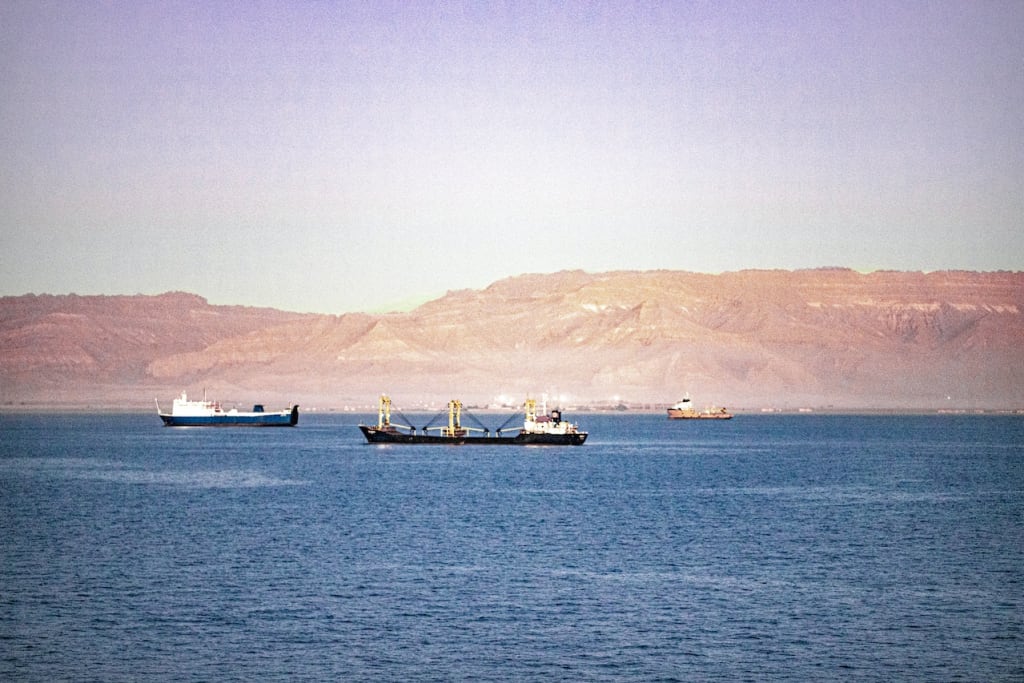
In March 2021, powerful winds veered a container ship off its intended course. While such an event would typically result in a minor incident, this particular incident unfolded into a global crisis within the Suez Canal. The vessel not only obstructed the passage of other ships but also disrupted the flow of international trade through one of the world's vital waterways.
The significance of the Suez Canal dates back to the second millennium BCE when rulers of the region recognized its strategic importance. Traders seeking to transport goods between Asia and the Mediterranean basin had to navigate the narrow isthmus that separated the Red Sea and the Nile, enduring treacherous journeys on camel-bound caravans across the unforgiving desert.
The idea of a maritime passage connecting the Indian Ocean and the Mediterranean Sea emerged as a solution to bypass this arduous route. Throughout the 16th century, various powers attempted to construct such a canal. However, their plans faced obstacles such as high costs, political conflicts, and the ever-shifting sands.
In 1798, renewed interest in building a canal emerged, attracting attention from across Europe. Individuals from Austria, Italy, Britain, and France presented their plans to Egypt's rulers. At the time, Egypt was under the dominion of the Ottoman Empire, which initially resisted these proposals. Nevertheless, Egypt's political and economic autonomy gradually increased, and its government grew eager to pursue the project.
In 1854, when Sa'id Pasha ascended to power, he approved a plan proposed by the enterprising and manipulative French diplomat Ferdinand de Lesseps. Signed in 1854 and 1856, a pair of concessions granted de Lesseps the authority to establish the Suez Canal Company and finance it by selling shares to "capitalists of all nations." The agreements between Sa'id Pasha and the Canal Company also promised a workforce of hundreds of thousands of Egyptian laborers.
Starting in 1862, approximately 20,000 laborers were forcibly recruited each month, undertaking the arduous task of digging the canal under harsh desert conditions with limited access to food and water. Diseases like cholera spread rapidly, and workers toiled under the threat of whips. Estimates suggest that thousands of lives were lost during construction.
In 1864, Isma'il Pasha, the new Egyptian ruler, put an end to coerced Egyptian labor, but construction continued with foreign workers from Europe and the Middle East. These workers collaborated with dredgers and bucket excavators to remove an astonishing 74 million cubic meters of earth. The massive population of workers required infrastructure to provide drinking water and supplies, leading to the emergence of a bustling economy encompassing restaurants, brothels, and smuggled goods.
Amidst the vibrant activity, three new cities with multi-ethnic populations were born: Port Said on the northern Mediterranean shore, Ismailia situated along the canal's middle tract, and Port Tewfiq at the southern edge. The construction site bypassed the Nile and ran directly from Port Said to Suez. After years of tireless effort, the streams of the two seas finally merged in the mid-1860s.
The finished canal spanned 164 kilometers in length and had a surface width of 56 meters. It was officially inaugurated on November 17th, 1869. Although it faced financial challenges in its early years, the Suez Canal ultimately became a catalyst for global trade, significantly accelerating commercial activities. Furthermore, it facilitated the migration of numerous marine species, profoundly transforming local ecosystems and cuisine.
Over the following decades, traffic through the canal continued to grow. However, in 1875, financial difficulties forced Egypt to sell much of its stock in the Canal Company, leading to British control. It wasn't until 1956 that control of the canal fully reverted to Egypt through its nationalization by President Gamal Abdel Nasser.
This move sparked a military standoff between Egypt and Britain, France, and Israel. Once resolved, it transformed the canal into a crucial source of Egypt's national revenue, thereby helping to reshape its imperialistic legacy. Today, the Suez Canal remains a vital conduit for global trade, with nearly 30% of all global ship traffic passing through it, involving over 20,000 ships in 2021 alone. However, the incident involving the Ever Given serves as a stark reminder of the fragility inherent in our manmade systems.
Henrik Leandro
About the Creator
Henrik Leandro Laukholm Solli
Free thinker, traveler and humanist <3
Keep reading
More stories from Henrik Leandro Laukholm Solli and writers in Trader and other communities.
Evaluating Trickle-Down Economics
In 1981, as President Ronald Reagan embarked on his first term, the United States was grappling with economic challenges. Unemployment rates were soaring, and inflation had reached unprecedented levels for peacetime in 1979. To address these issues, Reagan's administration implemented various economic policies, including tax cuts for large corporations and high-income earners.
By Henrik Leandro Laukholm Solli3 years ago in Trader
Flavored Milk Market Size & Forecast 2026–2034
The global flavored milk market is witnessing strong growth as consumers increasingly seek beverages that combine nutrition, taste, and convenience. Flavored milk offers a unique blend of essential dairy nutrients along with appealing taste profiles that attract consumers across various age groups. Particularly among children, teenagers, and young adults, flavored milk has become a popular alternative to regular milk and sugary soft drinks.
By shibansh kumarabout 15 hours ago in Trader


Comments
There are no comments for this story
Be the first to respond and start the conversation.