
The Role of AI in Business: Ethics and Benefits
Will AI Take Over Businesses Too?


Artificial Intelligence (AI) is transforming the business world, making operations faster and smarter. From automating repetitive tasks to helping companies understand their customers better, AI is becoming an essential tool. But as we embrace AI, it's also important to think about the ethical challenges that come with it. This article explores how AI is changing business, the ethical questions it raises, and why these issues matter.
What Is AI and How Does It Work?
AI is a type of technology that allows machines to perform tasks that normally require human intelligence, like making decisions or recognizing patterns. For example, AI can power chatbots that answer customer questions at any time of day, or manage inventory in a warehouse with incredible precision. This ability to handle tasks quickly and accurately helps businesses run more smoothly and efficiently.
Why AI Is a Game-Changer
One of AI’s biggest strengths is its ability to analyze massive amounts of data and find patterns that humans might miss. Companies like Netflix use AI to recommend shows and movies to users based on their past viewing habits. By understanding what people like, Netflix can keep its viewers happy and engaged, which is crucial for its business (Smith, 2022). Similarly, retailers like Amazon use AI to predict what customers want to buy next, making shopping easier and more personalized (Johnson, 2023).
The Importance of Data in AI
AI relies heavily on data to make decisions. For example, AI systems in healthcare analyze patient data to predict illnesses before they become serious (Taylor, 2021). But using so much personal data comes with risks. If not handled carefully, this data can be misused or fall into the wrong hands. The Cambridge Analytica scandal, where personal data was used without consent for political campaigns, is a prime example of how things can go wrong (Green, 2018).
The Challenge of AI Transparency
One of the biggest issues with AI is that it can be a "black box." This means that even the people who create AI systems don’t always fully understand how they make decisions. This lack of transparency can be a problem, especially in critical areas like finance or law. For instance, if an AI system denies someone a loan, it might not be clear why (Miller, 2022). Companies like Google and IBM are working on making AI more understandable by developing “explainable AI,” which aims to make the decision-making process more transparent (Brown, 2023).
Personalization: A Key Benefit of AI
AI is also great at personalization. For example, Spotify uses AI to create playlists that match your music taste, which keeps users coming back for more (Lee, 2022). This ability to tailor experiences to individual needs not only improves customer satisfaction but also strengthens the relationship between businesses and their customers.
Cost Efficiency and Predictive Power
AI doesn’t just improve customer experiences; it also helps businesses save money. Predictive maintenance is one example—AI can predict when a machine is likely to fail and schedule maintenance before it breaks down. This prevents costly repairs and downtime, which can save businesses a lot of money in the long run (Adams, 2023).
Ethical Concerns: Bias in AI
While AI brings many benefits, it also poses ethical challenges. One of the biggest concerns is bias. AI systems learn from data, and if that data is biased, the AI can make unfair decisions. For example, a hiring AI might favor certain groups of people over others based on biased data (Khan, 2022). Amazon faced this issue when their hiring AI was found to be biased against female applicants (Davis, 2021). To combat this, companies must work hard to ensure that their AI systems are fair and unbiased.
Balancing AI Innovation with Responsibility
To make the most of AI, businesses need to balance innovation with ethical responsibility. This means being transparent about how AI is used, ensuring that data is protected, and making sure that AI systems are fair and understandable. It also means preparing for the future by helping workers develop new skills to thrive in an AI-driven world.
Conclusion: The Future of AI in Business
AI is a powerful tool that is reshaping the business landscape, offering new opportunities and efficiencies. But as we move forward, it’s crucial to consider the ethical implications of AI. By balancing the benefits of AI with thoughtful consideration of its challenges, businesses can ensure that AI is used responsibly and effectively, paving the way for a future where technology and ethics go hand in hand.
Sources
• Adams, R. (2023). Predictive Maintenance: How AI Saves Businesses Money. Tech Insights. Retrieved from techinsights.com/predictive-maintenance
• Brown, J. (2023). Explaining Explainable AI. AI Journal. Retrieved from aijournal.com/explainable-ai
• Davis, M. (2021). AI Bias and the Challenges in Hiring. Workforce Weekly. Retrieved from workforceweekly.com/ai-bias-hiring
• Green, D. (2018). The Cambridge Analytica Scandal: Lessons Learned. Data Privacy Review. Retrieved from dataprivacyreview.com/cambridge-analytica
• Johnson, L. (2023). How AI Predicts Customer Preferences. Retail Tech. Retrieved from retailtech.com/ai-customer-preferences
• Khan, R. (2022). Addressing Bias in AI Systems. Ethical AI Review. Retrieved from ethicalaireview.com/bias-in-ai
• Lee, S. (2022). Personalization Through AI: The Spotify Experience. Music Tech Trends. Retrieved from musictechtrends.com/spotify-ai
• Miller, T. (2022). The Black Box Problem in AI. Tech Transparency Journal. Retrieved from techtransparencyjournal.com/black-box-ai
• Smith, A. (2022). AI and Customer Engagement: A Case Study of Netflix. Streaming Insights. Retrieved from streaminginsights.com/netflix-ai
• Taylor, H. (2021). AI in Healthcare: Predicting Patient Outcomes. Health Tech Report. Retrieved from healthtechreport.com/ai-healthcare
About the Creator
Gugaa M Nandhakhumar
AS Level Student | Entrepreneurship Enthusiast | Researcher | | Head of Student Officer - TIPS MUN Society (2023-2024) | President - Venture Visionaries ( Entrepreneurship Club ) | Active MUN participant | Trinity Grade 4 Keyboard Player
Keep reading
More stories from Gugaa M Nandhakhumar and writers in Trader and other communities.
THE LONGEVITY OF JAPANESE FAMILY BUSINESSES
Introduction This research report examines the remarkable endurance of Japanese family businesses that have sustained operations across generations, some spanning several centuries. These businesses, known as "shinise," represent a unique cultural and economic phenomenon. The report explores the causes and consequences of this tradition, its impact on the Japanese economy and business success rates, the mechanisms that enable such longevity, reasons why this practice is less prevalent in other countries, and the pros and cons of sustaining family businesses for generations. The analysis concludes with a personal perspective on the topic.
By Gugaa M Nandhakhumar2 years ago in Trader
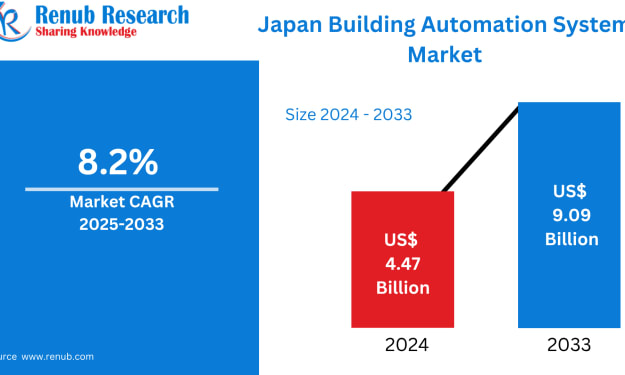
Japan Building Automation Systems Market Size and Forecast 2025–2033
Introduction Japan is undergoing a profound transformation in the way its buildings are designed, managed, and operated. From skyscrapers in Tokyo to manufacturing hubs in Aichi and logistics centers in Chiba, the demand for smarter, more energy-efficient, and digitally connected infrastructure is accelerating. At the center of this transformation lies the Building Automation Systems (BAS) market, which integrates mechanical, electrical, and electromechanical services into a centralized, intelligent control framework.
By Marthan Sir6 days ago in Trader



Comments
There are no comments for this story
Be the first to respond and start the conversation.