
The Rise of Green Investing: Aligning Your Portfolio with Purpose
Discover how sustainable investing can help you grow your wealth while supporting the planet and social good

---
The Rise of Green Investing: How to Build a Sustainable Portfolio
In recent years, a quiet revolution has been reshaping the financial world—green investing. Also known as sustainable, ESG (Environmental, Social, and Governance), or socially responsible investing, this approach aims to align profits with purpose. Whether driven by climate change, social justice, or ethical governance, more investors than ever are seeking to make a difference while still earning returns.
But what exactly is green investing? Why is it gaining momentum? And how can you build a sustainable portfolio that aligns with both your values and your financial goals? Let’s dive in.
---
What Is Green Investing?
Green investing refers to putting money into companies, funds, or projects that are environmentally responsible and socially conscious. The most common framework for evaluating these investments is ESG criteria:
Environmental: A company’s impact on the planet (e.g., carbon emissions, water usage, renewable energy initiatives).
Social: How a company treats employees, supports communities, and maintains human rights practices.
Governance: Board structure, executive pay, transparency, and shareholder rights.

A truly green investment not only screens for sustainability but also seeks to create long-term value by supporting businesses that are better prepared for future risks—such as climate regulation or shifting consumer preferences.

---
Why Green Investing Is Gaining Traction
There are several reasons why sustainable investing is becoming mainstream:
1. Consumer Demand
Millennials and Gen Z investors are leading the charge. According to Morningstar, more than 70% of young investors prefer to invest in companies that align with their values.
2. Risk Management
Companies with strong ESG practices are often more resilient. They tend to avoid costly scandals, environmental disasters, or regulatory penalties, making them less risky in the long term.

3. Performance Potential
The myth that green investments underperform is being debunked. In fact, many ESG funds have matched or outperformed traditional ones in recent years. For example, during volatile markets, ESG funds have shown lower drawdowns and more stable returns.

4. Regulatory Pressure
Governments are ramping up climate-related disclosures and pushing for corporate accountability. Investors who stay ahead of these changes may benefit from early opportunities.

---
How to Build a Sustainable Portfolio
Interested in getting started? Here’s a step-by-step guide:
1. Clarify Your Values
Before choosing investments, decide what matters most to you. Are you passionate about clean energy? Worker rights? Gender equity? Your personal values should guide the structure of your portfolio.

2. Do Your Research
Look into ESG scores and ratings from providers like MSCI, Sustainalytics, or Morningstar. Keep in mind that not all ESG ratings are equal—some are more focused on risk exposure than actual sustainability impact.
3. Choose Green Funds or ETFs
For beginners, ESG-focused mutual funds or ETFs (exchange-traded funds) are an easy entry point. Popular examples include:
iShares ESG Aware MSCI USA ETF (ESGU)
Vanguard FTSE Social Index Fund (VFTAX)

SPDR S&P 500 ESG ETF (EFIV)
These funds provide instant diversification and are managed to meet specific ESG criteria.
4. Analyze Individual Stocks
If you prefer to pick your own stocks, look at companies with strong sustainability reports, net-zero targets, and proven records of ethical behavior. Companies like Tesla (for clean energy) or NextEra Energy (for renewables) are often on ESG radars, though always consider valuations and risk.
5. Avoid Greenwashing

Not all companies or funds labeled “green” are genuinely sustainable. This marketing tactic, known as greenwashing, can mislead investors. Scrutinize fund holdings, read the fine print, and cross-check third-party ESG ratings.
---
Final Thoughts
Green investing is no longer a niche strategy—it’s a powerful movement reshaping the financial landscape. By aligning your investments with your values, you not only contribute to a better world but also position yourself to benefit from

About the Creator
Money Talks, I Write
Writer. Investor. Observer of money and mindset.
✍️ Money Talks, I Write — because every dollar has a story.
Keep reading
More stories from Money Talks, I Write and writers in Trader and other communities.
**“The Price of a dream
Part 1: Anna's Big Move Anna Rivera had always dreamed of moving to the city. After finishing college in her quiet hometown, she landed a junior marketing job in Metroville—a fast-paced, expensive metropolis. It was her dream come true.
By Money Talks, I Write6 months ago in Trader
Philippines Travel Technology Market: Digital Transformation, Consumer Trends & Industry Growth
Philippines Travel Technology Market Overview The Philippines travel technology market is expanding rapidly as travel operators, service providers and consumers increasingly adopt digital solutions to enhance convenience, efficiency and overall travel experiences. Travel technology — encompassing online booking systems, mobile applications, artificial intelligence (AI), cloud platforms, data analytics, digital payments and customer engagement tools — has become a strategic cornerstone for airlines, hotels, tour operators, travel agencies and transport services. The Philippines travel technology market size reached USD 214.00 Million in 2024. Looking forward, the market is expected to reach USD 361.86 Million by 2033, exhibiting a growth rate (CAGR) of 6.01% during 2025-2033. This growth reflects rising internet penetration, mobile usage, digital payment adoption and a resurgent travel demand post-pandemic as Filipinos and international tourists seek seamless digital journeys.
By Manisha Dixit8 days ago in Trader
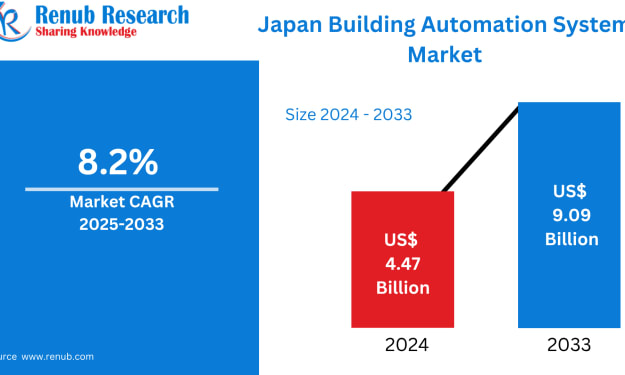
Japan Building Automation Systems Market Size and Forecast 2025–2033
Introduction Japan is undergoing a profound transformation in the way its buildings are designed, managed, and operated. From skyscrapers in Tokyo to manufacturing hubs in Aichi and logistics centers in Chiba, the demand for smarter, more energy-efficient, and digitally connected infrastructure is accelerating. At the center of this transformation lies the Building Automation Systems (BAS) market, which integrates mechanical, electrical, and electromechanical services into a centralized, intelligent control framework.
By Marthan Sir4 days ago in Trader



Comments
There are no comments for this story
Be the first to respond and start the conversation.