
The Rise of Cryptocurrency: A Digital Revolution
Business
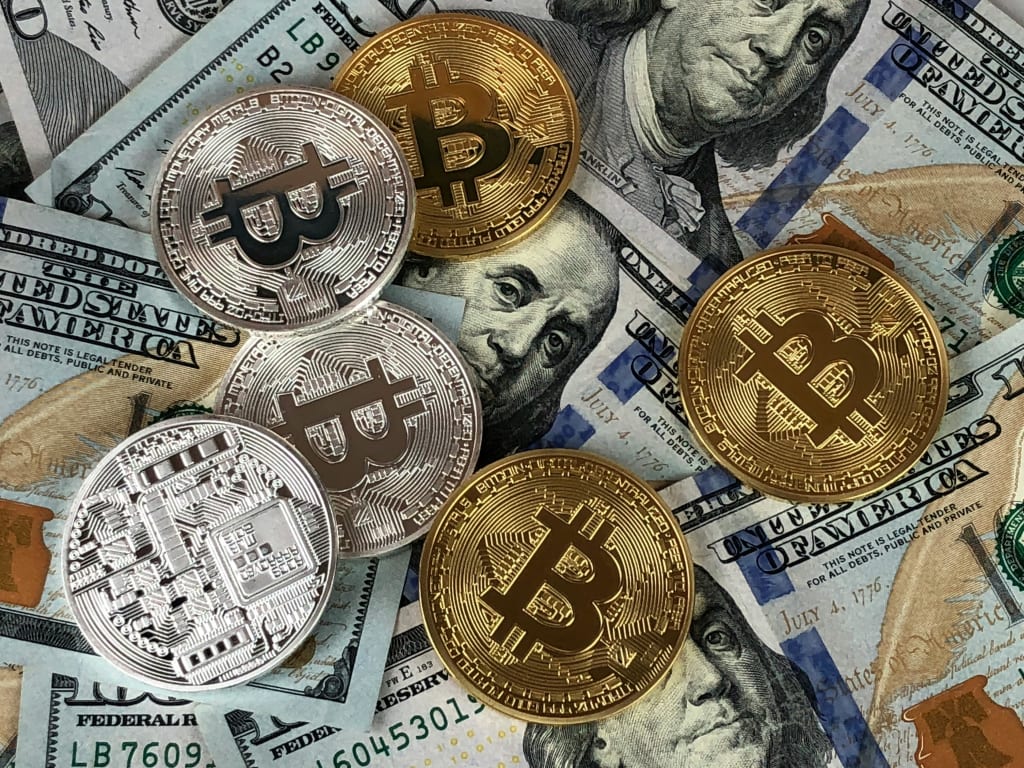
What is Cryptocurrency?
Cryptocurrency is digital money that is secured by cryptography techniques. Cryptocurrency is a digital currency and not like dollar or euro currencies; it is also independent of a central government or a bank’s control. This is among the features that set cryptocurrencies apart from traditional money in aspects such as decentralization.
Cryptocurrencies use blockchains which are the underlying technology behind these digital assets. It is a decentralized blockchain where all the transactions are stored in a computer network, in the form of nodes. These nodes validate every transaction and once validated, the transaction is included on a block of data. This block is then linked to the other block and this makes it very difficult to manipulate records as the work done is always transparent. It helps minimize fraud and corruption since everybody is involved, and all the processes are made understandable and transparent.
The Birth of Bitcoin
Bitcoin— the first and probably the most popular at the moment, was created as a result of the financial crisis of 2008. Bitcoin was developed as a ‘Peer-to-Peer Electronic Cash System’ by Satoshi Nakamoto, whose identity is still a mystery. According to Nakamoto, the idea was to develop a currency that would largely do away with the middlemen such as banks to allow direct transactions between persons.
The Bitcoin network works on the proof of work consensus algorithm in which miners have to solve highly sophisticated mathematical problems. This means that after a problem has been solved, a new block is formed which is added in the blockchain and the miner is paid with newly created bitcoins. This process of search is called mining and it is essential for the sustenance of the stability and security of the Bitcoin system.
Further, in the initial days of the use of Bitcoin, it had zero utility and was accepted by only a few visionaries and technophiles. However, the more people started to realize that this is the natural future of money and a decentralized currency, the price started to go up. In 2017, Bitcoin touched its initial target as the prices of the coins were raised close to $20,000 per coin. While the price has drastically changed in the recent past, Bitcoin has cemented its identity as the world’s first cryptocurrency.
The Rise of Altcoins
The appearance of Bitcoin unleashed the flood of other currencies which are known as altcoins In contrast to Bitcoin, numerous altcoins were launched with the purpose of enhancing some features of the initial coin or presenting some other options. Some of the altcoins are an extension of bitcoins known as Bitcoin forks like Litecoin and Bitcoin Cash; others are new concepts in themselves like Ethereum.
Ethereum: The Platform for Smart Contracts
Ethereum, which started operations in July 2015, has been considered to be the second most influential cryptocurrency behind Bitcoin. Security – The Ethereum network is highly secured compared to Bitcoin since it was developed as an app platform distinct from traditional currencies meant for the development of smart contracts and dApps.
A smart contract is an agreement between two parties that is automatically executed by rules written in the code. They operate as soon as specific conditions are met which enable the parties to avoid the interference of other middlemen including lawyers or notaries. This has paved the way to DeFi, rationalization, and tokenization of various assets, NFTs, and the like.
Ether (ETH) is Ethereum's own blockchain token and medium of exchange for transactions that are conducted on the Ethereum platform. The openness of the platform made it easily adaptable and has created a massive developer community which makes it among the most popular global blockchain networks.
Other Notable Altcoins
Apart from Ethereum, there are numerous other altcoins that have risen to fame to be embraced for various characteristics or uses. Some of the most notable include: Some of the most notable include:
Ripple (XRP): This is unlike Bitcoin and Ethereum which use mining to create new coins as Ripple uses consensus algorithms for real-time procurements worldwide. It is aimed to facilitate the international money transfer product for banks and other financial institutions at a faster pace and inexpensively.
Cardano (ADA): Cardano is a PoS blockchain system that supports value, value, and value throughout the entire ecosystem. Its purpose is to implement better and more sustainable blockchain than PoW systems that include Bitcoin.
Binance Coin (BNB): BNB started as the native token of the Binance exchange, but over time, its functions were extended to payment for transactions within the Binance Smart Chain and its involvement in the token sales.
The Importance Of Decentralized Finance – Hear How It Upcoming & Game-Changing Roll
The last few years have witnessed perhaps the most significant shift in cryptocurrency space in the form of Decentralized Finance, or DeFi for short. DeFi is an array of lending, borrowing, trading, and insurance facilities that are developed based on blockchain technology. These services eliminate the need for third-party service providers such as traditional banks through the use of smart contracts to perform most of the activities on their behalf.
DeFi started to popularize in 2020 with projects such as Uniswap, Compound, and Aave at the forefront of the development. People were able to gain some extra rewards in the form of interest on the amount of money they invested in mobs, borrow money, or exchange tokens with others without having to deal with any intermediaries. The total value locked, abbreviated as TVL, on DeFi platforms continued to rocket to the level of billions of dollars due to a growing number of people interested in managing their financial assets.
Even though DeFi has brought new possibilities for banking the unbanked and improving people’s financial situations, it also has its drawbacks regarding security and legal issues. There have been several major losses from the smart contract vulnerabilities and hacks, and the calls for improved supervision and auditing of the platforms have emerged.
The Regulatory Landscape
Cryptocurrencies have continued to receive traction within the shortest time possible, and this has caught the attention of various governments and regulators. While there are countries that have fully accepted Bitcoin as a legal tender, for instance, El Salvador, there are others that have adopted a fatal or hostile stand. China for instance, has prohibited trading and mining of cryptocurrency whereas the U. S has been endeavoring to come up with a cohesive legal regime that will govern digital assets.
Another massive concern that has been raised in the discussion of cryptocurrencies is the possibility of their abuse for money laundering, tax evasion, and criminal activities. Hiding behind anonymity has continued to appeal to criminals in adopting cryptocurrencies, although the utilization of blockchain logistics makes the tracing of transactions easier as compared to other similar systems involving cash.
This is viewed as essential so as to stimulate further growth and integration of cryptocurrency into the existing financial system. As Sussman notes from conversations with many people in the industry, proponents of the rules said they would safeguard consumers, discourage wrongdoings, and attract more institutions to invest in the market.
The Future of Cryptocurrency
Looking into the future, Monte goes and to show that cryptocurrencies will even further be integrated into the global financial system. The emergence of CBDCs means that governments seem to understand the potential of digital currencies and are willing to embrace them but still, control them. Some countries such as China and Sweden are currently experimenting with their central bank-issued digital currencies while some are still contemplating it like the U.S.
Cryptocurrency has also contributed to the innovation of other industries including; supply chain, healthcare, and identity. In the present world, blockchain technology has been implemented beyond the financial sector due to the nature of its features which include transparency, security, and efficiency.
Nevertheless, getting to the point where they become used by most people is not without some complications. One might identify some obstacles as unsolved; these include scalability, high energy consumption, and regulatory issues. Also, the fluctuation of cryptocurrencies has been an issue with regard to their stability as an asset class.
Conclusion
Cryptocurrency has been tested since 2009 when Bitcoin was created but it has proved to be very viable. The financial experiment in decentralization has gone from being a concept to an industry of many trillions that is changing the very fundamentals of money, finance, and technology. Nevertheless, this field has an incredible possibility of developing new ideas and revolutionizing the existing market of electronic payments. This shift in the world’s economy and the increase in the adoption of cryptocurrencies and distributed ledger technology means that the future of finance will most likely be decentralized.
About the Creator
Keep reading
More stories from shabana begam and writers in Trader and other communities.
5 Easy Swaps to Make Your Meals Healthier
Making small changes to your daily meals can have a big impact on your overall health and well-being. In this article, we will explore five easy swaps that you can make to transform your meals into healthier options. From choosing whole grains over refined ones to opting for fresh fruits and vegetables instead of processed snacks, these simple substitutions can help you improve your diet without sacrificing flavor or satisfaction. Join us as we delve into the importance of making healthy food swaps and discover practical ways to enhance the nutritional value of your meals.
By shabana begam2 years ago in Humans
78% of People Live Paycheck to Paycheck. Does This Include You?
A 2023 survey conducted by Payroll.org found that 78% of Americans live paycheck to paycheck, a 6% increase from the year before. According to reporting by Forbes, this means more than three-quarters of people struggle to save or invest after covering monthly expenses.
By Destiny S. Harrisa day ago in Trader


Comments
There are no comments for this story
Be the first to respond and start the conversation.