
The Pros And Cons Of Investing In Commodities Markets
Commodities Markets
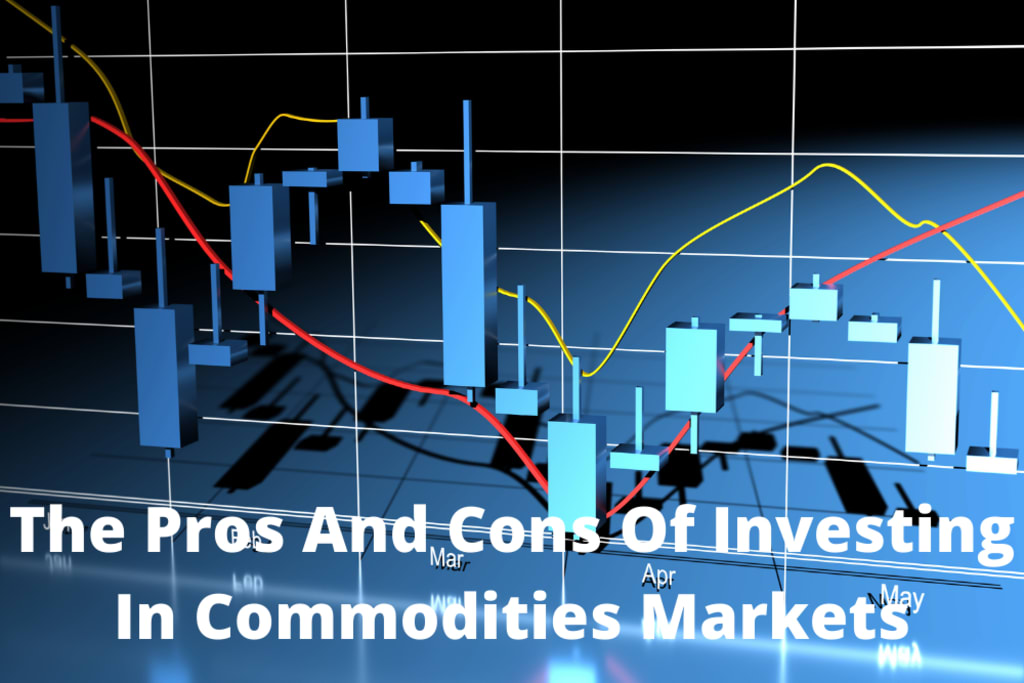
Commodities are the raw materials consumed in the manufacture of other products. Commodities come in diverse forms. As spending goes up all across the board, all major economies will feel the need to meet the post-Pandemic Age with a proactive perspective. While the preceding year saw plummeting oil and commodities prices, this year promises to be different. The economy is aflush with fiscal and monetary stimulus, the diverse commodities may be assessed differently per performance. Gold is reflective of rising inflation, while copper is undergoing structural demand shifts. The Pros And Cons Of Investing In Commodities Markets is, therefore, an interesting question.
Defining commodities
Commodities refer to natural resources that can be divided into components - agriculture, energy, and metals. Commodities are tangible assets. These comprise precious metals, fuel materials like gas and oil, and soft commodities like sugar, wheat, cocoa beans, and coffee.
Commodities are subject to substantial price fluctuations. However, as a rule, they are uniform and fungible.
Commodities may be a means for the investor to diversify their portfolio beyond conventional securities. Moreover, since commodity prices move opposite to stock prices, some investors depend on commodities during periods of market volatility. Thus, there are more opportunities to take part in the commodities markets than had been hitherto possible these days.
Of the handful of commodity derivatives on the market, the one with the most currency is the commodity futures contract. A commodity futures contract is a standardised contract that places the buyer’s obligation on the underlying commodity purchase at a predetermined price and date.
The Pros Of Investing In Commodities Markets
Inflation hedge
Even as the demand for goods and services rises, there is an increase in the price of goods and services with the price of commodities increasing.
During inflation, interest rates appreciate, which in turn increases the cost of borrowing and diminishes the company’s net income. A decrease in company income also impacts the profits shared with the shareholders. Thus, during inflation, stock prices decline. Obversely, the commodity prices appreciate owing to growing demand, finally leading to rising prices of final goods.
Small wonder investors escape to commodity futures to safeguard their capital from the effects of inflation.
Hedge against risky events
Geopolitical events like wars and conflicts disturb the supply chain, and there’s resultant resource scarcity. As a result, factory production becomes seriously hindered.
When the raw material supply gets adversely impacted, there's a mismatch of demand and supply, causing commodities’ prices to rocket.
High leverage
Commodity futures give a very high degree of leverage. You may control a big position by just 5-10% of the contract value as an upfront margin. The minor movement in commodities prices can cause huge gains.
Diversification
Commodities have a low/negative correlation with stocks. This is because commodities Are generally raw materials needed to make finished goods.
Rocketing commodity prices amplify production cost, which thins the profits, leaving little for shareholders and depleting earnings per share. This precipitates a decline in stock prices.
Also, owing to inflation, the current value of future cash flows paid by stocks depreciates since future cash will have less purchasing power.
Stocks do well when inflation is slow. Obversely, commodities do well with rising inflation.
The Cons Of Investing In Commodities Markets
Leverage
Leverage helps you control a big position with a tiny amount of upfront capital. However, even a tiny change in the contract price can impact your gains /losses considerably.
Low margin requirements lead up to excessive risk, depleting your entire investment.
Volatility
Demand supply factors affecting commodity prices, the latter tend to have high volatility. This is because the supply of the commodity stays fixed, even as the price may go up or down. This characteristic also means commodity derivatives will behave abnormally at times of supply and demand shocks.
Asset concentration
Diversification may be a result of commodity inclusion in a portfolio. However, it may easily happen that commodity funds themselves are concentrated in a couple of industries. Therefore, a change in a commodity price may have a considerable impact on a commodity ETF’s price.
Conclusion
Commodity market trading and investing come with their own sets of risks. Be sure to have a thorough handle on your own risk management strategy before you enter this market. A risk profile assessment would not be out of order. Carefully prepared and implemented strategies give good results. Therefore, it pays to be aware of The Pros And Cons Of Investing In Commodities Markets.
About the Creator
Keep reading
More stories from Jessica smith and writers in Trader and other communities.
How do you Maximise your Earnings in Any Trade on the Stock Market?
Introduction The stock market is the largest and oldest financial market globally; traders trust the market and invest in millions of shares. The primary reason for the trust and investment is the growth of the market over the years. It has developed and increased the exposure options of the traders. Investors can maximise their profits with various tools available in the market.
By Jessica smith4 years ago in Trader
TSMC Earnings Beat Sparks Rally in Nvidia, AMD, and Global Chip Stocks
In a powerful start to 2026 for tech markets, Taiwan Semiconductor Manufacturing Company (TSMC) delivered a stunning set of quarterly results that ignited renewed confidence in the semiconductor sector and lifted major chip stocks including Nvidia and AMD. The world’s largest contract chipmaker reported better-than-expected revenue and profit for the fourth quarter of 2025, while guiding for robust growth and massive capital spending in the year ahead — a signal to Wall Street that the artificial intelligence hardware boom remains firmly intact.
By Raviha Imran3 days ago in Trader
Expected Long-Term Return MSCI World ETF: How to Maximize Your Investment Safely
Understanding the expected long-term return MSCI World ETF can help you plan your investments wisely. Many beginners and even experienced investors underestimate the power of long-term growth. This article will guide you through strategies top investors use to maximize returns while minimizing risks. By applying these techniques, you can grow your wealth steadily over time.
By hamza mirza4 days ago in Trader



Comments
There are no comments for this story
Be the first to respond and start the conversation.